
Short answer
Learn how Virtual IBAN payments work, from incoming payment notifications and balance updates to currency handling and payment reconciliation.
Receiving money is only one part of a successful payment process. Businesses also need to know when funds arrive, how transactions are recorded, whether currency conversion is required, and how incoming payments match their financial records. This is where a Virtual IBAN account can help simplify payment operations. It gives businesses a structured way to identify incoming transfers and organize payment activity, depending on how the account and payment infrastructure are configured. For companies handling international transactions, understanding what happens after money arrives is important for cash flow management, reporting, and payment reconciliation. With payment infrastructure providers such as NetPay, businesses can explore ways to connect incoming payments with their broader financial workflows.
What Is a Virtual IBAN Account?
A Virtual IBAN is an International Bank Account Number assigned for identifying or routing payments to a particular customer, business, or account arrangement. It can help businesses distinguish incoming payments without necessarily opening a separate physical bank account for every customer or payment purpose. Businesses may use virtual IBANs to receive payments from clients, collect funds from different markets, or organize incoming transfers across business activities. The exact functionality depends on the provider, account structure, and supported payment networks. For businesses managing international payments, Virtual IBAN payments can make it easier to identify where incoming funds belong and organize transaction records.
What Happens When Money Comes Into a Virtual IBAN Account?
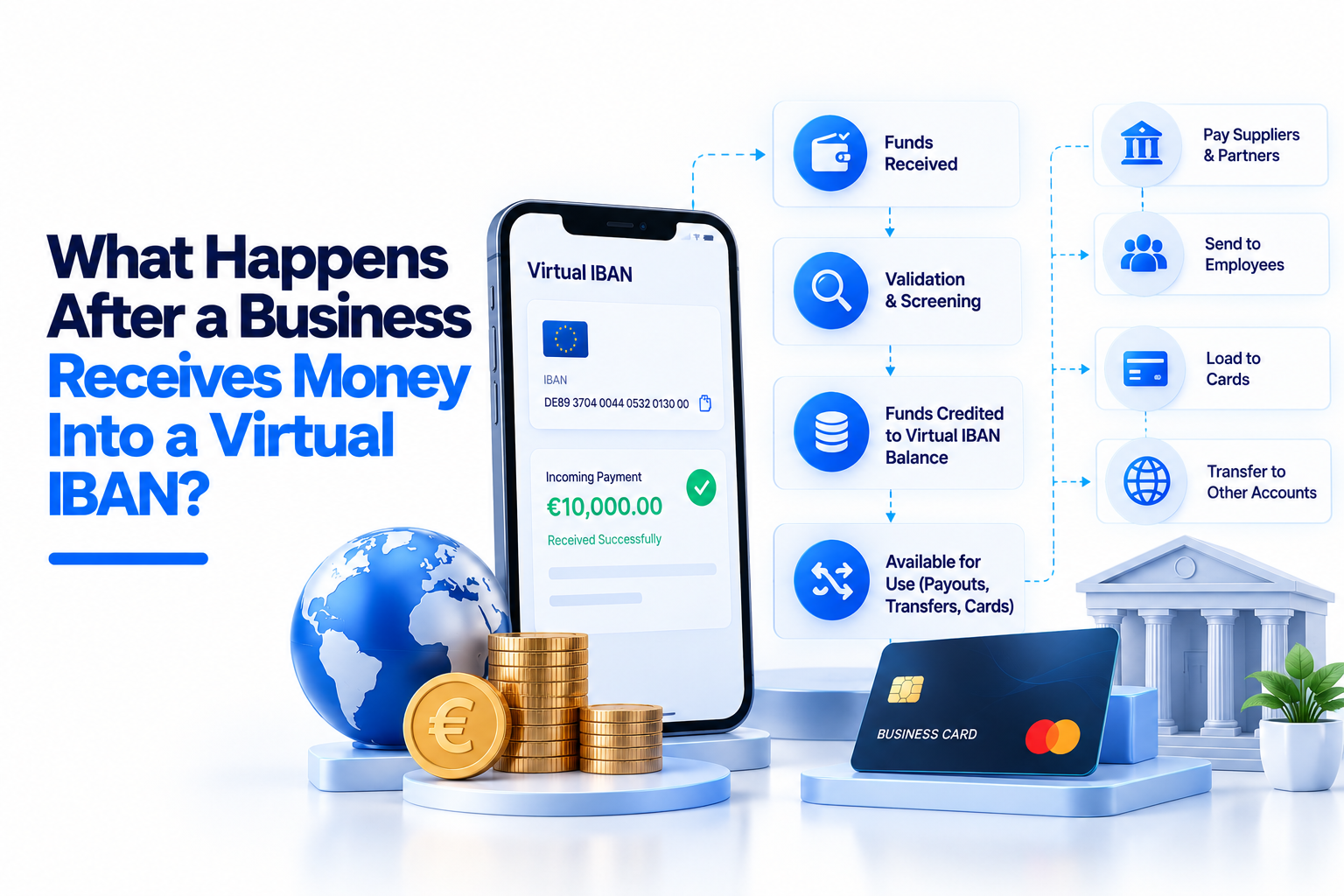
1. The Incoming Payment Is Processed
When a customer or business partner sends money, the transfer moves through the relevant payment network. The receiving institution or payment provider processes the transfer according to the applicable payment method and its procedures. The payment may need to pass through checks before it is credited. Processing times can vary depending on the transfer method, currency, sending institution, business day, and other factors. A payment being initiated does not always mean the funds have been received. Businesses should distinguish between a pending transfer and a completed incoming payment.
2. The Payment Is Identified and Recorded
Once the incoming transfer is processed, the payment information can help identify its intended recipient or purpose. Depending on the setup, this information may include the Virtual IBAN, sender details, payment reference, amount, and currency. This identification process is useful for businesses receiving payments from multiple customers. Instead of manually investigating every transfer, finance teams can use available payment references and account information to connect transactions with the correct customer, invoice, or business activity. Accurate payment identification also helps reduce the time spent resolving unmatched incoming transfers.
3. A Payment Notification May Be Generated
After a payment reaches a particular processing stage, the payment system may generate a notification. This can help the business or its connected software identify a transaction update without relying entirely on manual checks. Depending on the provider's capabilities, notifications may be delivered through a dashboard, API response, webhook, or another supported channel. For example, a business platform could receive a transaction update and use it to update an internal payment record. However, the system should interpret the event according to its meaning. A notification that a transfer has been initiated is not the same as confirmation that funds are available. Transparent payment notifications keep the internal systems of businesses up to date and give the finance teams and the customers better information.
4. The Account Balance Is Updated
After the payment is successfully credited, the relevant account or ledger balance can be updated according to the provider's processing rules. This is an important step because businesses need an accurate view of their available funds. If payment records and balance information are not synchronized, teams may struggle to determine how much money has actually been received. A well-connected payment workflow helps maintain consistency between transaction records, account balances, and internal financial systems. Businesses should also account for pending transactions, holds, fees, or other adjustments where applicable.
How Virtual IBAN Payment Workflows Work Inside NetPay
For businesses managing incoming payments and international financial operations, the underlying payment infrastructure plays an important role. NetPay provides payment infrastructure designed to support business payment workflows, including solutions related to global payments and multi-currency operations. When assessing a Virtual IBAN account or payment solution, businesses should consider how incoming transfers are identified, how transaction updates are communicated, how balances are presented and how payment information can be linked with internal banking systems.
Final Thoughts
A payment received into a Virtual IBAN account goes through several stages, from transfer processing and payment identification to balance updates and reconciliation. Each stage helps businesses understand where their money is, whether it has been credited, and how it relates to their financial records. For companies handling international transactions, effective Virtual IBAN payments depend on more than receiving funds. Clear transaction information, reliable status updates, appropriate currency handling, and accurate payment reconciliation all contribute to better financial visibility. With payment infrastructure providers such as NetPay, businesses can explore ways to connect payment workflows and build a more structured approach to managing incoming funds.
What happens when money is received into a Virtual IBAN account?
The payment is processed through the relevant payment network, identified using available transaction details, and recorded when credited. The business can then update its internal records and reconcile the payment with the relevant invoice or account.
How long does a Virtual IBAN payment take to arrive?
Processing time depends on the payment network, transfer type, currency, sending institution, and applicable processing checks. Some transfers may arrive quickly, while others can take longer.
Does a Virtual IBAN automatically convert incoming payments into another currency?
Not necessarily. Currency handling depends on the account's supported currencies and payment arrangement. Conversion may be required in some cases, and applicable exchange rates and fees should be checked.

The NetPay247 team writes about card issuing, Virtual IBANs, cross-border payments and building products on embedded finance infrastructure.
Leave a reply
Your email address will not be published. Required fields are marked *