
Short answer
Learn how Virtual IBANs and multi-currency payments work together to simplify global collections, payment tracking, transfers, and reconciliation for businesses.
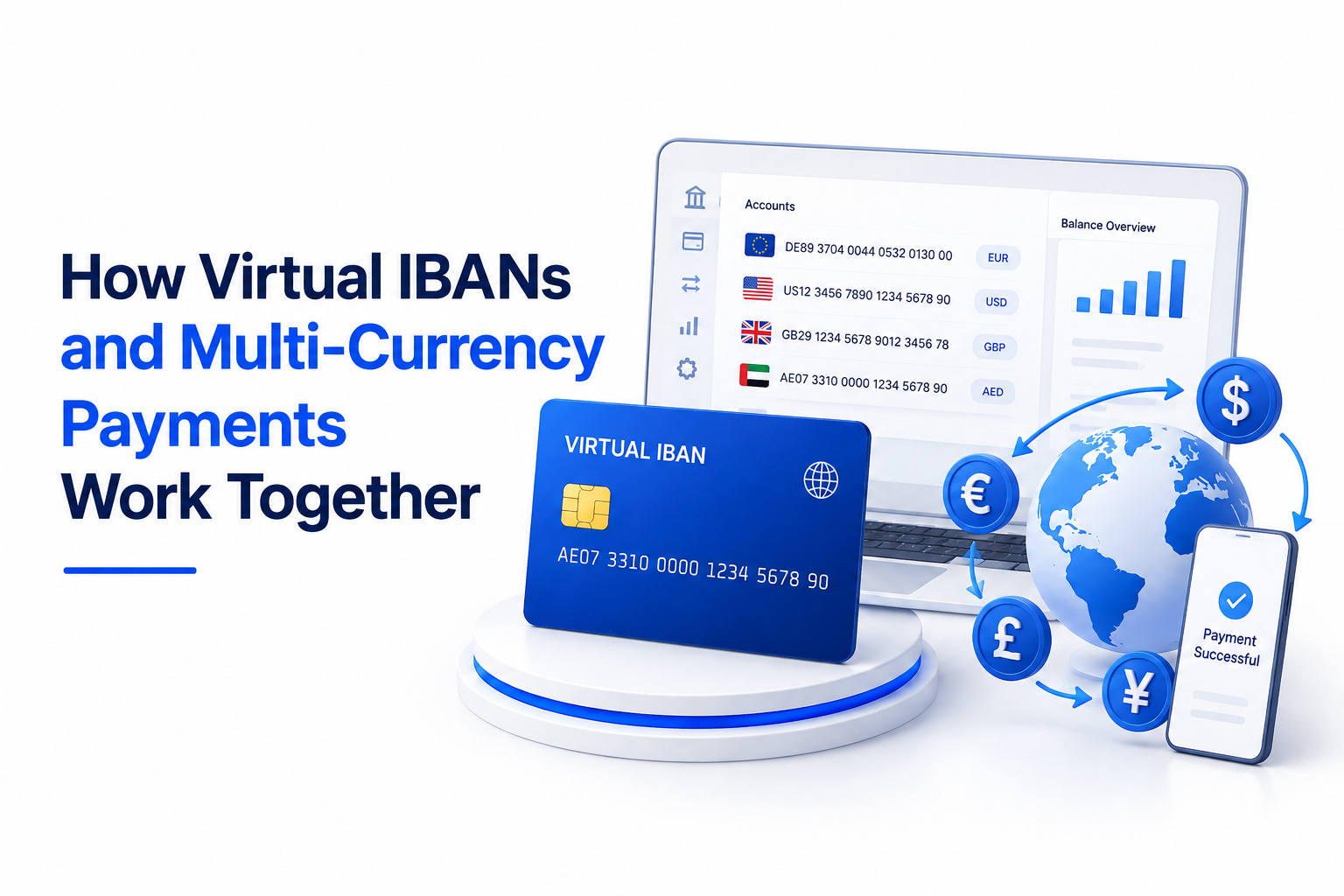
As businesses expand across borders, managing payments in different currencies can quickly become complicated. Companies may receive money from international customers, pay suppliers in different countries, and manage funds across multiple markets—all while trying to keep financial records organised. This is where Virtual IBANs and multi-currency payment solutions can work together. A Virtual IBAN can provide a dedicated payment account identifier for receiving and organising funds, while a multi-currency setup can allow businesses to manage payments in different currencies through a connected financial infrastructure. Together, they can create a more organised approach to international payment collection and management.
What Is a Virtual IBAN?
A Virtual IBAN is a digital account identifier associated with an underlying payment or banking account structure. It can be used to help businesses receive and identify payments without necessarily requiring a separate traditional bank account for every payment relationship. For businesses operating internationally, Virtual IBANs can provide a more structured way to organise incoming payments. For example, a company may assign dedicated Virtual IBANs to different customers, business units, marketplaces, or payment flows. Incoming funds can then be identified and allocated more efficiently. The exact functionality of a Virtual IBAN depends on the provider and underlying account structure, so businesses should always review the available currencies, transfer methods, jurisdictions, and account capabilities before choosing a solution.
What Does Multi-Currency Payment Infrastructure Mean?
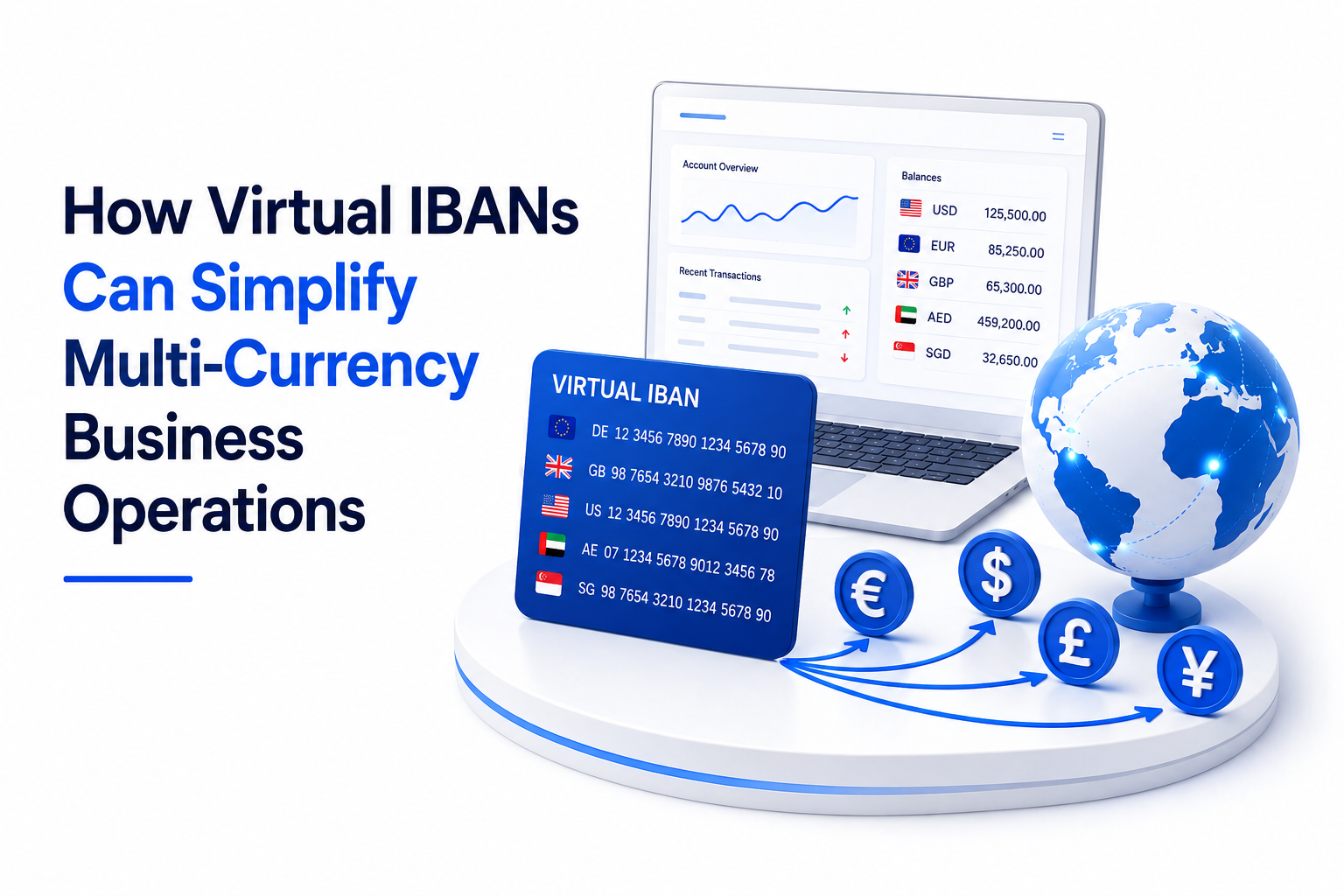
A multi-currency payment solution allows businesses to handle financial activity across multiple currencies through a connected infrastructure. Instead of managing every currency through completely separate systems, businesses can have a centralised environment for managing supported currencies and payment flows. Depending on the provider, this may include: Multi-currency accounts | International payment collection | Currency conversion | SEPA transfers | SWIFT transfers | Internal transfers | Payment tracking | Automated reconciliation | API integration This can be particularly useful for businesses that regularly operate across different countries and currency zones.
How Virtual IBANs and Multi-Currency Payments Work Together
The real value comes from combining the two capabilities. Think of the Virtual IBAN as an organised entry point for payments, while the multi-currency infrastructure provides the environment for managing those funds. A simplified flow could look like: Customer → Virtual IBAN → Payment Received → Currency Account → Business Operations → Reconciliation For example, an international business may receive EUR payments through a dedicated Virtual IBAN while managing USD and GBP through the same broader payment infrastructure. Instead of treating every payment as an isolated transaction, the business can organise incoming funds according to customers, markets, currencies, or business requirements. This creates a more connected payment workflow. Read Also : Card Issuing Solutions for Digital Banks and Neobanks From Setup to Go-Live: How to Launch a Business Card Program How White-Label Card Programs Help Businesses Build Their Own Payment Ecosystem
Why This Matters for Global Businesses
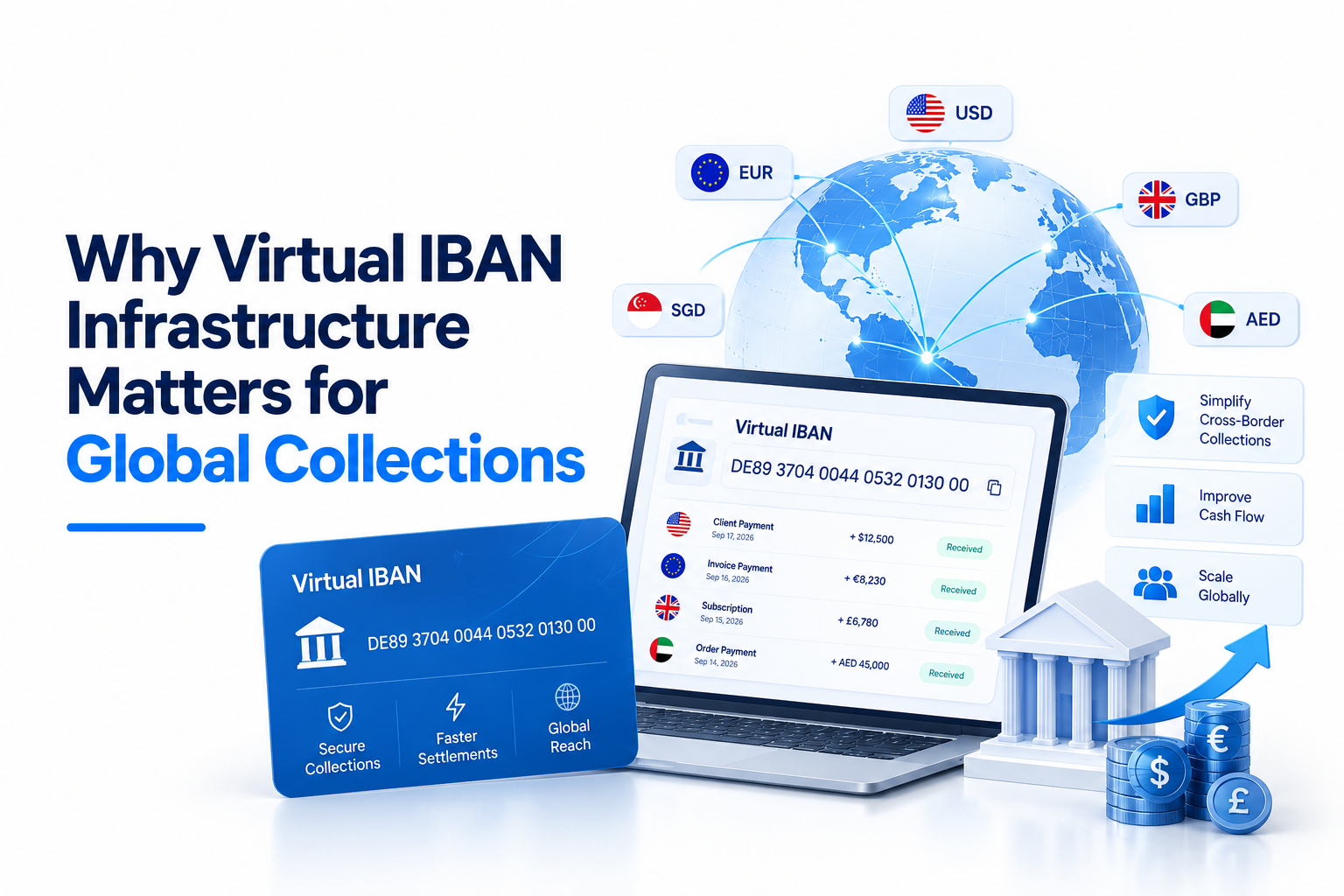
International payments become difficult when businesses have limited visibility into where money is coming from, which currency it is in, and how it should be allocated. Virtual IBANs can help create clearer payment identification, while multi-currency capabilities can help businesses manage different currency flows within a broader financial structure. This can support several important operational areas.
1. Better Payment Organisation
Dedicated Virtual IBANs can help businesses separate incoming payment flows. For example, different identifiers could be used for different customers, regions, or business activities, making it easier to determine where a payment originated.
2. Easier Multi-Currency Management
Businesses working with international customers may need to receive and manage several currencies. A multi-currency infrastructure can provide a more centralised way to manage supported currencies rather than relying entirely on disconnected accounts and processes.
3. More Efficient Reconciliation
Payment reconciliation can become challenging when transaction information is spread across multiple accounts and platforms. When Virtual IBANs, transaction data, and business systems are connected, businesses can create more structured reconciliation workflows. Automated reconciliation can help match incoming payments with the appropriate customer, invoice, or internal record.
4. Better Visibility
Centralised payment infrastructure can give finance and operations teams a clearer view of payment activity. Instead of checking multiple systems, businesses can potentially monitor payment flows, balances, transfers, and reconciliation information from a connected environment.
Where NetPay Fits In
NetPay provides payment infrastructure designed to support modern business payment operations, including Virtual IBANs, multi-currency accounts, SEPA and SWIFT transfers, internal transfers, automated reconciliation, and API integration. The objective is not simply to provide an account identifier. The broader goal is to connect payment collection with the operational systems businesses use to manage their finances. With NetPay Virtual IBAN solutions, businesses can use dedicated IBANs to organise payment flows while leveraging multi-currency capabilities for international operations. API connectivity can further help businesses integrate payment information into their own platforms, finance systems, or internal workflows. This becomes especially relevant for fintech platforms and businesses that want payment infrastructure to work alongside their existing technology rather than operate as a separate system.
A Simple Example
Imagine a company selling services to customers in Europe, the UK, and the United States. It may receive payments in EUR, GBP, and USD. Without a structured payment infrastructure, the finance team could end up managing multiple accounts, payment references, transaction reports, and reconciliation processes. With a connected Virtual IBAN and multi-currency setup, the company can create a more organised payment structure. Customers can send payments through designated payment channels, while the business manages supported currencies through its broader payment infrastructure. The payment data can then be connected to internal systems for tracking and reconciliation. The result is a payment process designed around organisation and visibility, rather than simply receiving money.
Building a More Connected Payment Operation
Global payment management does not have to mean managing an ever-growing collection of disconnected accounts and spreadsheets. A well-designed payment infrastructure can connect collection, currency management, transfers, transaction data, and reconciliation into one more structured workflow. Virtual IBANs can provide organised payment entry points, while multi-currency infrastructure can help businesses manage international financial flows. For companies looking to build scalable payment operations, the combination can provide a practical foundation for managing global collections more efficiently. With solutions such as NetPay, businesses can bring Virtual IBANs, multi-currency payments, transfers, reconciliation, and API connectivity into a more connected payment environment.
How do Virtual IBANs help with international payments?
Virtual IBANs can provide dedicated payment identifiers that help businesses organise and identify incoming payment flows from customers or different business activities
Can Virtual IBANs support multiple currencies?
Virtual IBAN functionality and supported currencies vary by provider. A multi-currency payment solution can provide the broader infrastructure for managing different supported currencies.
Why combine Virtual IBANs with multi-currency accounts?
Combining them can help businesses organise incoming payments while managing multiple currency flows through a more connected financial infrastructure.
Does NetPay provide Virtual IBAN solutions?
NetPay offers Virtual IBAN infrastructure with capabilities including dedicated IBANs, multi-currency accounts, SEPA and SWIFT transfers, internal transfers, automated reconciliation, and API integration.
Can Virtual IBAN payment data be integrated with business systems?
Where API integration is supported, payment information can be connected with a company's own platforms, finance systems, or operational workflows.

The NetPay247 team writes about card issuing, Virtual IBANs, cross-border payments and building products on embedded finance infrastructure.

Leave a reply
Your email address will not be published. Required fields are marked *