
Short answer
Learn how Virtual IBANs simplify multi-currency business operations through dedicated accounts, global transfers, reconciliation, and NetPay payment infrastructure.
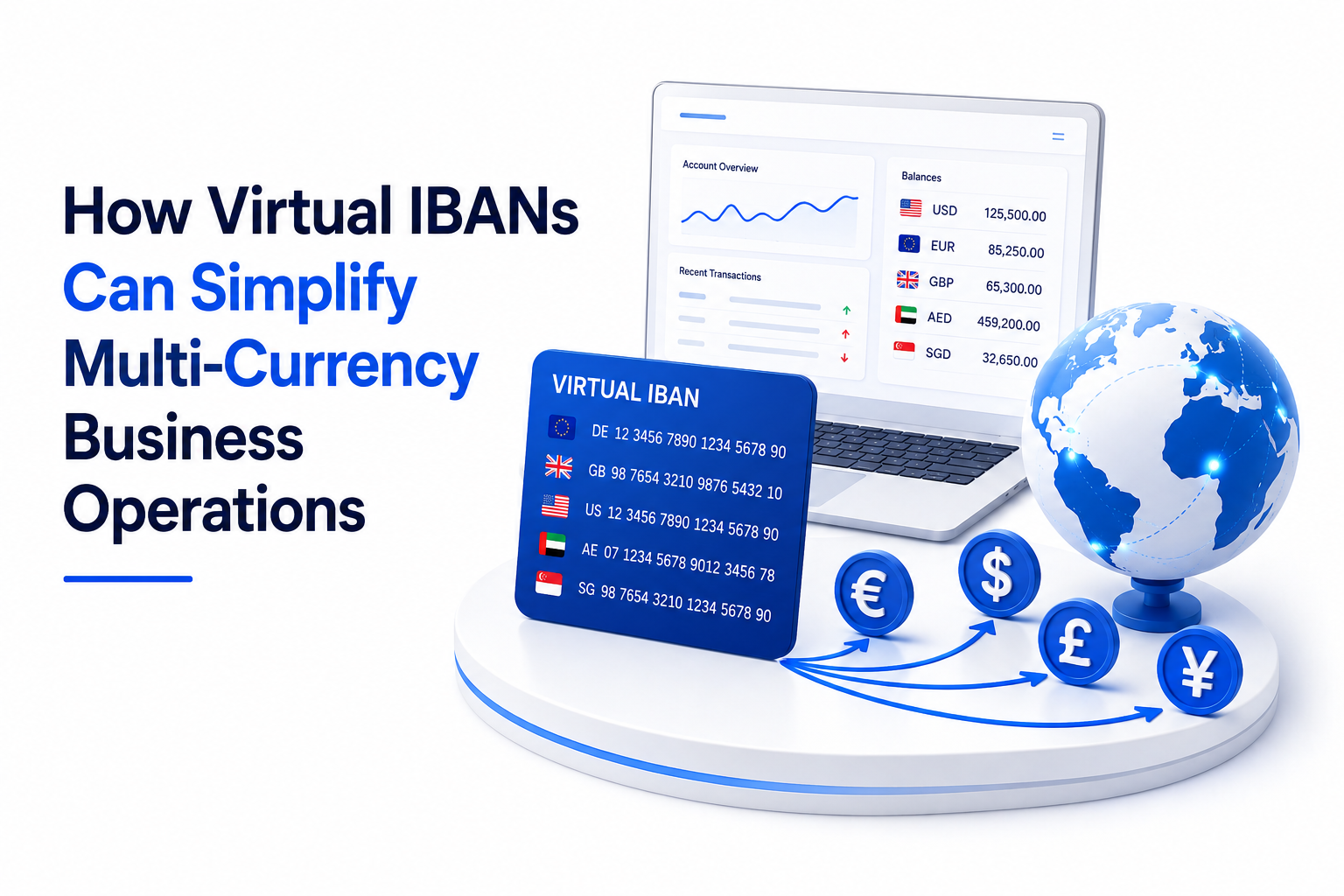
Managing payments across multiple currencies can become complicated very quickly. A growing business may receive money from clients in different countries, pay international suppliers, handle multiple currencies, and still need to keep every transaction organized for accounting and reconciliation. Traditional banking structures are not always designed for this level of flexibility. Businesses often end up managing several accounts, payment providers, spreadsheets, and manual reconciliation processes. This is where Virtual IBANs can simplify multi-currency business operations. With the right Virtual IBAN solution, businesses can organize incoming payments, manage different currencies more efficiently, improve reconciliation, and connect payment activity with their wider financial systems. NetPay provides Virtual IBAN infrastructure designed to support modern businesses with dedicated IBAN accounts, multi-currency capabilities, international transfers, reconciliation, and API connectivity.
What Is a Virtual IBAN?
A Virtual IBAN, or Virtual International Bank Account Number, is an account identifier that can be assigned to a business, customer, department, or payment flow. Instead of routing every payment into one general account and identifying transactions manually, Virtual IBANs can help businesses separate incoming payments more clearly. For businesses handling high volumes of international transactions, this structure can make payment tracking and financial operations easier to manage.
Why Multi-Currency Operations Become Complicated
Operating internationally usually means dealing with more than one currency. A business may receive EUR from European customers, USD from international clients, GBP from UK customers, or other supported currencies depending on its payment infrastructure. Without a structured system, teams may need to: Manage several payment accounts Track transfers manually Match payments with customers Monitor different currency balances Reconcile transactions across multiple systems Handle cross-border transfers separately As transaction volumes increase, these processes can become time-consuming. A multi-currency Virtual IBAN solution can help bring these payment flows into a more organized structure.
Dedicated IBANs Make Payments Easier to Identify
One of the key advantages of Virtual IBAN infrastructure is the ability to provide dedicated payment identifiers. For example, a business may assign different Virtual IBANs to specific customers, business units, regions, or payment purposes. When a payment arrives, the dedicated IBAN can help identify where the payment belongs. This can reduce the amount of manual work required to understand who sent a payment and what the payment relates to. For businesses managing large numbers of transactions, better payment identification can significantly improve day-to-day operations.
Managing Multiple Currencies More Efficiently
A strong multi-currency payment infrastructure allows businesses to work with different currencies without building a completely separate payment process for each market. With NetPay's Virtual IBAN infrastructure, businesses can build payment operations around multi-currency accounts and international transfer capabilities. This can be particularly useful for: Global businesses Fintech platforms Online marketplaces International service providers Brokerages Digital businesses Companies working with overseas clients and suppliers Instead of treating every currency as an isolated payment flow, businesses can manage them within a more connected financial environment.
SEPA and SWIFT Transfers Support International Operations
Cross-border business payments often depend on different payment networks. SEPA transfers are widely used for euro payments across participating European markets, while SWIFT transfers support international bank transfers across a broader global network. Virtual IBAN infrastructure that supports these transfer methods can help businesses manage both regional and international payments from a connected payment setup. For global companies, this can reduce the complexity of working with several independent banking relationships.
Better Visibility Across Global Payments
As a company expands internationally, visibility becomes just as important as payment capability. Managing multiple currencies, clients, and transfers without centralized visibility can create operational confusion. Virtual IBAN infrastructure can help businesses organize payment flows by providing clearer separation between customers, accounts, and transactions. Instead of asking, “Where did this payment come from?” finance teams can work with a more structured system.
How NetPay Supports Virtual IBAN Infrastructure
NetPay provides Virtual IBAN solutions designed for businesses that need a more organized approach to global payments. The infrastructure can support capabilities such as: Dedicated Virtual IBANs Multi-currency accounts SEPA transfers SWIFT transfers Internal transfers Automated reconciliation API integration By combining these capabilities, NetPay helps businesses build payment operations that are more connected, structured, and suitable for international growth.
Conclusion
Managing multiple currencies does not have to mean managing multiple disconnected payment processes. Virtual IBANs can help businesses organize incoming payments, manage different currencies, simplify reconciliation, support international transfers, and integrate payment activity with existing systems. With NetPay Virtual IBAN solutions, businesses can build a more structured payment infrastructure using dedicated IBANs, multi-currency capabilities, SEPA and SWIFT transfers, automated reconciliation, and API integration. For businesses expanding across markets, the right Virtual IBAN infrastructure can turn complicated international payment operations into a more connected and manageable system.
How do Virtual IBANs help with multi-currency payments?
Virtual IBAN infrastructure can help businesses manage different currency payment flows within a more organized system instead of relying on multiple disconnected accounts and processes.
Can Virtual IBANs make reconciliation easier?
Yes. Dedicated Virtual IBANs can make it easier to identify incoming payments and match them with customers, invoices, or specific payment purposes, helping reduce manual reconciliation.
Can Virtual IBANs support international transfers?
Virtual IBAN solutions can be integrated with international payment rails such as SEPA and SWIFT, depending on the infrastructure and supported markets.
Why are APIs important for Virtual IBAN solutions?
APIs can help businesses connect Virtual IBAN payment infrastructure with their own applications, finance systems, dashboards, or operational workflows.
Who can benefit from Virtual IBANs?
Fintech companies, marketplaces, brokerages, international businesses, online platforms, and companies receiving payments from multiple countries can benefit from Virtual IBAN infrastructure.

The NetPay247 team writes about card issuing, Virtual IBANs, cross-border payments and building products on embedded finance infrastructure.

Leave a reply
Your email address will not be published. Required fields are marked *