
Short answer
Learn how payment APIs connect card infrastructure with business platforms, automate card operations, enable real-time data, and improve payment management with NetPay.
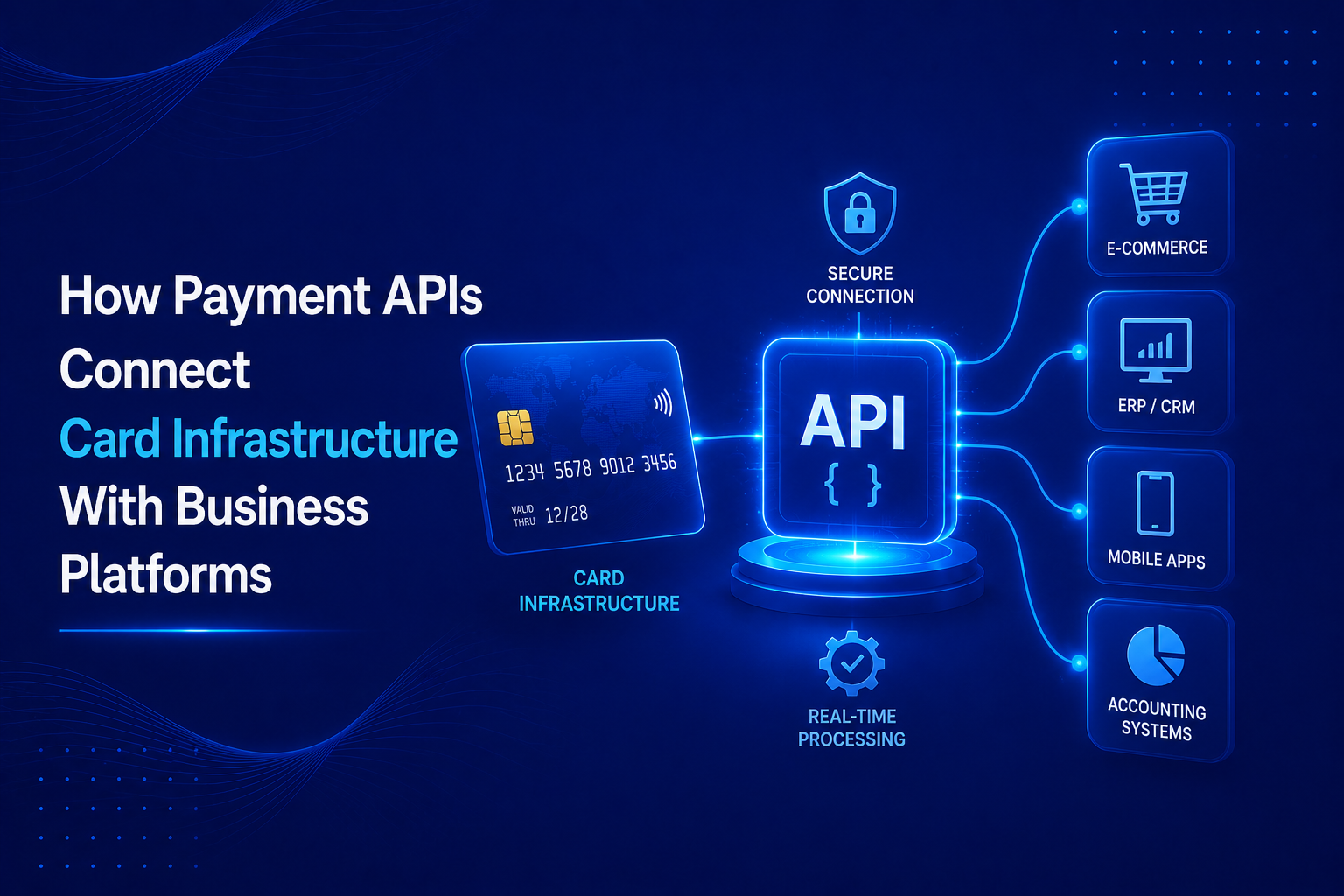
Modern card programs are no longer managed through standalone systems. Businesses increasingly need their card infrastructure to connect with CRMs, accounting platforms, finance systems, customer portals, and internal applications. This is where payment APIs become essential. Instead of moving information manually between different systems, APIs allow card infrastructure to communicate directly with business platforms. From issuing cards and checking balances to receiving transaction updates and managing controls, APIs create a connected environment where financial operations can be automated and managed more efficiently. For fintechs, payment platforms, marketplaces, and businesses building card-based products, understanding this connection is becoming increasingly important.
What Are Payment APIs?
A payment API is a technical interface that allows two or more software systems to exchange information and trigger actions. In a card program, an API can connect the underlying card issuing infrastructure with a company's own technology stack. For example, when a business creates a new cardholder through its platform, an API can send the required information to the card infrastructure. The system can then create or issue the card and return the relevant information to the business platform. The same principle can apply to: Card creation and issuance Card activation and blocking Balance checks Transaction information Spending limits Cardholder management Notifications and webhooks Reconciliation data This makes the API an important connection between the customer-facing platform and the financial infrastructure operating behind it.
Why Connecting Card Infrastructure Matters
A card may be the visible part of a financial product, but businesses need much more than the physical or virtual card itself. They need to know what happened to a transaction, how much a cardholder has spent, whether a card is active, and whether financial records match their internal systems. Without integration, teams may need to export files, update records manually, or move information between multiple dashboards. As transaction volumes increase, this can create delays and operational complexity. With API connectivity, information can move between systems automatically. For example, a business platform could receive a transaction event shortly after a card payment takes place. That information could then update the customer's account, internal reporting system, or finance dashboard without requiring manual intervention.
How Payment APIs Connect Different Systems
A modern card ecosystem can involve several technology layers. A typical flow may look like: Business Platform → Payment API → Card Infrastructure → Transaction Processing → API/Webhook → Business Platform The business platform may handle the customer experience, while the card infrastructure manages the underlying card functionality. The API acts as the communication layer between them. When an action takes place, the relevant information can be exchanged between systems. This allows businesses to create their own workflows while relying on specialized payment infrastructure for card-related functions. For example, a fintech platform could allow users to request cards directly from its own application. The request can be sent through an API to the card infrastructure, while the resulting card status can be returned to the platform. This creates a more seamless experience for both the business and its customers.
Payment APIs and Business Automation
One of the biggest advantages of API-based payment infrastructure is automation. Consider a company managing hundreds or thousands of cards. Its finance and operations teams may need to monitor spending, track transactions, update records, and reconcile payments. When card infrastructure is connected to internal business systems, many of these processes can become automated. Transaction information can flow into accounting or reporting systems. Card status can be reflected inside a customer portal. Spending data can be used to trigger internal alerts or business rules. The result is less dependence on manual processes and better visibility across the organization.
How NetPay Supports Connected Card Infrastructure
NetPay is designed around the idea that card programs need more than card issuance. A modern card program requires infrastructure that can connect card issuing, APIs, dashboards, transaction monitoring, controls, and reconciliation into a more connected operational environment. With NetPay card infrastructure, businesses can integrate key card functions into their own platforms and workflows. API capabilities can support processes such as card creation, activation, blocking, balance checks, transaction history, spending limits, webhooks, and reconciliation. This gives businesses greater flexibility to build their own customer-facing experiences while connecting them with the infrastructure operating behind the card program. For fintech platforms and businesses developing financial products, this approach can reduce the need to build every card-management component from scratch.
What Businesses Should Consider Before Choosing Payment APIs
API connectivity can provide significant advantages, but businesses should evaluate the infrastructure carefully before selecting a provider. Important considerations include:
API Coverage
The API should support the functions your card program actually needs, including issuing, card controls, transaction data, and account management.
Real-Time Events
Webhooks and event-based notifications can be important for keeping business platforms synchronized with card activity.
Security
Financial APIs need strong authentication, authorization, data protection, and appropriate access controls.
Scalability
The infrastructure should be capable of supporting increasing cardholders, transactions, and API requests as the business grows.
Documentation
Clear API documentation and integration support can significantly reduce development time and make ongoing maintenance easier.
Reconciliation
Transaction and settlement data should be accessible in a way that supports accurate financial reporting and reconciliation.
The Future of Connected Payment Infrastructure
The future of card programs is increasingly connected. Businesses don't necessarily want customers to move between multiple systems just to manage a card. They want card functionality to become part of their existing digital experience. Payment APIs make this possible by connecting financial infrastructure with the platforms businesses already use. The card remains the customer-facing product, but APIs, webhooks, controls, transaction data, and reconciliation form the technology layer that keeps everything connected behind the scenes. For businesses building or scaling card programs, choosing the right payment API infrastructure can therefore become an important technology and operational decision. With solutions such as NetPay, businesses can connect card infrastructure with their own platforms while creating a more integrated foundation for modern payment operations.
How do APIs help card programs?
APIs can connect card issuing and management functions with a company's own applications, CRM, finance systems, dashboards, or customer portals, reducing manual processes.
What is the difference between an API and a webhook?
An API generally allows one system to request information or trigger an action. A webhook allows a system to automatically send an event notification to another connected system when something happens.
Can payment APIs support card management?
Yes. Depending on the provider, APIs can support functions such as card creation, activation, blocking, balance checks, transaction history, spending controls, and other card-management operations.
Why are payment APIs important for fintech platforms?
They allow fintech platforms to integrate payment functionality into their own products instead of building every financial infrastructure component independently.

The NetPay247 team writes about card issuing, Virtual IBANs, cross-border payments and building products on embedded finance infrastructure.


Leave a reply
Your email address will not be published. Required fields are marked *