
Short answer
Discover why embedded finance is becoming a core product strategy and how APIs, payment infrastructure, cards, and platforms are creating connected financial experiences.
Financial services are no longer limited to banks and traditional financial institutions. Today, businesses across industries are finding ways to bring payments, cards, accounts, and other financial capabilities directly into the products their customers already use. This shift is known as embedded finance. For product teams, embedded finance is becoming more than a technology trend. It can be a strategic way to improve customer experiences, create new revenue opportunities, and make financial functionality a natural part of an existing product. Instead of sending customers to a separate financial platform, businesses can integrate relevant financial services directly into their own applications and workflows
What Is Embedded Finance?
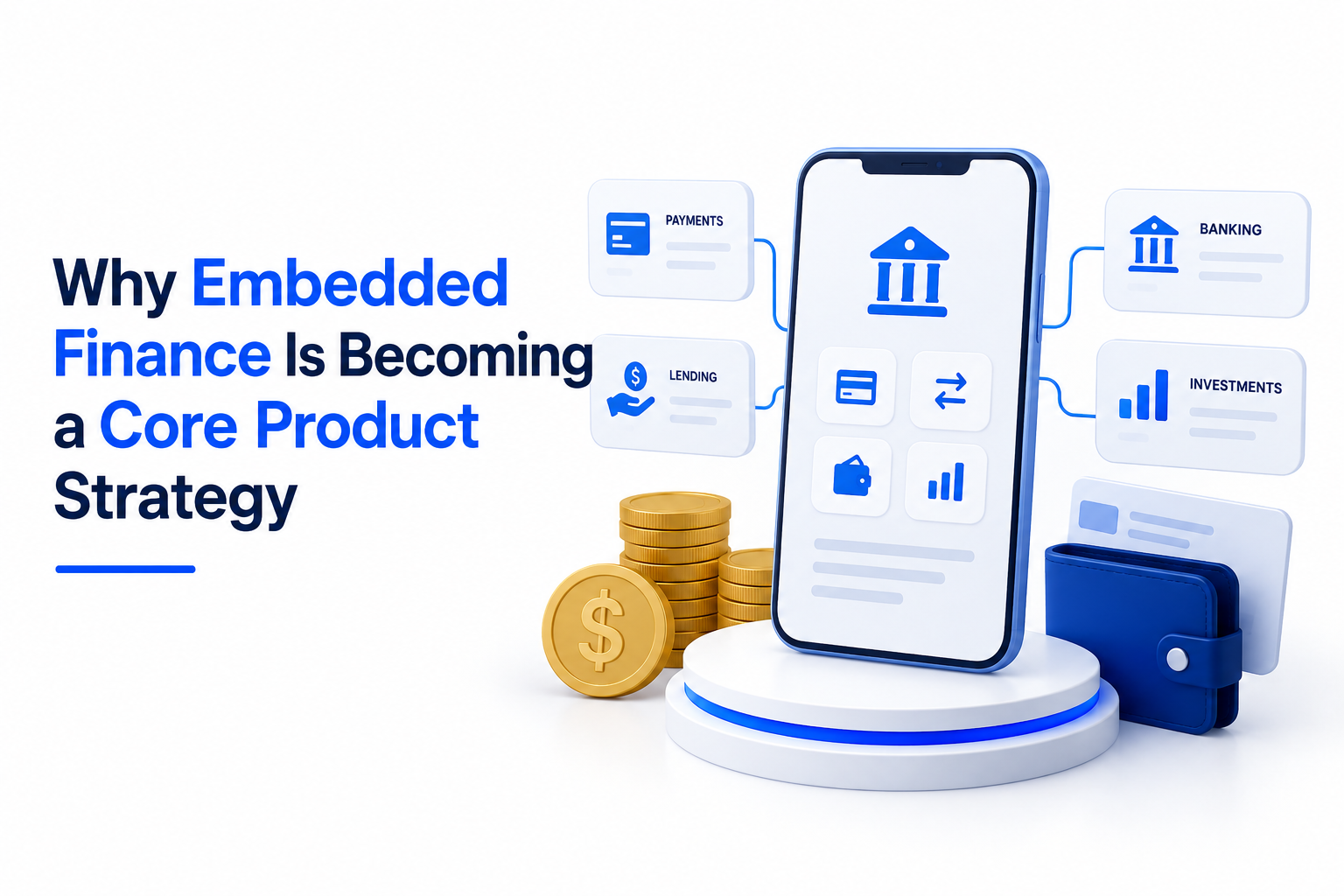
Embedded finance refers to the integration of financial services into non-financial products or platforms. A marketplace might allow sellers to receive payments directly through its platform. A business management application might offer payment accounts. An online platform could provide cards for employees or users. The financial service becomes part of the product experience rather than an entirely separate destination. This model is usually enabled through APIs, payment infrastructure, financial technology providers, and other connected systems.
Why Is Embedded Finance Becoming a Product Strategy?
The biggest change is that financial functionality is increasingly being viewed as part of the overall product—not simply an additional service. Customers generally prefer fewer disconnected processes. If they can complete a payment, manage funds, or access a card without leaving the platform they already use, the experience can become simpler and more integrated. For businesses, this creates an opportunity to build financial functionality around the specific needs of their customers.
1. Better Customer Experiences
One of the strongest reasons businesses explore embedded finance is convenience. Imagine a business platform where users can manage their account, make payments, receive funds, and access a payment card from one interface. The customer does not necessarily need to understand the underlying infrastructure. They simply experience a more connected product. This can reduce unnecessary steps and create a smoother journey. For product teams, the goal is not to add financial features simply because they are available. The goal is to integrate financial capabilities where they solve a genuine customer problem.
2. New Revenue Opportunities
Embedded finance can also create additional business models. Depending on the product and regulatory structure, businesses may generate revenue through payment services, account-related services, card programs, transaction-based services, or other financial features. For example, a software platform serving businesses could expand from providing operational tools to offering payment-related capabilities that customers already need. This can increase the value of the platform while creating additional opportunities for customer engagement.
3. More Control Over the Product Experience
When financial services are handled entirely through third-party destinations, businesses may have limited control over the customer journey. Embedded finance changes that model. Financial functionality can be designed into the company's existing user interface and workflows. This allows product teams to control how users discover, access, and manage financial features. The underlying financial infrastructure may come from a specialized provider, while the business focuses on the customer experience. This separation can be particularly useful for companies that want to offer financial capabilities without building an entire financial infrastructure stack themselves.
4. APIs Make Embedded Finance More Practical
APIs are one of the key technologies supporting embedded finance. Instead of building every financial capability from the ground up, businesses can connect their applications with specialized financial infrastructure. Depending on the provider, APIs can support functions such as: Payment processing Card issuing Card activation and blocking Balance information Transaction data Spending controls Account management Webhooks and notifications Reconciliation This allows product teams to build financial functionality into their own applications while relying on established infrastructure for the underlying operations.
5. Embedded Cards Are a Good Example
Cards are one of the clearest examples of embedded finance. A business may want to offer physical or virtual cards to customers, employees, partners, or users. Rather than requiring users to access a separate card-management application, the business can integrate card functionality into its existing platform. Users may be able to request a card, view transactions, manage spending limits, or control card status directly within the product. The card becomes a feature of the platform rather than a completely separate financial product.
6. Embedded Finance Requires Strong Infrastructure
While embedded finance can create valuable product opportunities, the user-facing experience is only one part of the equation. Behind the interface, businesses need reliable infrastructure for managing financial activity. This may include: APIs → Transaction Processing → Card Management → Controls → Monitoring → Reconciliation If these components are disconnected, adding financial features can create operational challenges. That is why infrastructure should be considered early in the product strategy rather than after the customer-facing experience has already been designed.
How NetPay Supports Embedded Finance
NetPay provides payment and card infrastructure that can support businesses looking to integrate financial capabilities into their own products. Its infrastructure can support areas such as card issuing, APIs, transaction management, card controls, monitoring, dashboards, and reconciliation. For businesses developing embedded financial experiences, this type of infrastructure can provide the operational layer behind the product. Instead of building every card-management function internally, businesses can connect their platforms with NetPay payment infrastructure and focus more heavily on their customer experience and product strategy. NetPay can also support Virtual IBAN and multi-currency payment infrastructure, helping businesses build more connected payment experiences around international collections and financial operations. The specific services and availability can depend on the business model, program structure, and applicable requirements.
The Future of Product-Led Finance
Embedded finance is changing the relationship between software and financial services. Financial capabilities are increasingly becoming features that can be integrated into products rather than destinations customers visit separately. For product teams, this creates an opportunity to rethink how payments, cards, accounts, and financial workflows fit into the customer journey. The companies that approach embedded finance strategically will not simply add financial features. They will design financial functionality around the problems their customers already have. And behind those experiences, reliable infrastructure will remain essential. With solutions such as NetPay, businesses can access the payment and card infrastructure needed to build more connected financial experiences while keeping the customer-facing product at the centre of the strategy.
Why is embedded finance becoming important for product teams?
It can help businesses create more integrated customer experiences, increase product value, explore new revenue opportunities, and reduce the need for customers to use separate financial platforms.
What role do APIs play in embedded finance?
APIs allow a business platform to connect with financial infrastructure and access supported functions such as payments, card issuing, transaction data, account management, and controls.
Can businesses offer cards through embedded finance?
Yes. Depending on the infrastructure provider and program structure, businesses can integrate physical or virtual card functionality into their own platforms.
Is embedded finance only for fintech companies?
No. Non-financial businesses such as marketplaces, SaaS platforms, e-commerce businesses, and other digital platforms can explore embedded finance where financial functionality adds value to their products.
How does NetPay support embedded finance?
NetPay provides payment and card infrastructure that can support APIs, card issuing, card controls, transaction management, monitoring, reconciliation, Virtual IBANs, and multi-currency payment capabilities.

The NetPay247 team writes about card issuing, Virtual IBANs, cross-border payments and building products on embedded finance infrastructure.


Leave a reply
Your email address will not be published. Required fields are marked *