
Short answer
Discover how white-label card programs help businesses issue branded physical and virtual cards, streamline payment operations, improve spending control, and build a scalable payment ecosystem.
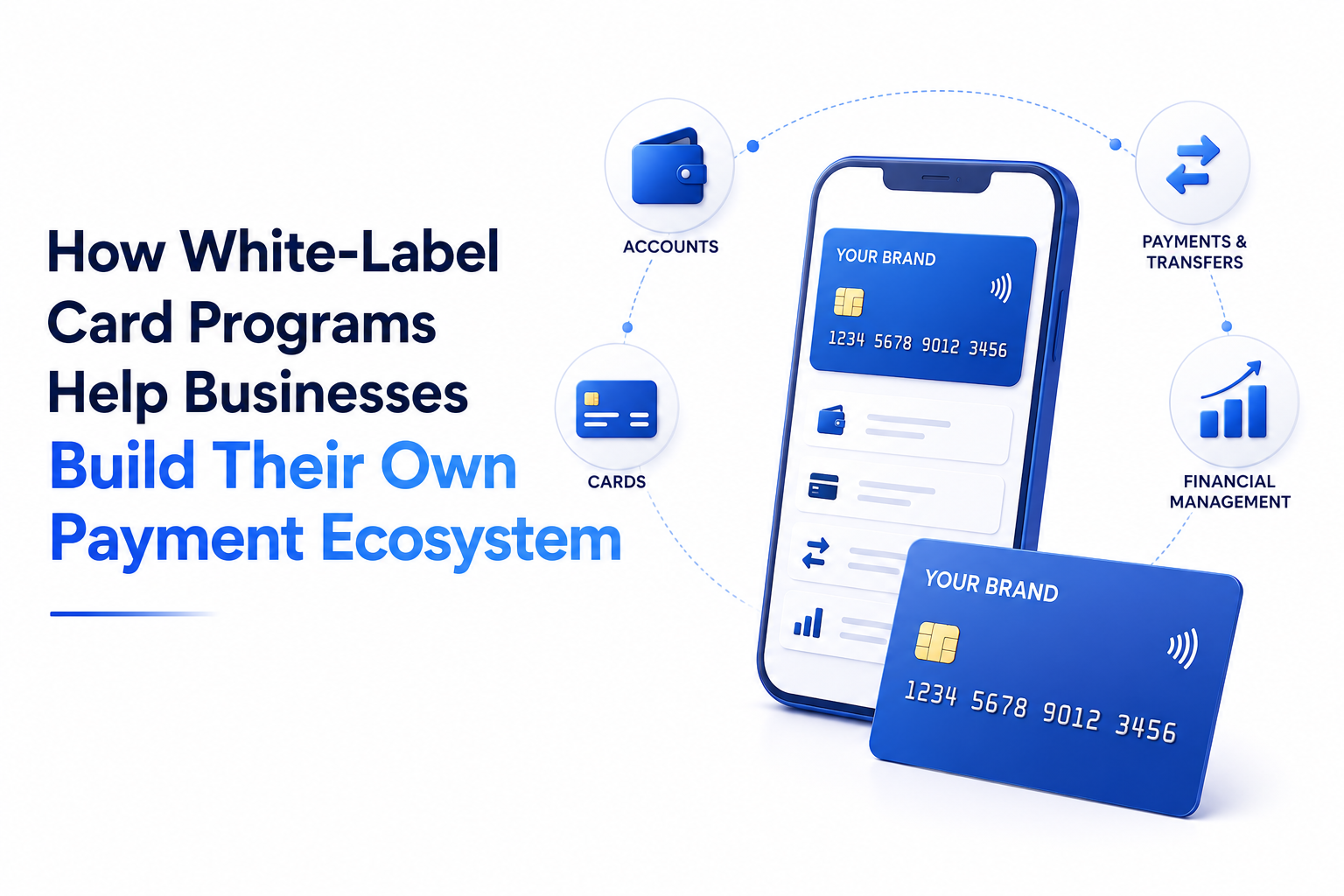
Businesses today are looking for more control over their payment operations and customer experiences. Instead of depending entirely on third-party financial products, companies can use white-label card programs to offer branded physical and virtual cards under their own identity.
A white-label card program allows businesses to provide card services while using established card issuing infrastructure in the background. This gives companies an opportunity to create a more connected payment ecosystem without building every component from scratch.
What Is a White-Label Card Program?
A white-label card program enables a business to offer payment cards under its own brand. These can include both physical and virtual cards, depending on the business's requirements.
White-label cards can support various use cases, including corporate expenses, platform payouts, brokerage clients, advertising spend, vendor payments, and digital financial products.
With the right infrastructure, businesses can also manage card issuance, cardholders, transactions, balances, spending limits, and reconciliation through integrated technology.
Create a More Consistent Brand Experience
One of the key benefits of white-label cards is the ability to create a branded payment experience.
Businesses can use custom card artwork, branding, and personalization to align their card programs with their existing brand identity, subject to Visa and Mastercard network approval.
This allows the card to become a natural extension of the company's products and services rather than a separate third-party payment solution.
For fintechs, brokers, platforms, and other digital businesses, this can help create a more consistent experience for customers and users.
Support Physical and Virtual Cards
Different businesses have different payment requirements. Physical cards can be used for in-person and contactless payments, while virtual cards are useful for online transactions, advertising expenses, vendor payments, and platform payouts.
By offering both physical and virtual cards, businesses can create a flexible payment ecosystem that supports multiple use cases.
For example, a company could provide physical cards for employee expenses while using virtual cards for online advertising or vendor payments.
Connect Cards With Payment Operations
A card program becomes more effective when it is connected to broader payment operations.
API capabilities can support card creation, activation and blocking, balance checks, transaction history, webhook notifications, spending limits, and reconciliation.
A centralized dashboard can also provide visibility into cardholders, transactions, load history, spending reports, user management, and reconciliation.
This helps businesses manage their card programs from a more organized and centralized environment.
Improve Spending Control and Visibility
As businesses grow, managing multiple cards and cardholders can become challenging. White-label card infrastructure can provide tools that help businesses maintain better control over spending.
Features such as spending limits, card freezing, unfreezing, and cancellation can help organizations manage how cards are used.
Transaction monitoring and reporting can also provide greater visibility into payment activity, while reconciliation tools can support more organized financial operations.
These capabilities can be especially useful for businesses managing employee expenses, advertising budgets, vendor payments, or large numbers of cardholders.
Support Multiple Business Use Cases
White-label card programs can be adapted to different business models and payment requirements.
Common use cases include:
- Corporate and employee spending
- Marketplace and platform payouts
- Brokerage and fintech card programs
- Advertising and digital spending
- Vendor payment cards
- White-label financial products
- Digital banking card solutions
This flexibility allows businesses to build card functionality around their specific needs.
Building a Connected Payment Ecosystem
A complete payment ecosystem involves more than simply issuing cards. It requires effective management of cardholders, balances, transactions, spending controls, monitoring, reporting, and reconciliation.
White-label card programs can help businesses bring these functions together under their own brand. By connecting card issuing with operational and payment management tools, companies can create a more streamlined experience for both customers and internal teams.
Final Thoughts
White-label card programs offer businesses a way to provide branded physical and virtual cards while connecting card functionality with broader payment operations.
For companies looking to expand their financial offerings, improve spending management, or provide additional payment options, a white-label card program can be a practical step toward building a more integrated payment ecosystem.
The right infrastructure can help businesses manage card programs more efficiently while providing the technology and operational capabilities needed to support future growth.
Frequently Asked Questions
How do white-label card programs work?
A white-label card program uses a licensed card issuing provider to manage the backend infrastructure, while businesses customize the cards with their own branding and integrate card management features through APIs or dashboards.
What are the benefits of a white-label card program?
White-label card programs help businesses strengthen their brand, improve customer experience, streamline payment operations, manage spending, and launch card services more quickly than building an in-house solution.
Can businesses offer both physical and virtual cards?
Yes. Most white-label card programs support both physical and virtual cards. Physical cards are suitable for everyday purchases, while virtual cards are ideal for online payments, subscriptions, advertising expenses, and vendor transactions.
Which businesses can benefit from white-label card programs?
White-label card programs are suitable for fintech companies, brokerages, digital platforms, marketplaces, corporate businesses, payment providers, travel companies, and organizations looking to offer branded payment solutions.
What features are included in a white-label card platform?
Features often include card issuance, cardholder management, spending controls, transaction monitoring, balance management, API integration, reporting, reconciliation, and secure payment processing.

The NetPay247 team writes about card issuing, Virtual IBANs, cross-border payments and building products on embedded finance infrastructure.

Leave a reply
Your email address will not be published. Required fields are marked *