
Short answer
Discover how card tokenisation protects sensitive payment data, reduces card fraud risks, and supports safer digital payment experiences for businesses and customers.
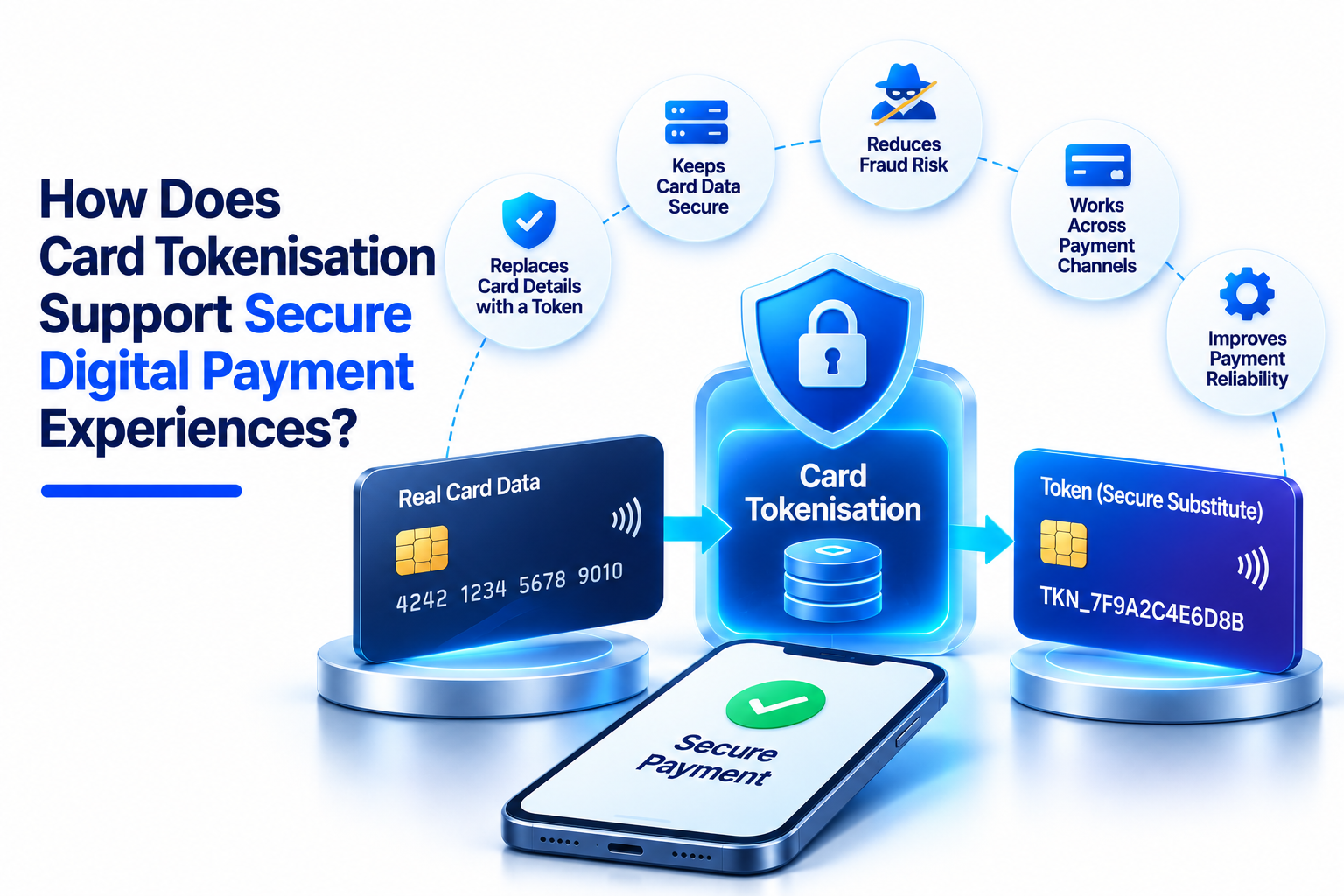
Digital payments have become an essential part of everyday business operations. Customers use cards to shop online, subscribe to services, make in-app purchases, and pay through digital wallets. While these payment methods offer convenience, they also create an important challenge: protecting sensitive card information during transactions. This is where card tokenisation plays an important role. Tokenisation helps protect payment data by replacing sensitive card details with a unique digital identifier called a token. Instead of sharing the original card number every time a payment is made, businesses can use the token within supported payment environments. For fintech companies, SaaS platforms, and digital businesses, payment tokenisation can be an important part of building safer and more reliable payment experiences.
What Is Card Tokenisation?
Card tokenisation is a security process that replaces sensitive card information, such as a primary account number (PAN), with a unique token. This token can be used for supported payment activities without exposing the original card details to every system involved in the transaction. For example, when a customer saves a card on an online shopping platform, the platform may store a token instead of retaining the actual card number. When the customer makes another purchase, the token can be used to initiate a payment through the supported payment infrastructure. The original card information is protected within the relevant tokenisation environment, where access and token usage are controlled. This approach helps reduce the exposure of sensitive payment information across digital platforms.
1. Reduces Exposure of Sensitive Card Information
One of the main benefits of tokenisation is that businesses do not need to repeatedly handle or store actual card details for supported transactions. If a platform's database is compromised, properly implemented tokenisation can reduce the risk of exposing the original card numbers because the stored tokens are not simply interchangeable with those card details. However, tokens must still be protected. Their security depends on how they are generated, stored, and used, as well as the controls applied by the tokenisation provider. For businesses handling digital payments, reducing unnecessary access to card information is an important step towards stronger payment security.
2. Supports Safer Online and In-App Payments
Customers expect online payments to be quick, simple, and secure. Re-entering card details for every purchase can create friction, especially for subscription services and platforms with repeat customers. Tokenisation can support convenient payment experiences by allowing businesses to use securely stored payment tokens for eligible future transactions. For example: An eCommerce customer saves a card for future purchases. A subscription platform uses a payment token for recurring billing. A mobile application enables supported in-app card payments. A digital platform processes eligible repeat transactions without repeatedly handling the original card number. This combination of convenience and reduced card-data exposure makes tokenised payments useful across several digital business models.
3. Helps Reduce Certain Types of Payment Fraud
Stolen card information can be misused for unauthorised transactions. Tokenisation can help reduce this risk by making intercepted token data less useful outside its intended payment environment. Some tokenisation systems also apply controls that restrict how and where a token can be used. Depending on the implementation, these controls may connect a token to a specific device, merchant, or payment context. This means a token may not work in the same way as the original card number if someone attempts to use it in an unauthorised environment. It is important to understand that tokenisation does not prevent every type of fraud. Businesses should combine it with additional security measures such as transaction monitoring, authentication, fraud detection, and appropriate access controls.
4. Improves the Security of Recurring Payments
Recurring payments are common across subscription platforms, SaaS products, streaming services, and membership-based businesses. These platforms often need to process payments regularly without asking customers to enter their card details each time. With tokenisation, supported payment systems can use stored payment tokens to process eligible recurring transactions. This helps businesses avoid repeatedly exposing the original card information during the payment process. For customers, this can create a smoother subscription experience. For businesses, it can simplify the management of repeat payments while supporting better payment-data protection.
5. Supports Digital Wallets and Modern Payment Experiences
Digital wallets have changed how customers use payment cards. Instead of presenting the original card number during every transaction, many wallet-based payment systems use payment tokens or device-specific credentials. This allows customers to make payments through compatible smartphones, smartwatches, and other supported devices. For example, a digital wallet may use a device-specific payment token instead of sharing the underlying card number with the merchant during a transaction. This approach helps protect card details while supporting convenient contactless and online payment experiences.
6. Strengthens Modern Payment Infrastructure
Tokenisation is most effective when it is part of a broader payment security strategy. Businesses need infrastructure that can support secure card-data handling, token management, transaction processing, and communication between different payment systems. For fintech platforms and businesses building digital financial products, this may involve connecting payment gateways, card issuing systems, digital wallets, and other service providers. NetPay provides payment infrastructure and card issuing capabilities that businesses can explore when developing digital payment products. Through its card issuing API and payment solutions, businesses can build connected payment experiences. When evaluating a provider such as NetPay, businesses should confirm which tokenisation capabilities are supported directly, which depend on network or third-party integrations, and how token lifecycle management is handled. A well-connected payment infrastructure can help businesses build secure and scalable digital payment experiences while keeping their security requirements in focus.
Final Thoughts
As digital payments continue to grow, protecting sensitive card information is becoming increasingly important. Card tokenisation helps businesses reduce direct exposure to card details while supporting convenient payment experiences across online platforms, mobile applications, digital wallets, and recurring payment services. However, tokenisation should not be treated as a complete security solution on its own. It works best alongside strong authentication, fraud monitoring, access controls, and reliable payment infrastructure. For businesses building modern financial products, choosing the right infrastructure is an important part of this process. With solutions such as NetPay's card issuing API and payment infrastructure, businesses can explore connected payment capabilities while planning for the security and operational requirements of their products. Ultimately, secure digital payments depend on combining the right technology with thoughtful implementation and ongoing risk management.
What is card tokenisation in digital payments?
Card tokenisation is a process that replaces sensitive card details with a unique digital token. This token can be used for supported payment transactions without repeatedly exposing the original card number.
How does payment tokenisation improve security?
It reduces the need to store or share actual card details across different systems. Properly implemented tokens also have usage restrictions that can make them less useful if intercepted.
Is card tokenisation the same as encryption?
No. Encryption transforms data into a protected form that can be decrypted using the appropriate key. Tokenisation replaces sensitive data with a separate identifier, while the original information is held within a protected tokenisation system.
Does tokenisation prevent all card fraud?
No. It can reduce certain risks associated with exposing card details, but it does not prevent every type of fraud. Businesses still need authentication, transaction monitoring, and fraud-prevention controls.
How is tokenisation used in digital wallets?
Digital wallets can use device-specific payment tokens instead of sharing the original card number with merchants. This helps protect card information during supported transactions.

The NetPay247 team writes about card issuing, Virtual IBANs, cross-border payments and building products on embedded finance infrastructure.
Leave a reply
Your email address will not be published. Required fields are marked *