
Short answer
Learn how payment routing decisions influence transaction success rates and how smart routing helps businesses manage multiple payment gateways efficiently.
When customers make online payments, they expect the transaction to be completed quickly and smoothly. However, not every payment attempt is successful. Transactions may be declined because of gateway limitations, regional payment restrictions, currency compatibility, processing issues, or other factors. For businesses handling a high volume of digital payments, these unsuccessful transactions can affect customer experience and revenue. One way to manage this challenge is through payment routing. By selecting suitable payment providers for different transactions, businesses can improve their payment processing approach and make better use of their available payment infrastructure. This is where smart payment routing becomes valuable.
What Is Payment Routing?
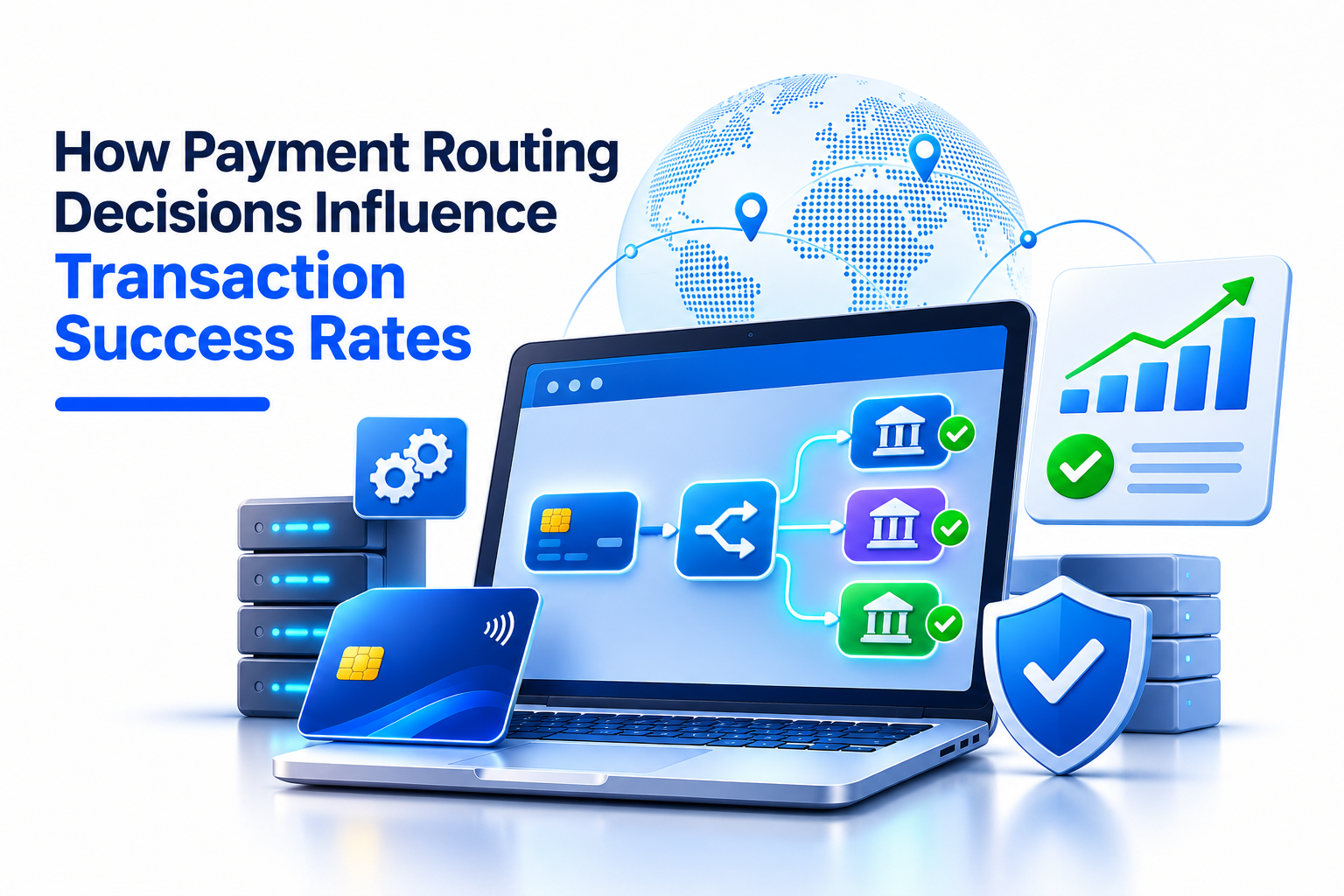
Payment routing is the process of directing a payment transaction to a suitable payment gateway or payment service provider (PSP) for processing. Businesses that work with multiple payment providers can use routing rules to decide where a transaction should be sent. These rules may consider factors such as the customer's location, payment currency, card type, transaction amount, provider availability, and historical approval performance. Instead of sending every transaction through a single gateway, businesses can distribute payments across different providers based on their requirements. A well-planned payment routing strategy helps businesses manage payment processing more efficiently and respond to changing gateway performance.
How Do Payment Routing Decisions Affect Transaction Success Rates?
The payment provider selected for a transaction can influence whether the payment is successfully processed. Different providers may perform differently depending on the region, currency, payment method, and transaction characteristics. Here are some important ways routing decisions can influence payment outcomes. 1. Selecting Providers Based on Regional Performance Payment providers may have different strengths across countries and regions. A gateway that performs well in one market may not deliver the same results in another. Businesses can use geography-based payment routing to direct transactions towards providers with suitable regional coverage and stronger performance in the relevant market. This can help create a smoother payment experience for customers making payments from different locations. 2. Matching Transactions with Supported Currencies Currency compatibility is another important factor in payment processing. Some gateways may support specific currencies or offer better processing capabilities for particular markets. With currency-based payment routing, businesses can direct transactions to providers that support the required currency and payment requirements. This can help reduce avoidable processing issues and make international payment operations easier to manage. 3. Considering Gateway Approval Performance Not all payment providers achieve the same approval rates. Their performance can change depending on transaction type, region, payment method, and other conditions. By reviewing historical and current gateway performance, businesses can make more informed routing decisions. Success-rate-based routing helps direct transactions towards providers that demonstrate stronger approval performance for relevant payment conditions. Regular performance monitoring also allows businesses to adjust routing rules when results change. 4. Using Backup Providers When Required Relying on a single payment gateway can create operational challenges if that provider experiences downtime or temporary processing issues. A multi-gateway setup allows businesses to connect alternative providers. With automatic payment failover, eligible transactions can be redirected to a backup gateway when the primary provider is unavailable or returns a retryable failure. However, businesses should use appropriate retry rules. Not every decline should trigger another payment attempt, and transactions with uncertain statuses should be checked before retrying to avoid duplicate charges. 5. Balancing Approval Rates and Processing Costs A successful payment strategy should consider more than transaction approvals. Processing costs also influence the overall efficiency of a payment operation. Businesses can use routing rules to consider provider fees alongside approval performance, currency support, and regional coverage. This helps them make more balanced decisions instead of selecting a payment provider based on a single factor.
Why Should Businesses Use Smart Payment Routing?
As businesses expand into new markets and handle more transactions, managing multiple payment providers can become complicated. Smart payment routing helps simplify this process by applying predefined rules and performance-based decisions to incoming transactions. Some key benefits include: Improved Payment Processing: Transactions can be directed towards providers that better match their processing requirements. Better Gateway Utilisation: Businesses can distribute payment volumes across connected providers instead of depending entirely on one gateway. Greater Payment Flexibility: Different routing rules can support various countries, currencies, payment methods, and transaction amounts. Reduced Dependency on One Provider: Backup gateways can provide alternative processing options when a primary provider experiences an issue. Better Performance Visibility: Centralised routing analytics can help businesses compare provider approval rates, response times, and processing costs.
How NetPay Supports Smarter Payment Routing
NetPay provides payment orchestration infrastructure that helps businesses connect and manage multiple payment service providers through a unified integration. Its smart PSP routing capabilities allow businesses to configure routing decisions using factors such as geography, currency, card BIN, transaction amount, and gateway success rates. NetPay also supports automatic failover, allowing eligible transactions to be redirected through backup providers when a connected gateway experiences an outage or a retryable failure. Through its payment orchestration platform, NetPay offers: 30+ payment gateway integrations through one unified API. Smart payment routing based on configured transaction rules. Automatic failover for eligible failed payment attempts. Unified analytics to compare gateway performance. Routing logs to understand which provider processed a transaction and why. Centralised payment management through a single dashboard. These capabilities help businesses manage different payment providers through a more connected infrastructure instead of handling every gateway separately. For fintech companies, e-commerce businesses, marketplaces, and payment platforms, NetPay payment orchestration provides tools to organise payment routing and support more flexible transaction processing.
Conclusion
Payment routing decisions play an important role in how businesses manage digital transactions. Selecting suitable payment providers based on location, currency, gateway performance, and processing costs can help improve payment operations and create a smoother customer experience. With smart payment routing, businesses can make better use of multiple gateways, reduce dependency on a single provider, and respond more effectively to processing issues. NetPay helps businesses connect multiple payment providers through its payment orchestration platform, offering smart routing, automatic failover, and unified analytics to support modern payment operations.
What is payment routing in payment processing?
Payment routing is the process of directing a transaction to a suitable payment gateway or payment service provider based on predefined rules and transaction requirements.
How does payment routing influence transaction success rates?
Payment routing can improve the chances of successful processing by selecting providers based on factors such as regional performance, currency support, and historical approval rates. Actual results depend on the transaction, issuer, provider, and configured routing rules.
What is smart payment routing?
Smart payment routing uses predefined conditions and performance-related information to select an appropriate payment provider for each transaction.
What is automatic payment failover?
Automatic payment failover redirects eligible transactions to an alternative payment provider when the primary gateway is unavailable or a retryable processing failure occurs.

The NetPay247 team writes about card issuing, Virtual IBANs, cross-border payments and building products on embedded finance infrastructure.

Leave a reply
Your email address will not be published. Required fields are marked *