
Short answer
Discover how EMV chip technology protects physical card transactions, reduces counterfeit card risks, and supports secure payment experiences for businesses.
Physical payment cards remain an important part of modern financial transactions. As businesses introduce branded payment cards and expand their payment services, protecting card transactions becomes an essential consideration. One technology that plays an important role in payment card security is EMV chip technology. Used in modern debit and credit cards, EMV chips help make in-person card transactions more secure by supporting advanced transaction authentication. For fintech companies, financial institutions, and businesses offering card programs, understanding how EMV chip cards work can help them make better decisions when choosing physical card issuing solutions.
What Is EMV Chip Technology?
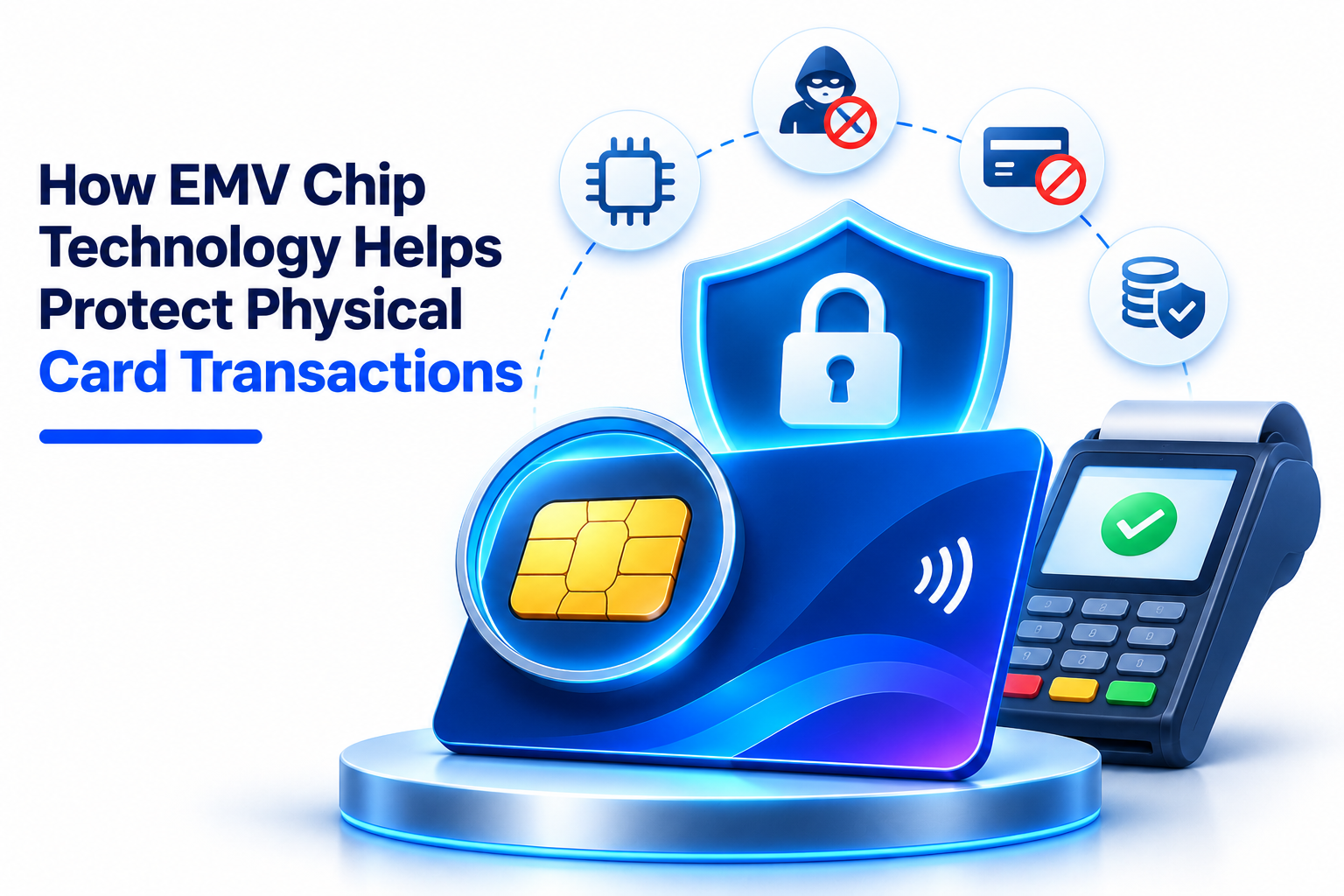
EMV (Europay, Mastercard, and Visa) is a global payment card technology standard that supports secure transactions using integrated microchips. Unlike traditional magnetic stripe cards, which store static payment information, EMV chip cards use a microprocessor chip to generate transaction-specific security data. This makes it more difficult for fraudsters to create counterfeit cards using copied transaction information. EMV technology is widely used in physical payment cards and supports secure payment experiences across compatible payment terminals.
How Does EMV Chip Technology Protect Card Transactions?
EMV chip technology adds security to card payments through several important mechanisms. 1. Unique Transaction Data During an EMV transaction, the chip generates a unique cryptographic value that helps authenticate the transaction. This makes it harder to reuse captured transaction data for fraudulent payments. 2. Reduced Risk of Card Counterfeiting Magnetic stripe information can be copied and reused to create counterfeit cards. EMV chips use dynamic transaction data, making traditional card cloning more difficult. 3. Secure Transaction Authentication EMV technology supports different cardholder verification methods, depending on the card, terminal, and payment environment. These methods help verify that the person using the card is authorized to make the payment. 4. Support for Modern Payment Terminals EMV-enabled cards work with compatible payment terminals, allowing businesses and customers to complete chip-based transactions through supported reliable payment infrastructure.
EMV Chip vs Magnetic Stripe Cards
Both technologies are used in physical payment cards, but they differ in how transaction information is processed. Magnetic Stripe Cards: These cards store payment information in a magnetic stripe. Since the information is generally static, copied data can be used to create counterfeit cards. EMV Chip Cards: These cards contain an embedded microprocessor that generates dynamic transaction data during supported payments. This provides stronger protection against certain types of card-present fraud. As payment security requirements continue to evolve, EMV chip technology has become an important feature of modern physical payment cards.
Why Is EMV Technology Important for Businesses?
For businesses launching their own payment card programs, security should be considered from the beginning. Choosing physical card issuing solutions with EMV chip technology can help businesses support secure in-person payment experiences and align their card programs with modern payment standards. It is particularly relevant for fintech companies, digital financial platforms, and businesses offering branded Visa and Mastercard cards. Businesses should also consider other important card program features, including 3D Secure, card controls, transaction monitoring, and fraud management, as these address different aspects of payment security.
How NetPay Supports Physical Card Issuing
Having the right card issuing infrastructure is important for businesses planning to introduce physical payment cards. NetPay provides Visa and Mastercard card issuing infrastructure with physical and virtual card programs. Its physical card offering includes EMV chip technology, NFC contactless functionality, and custom card branding. Through NetPay's card issuing solutions businesses can explore branded physical card programs supported by API access, dashboard functionality, card controls, and transaction monitoring. By combining modern card technology with connected management tools, NetPay helps businesses build card programs aligned with their operational requirements.
Final Thoughts
EMV chip technology has become an important part of modern physical payment cards. By generating dynamic transaction data and supporting secure payment authentication, it helps reduce the risk of certain types of card fraud. For businesses planning to launch branded payment cards, selecting the right physical card issuing infrastructure is an important step. With NetPay's physical card issuing solutions, businesses can explore Visa and Mastercard card programs featuring EMV chips, NFC contactless functionality, and modern card management capabilities.
What is EMV chip technology in payment cards?
EMV chip technology uses an embedded microprocessor to process payment information and generate unique transaction data, helping improve the security of card-present transactions.
How do EMV chips help prevent card fraud?
EMV chips generate dynamic transaction data, making it more difficult for fraudsters to create counterfeit cards using copied payment information.
What is the difference between EMV chip cards and magnetic stripe cards?
Magnetic stripe cards generally store static payment information, whereas EMV chip cards generate transaction-specific security data during supported payments.
Are EMV chip cards and contactless cards the same?
Not exactly. EMV refers to the payment card technology standard, while contactless functionality allows customers to make payments by tapping their cards on compatible terminals. A physical card can support both features.
Does NetPay support EMV-enabled physical cards?
Yes. NetPay's physical Visa and Mastercard card issuing infrastructure supports EMV chip technology, NFC contactless functionality, and custom card branding.

The NetPay247 team writes about card issuing, Virtual IBANs, cross-border payments and building products on embedded finance infrastructure.


Leave a reply
Your email address will not be published. Required fields are marked *