
Short answer
Learn how businesses can simplify payment collections across multiple clients with better tracking, automated workflows, reconciliation, and connected payment infrastructure.
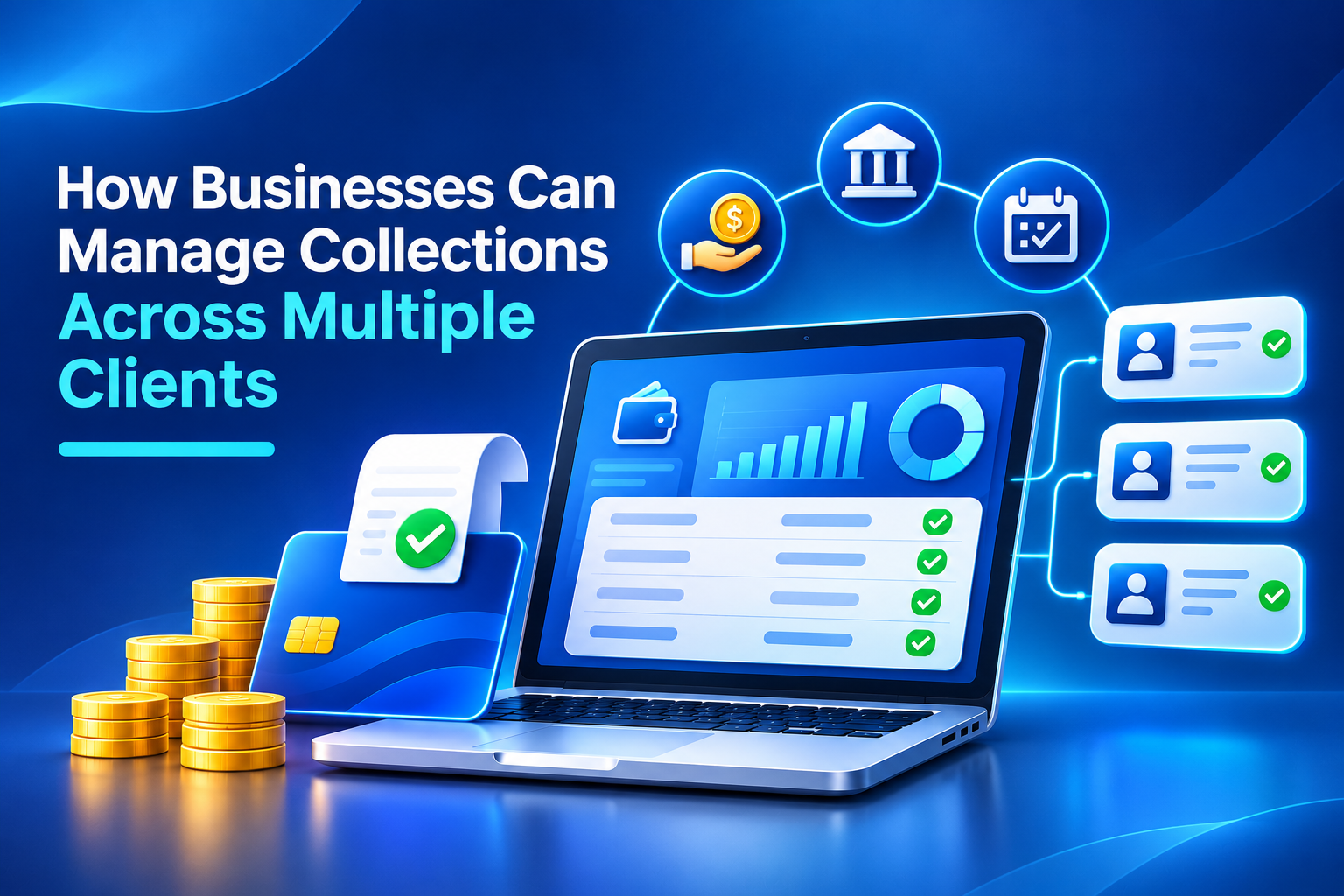
For businesses that work with multiple clients, collecting payments is an important part of daily financial operations. Whether a company provides professional services, manages subscriptions, operates a digital platform, or handles B2B transactions, keeping track of incoming payments can become challenging as its client base grows. Different clients may follow different payment schedules, use different payment methods, or require separate invoices and payment records. Without an organised process, businesses can spend significant time following up on outstanding payments, checking transaction statuses, and matching incoming funds with the correct client accounts. This is why having a structured business payment collections process matters. With the right systems and payment infrastructure, businesses can improve payment visibility, reduce manual work, and manage collections more efficiently.
1. Organise Client Payments in One System
When a business manages payments from multiple clients, keeping information in separate spreadsheets, emails, or accounting tools can make tracking difficult. A centralised payment management system helps businesses maintain a clearer view of their collection activity. Each payment can be associated with relevant information, such as the client name, invoice reference, amount due, payment date, and transaction status. This makes it easier for finance teams to understand: Which clients have completed their payments. Which invoices are still outstanding. Which payments are pending or unsuccessful. Which clients require a payment reminder. How much revenue has been collected during a specific period. A structured system gives businesses better control over their client payment management process and makes financial information easier to review.
2. Make Payment Collection Convenient for Clients
A complicated payment process can create delays. If clients have to follow multiple steps or contact the business to understand how to pay, the collection experience may become frustrating. Businesses should aim to make payment instructions clear and accessible. Depending on their operating model, they can offer suitable payment methods such as bank transfers, card payments, payment links, or other supported options. For example, a service provider working with international clients may need payment methods that support cross-border transactions. Offering appropriate options can make it easier for clients in different markets to complete their payments. A convenient payment experience benefits both sides: clients can complete payments with less friction, while businesses can manage incoming collections more effectively.
3. Use Automated Payment Reminders
Following up with every client manually can take considerable time, especially when a business manages hundreds of invoices or recurring payments. Automated reminders can help improve this process. Businesses can configure notifications before or after payment due dates, depending on their billing policies. A practical reminder workflow might include: A notification before the payment due date. A reminder when an invoice becomes overdue. A follow-up for payments that remain outstanding. A confirmation after the payment is received. Automation helps finance teams maintain consistent communication without having to manage every follow-up manually. However, reminders should be relevant, timely, and aligned with the business's customer communication policies.
4. Track Payment Status in Real Time
Knowing whether a payment has been initiated, processed, completed, or declined is important when managing multiple clients. Without clear transaction visibility, finance teams may need to contact payment providers or manually check different systems to understand what happened. A connected payment setup can help businesses monitor transaction activity and access relevant payment status updates. Depending on the payment provider and integration, businesses may also use webhooks to receive event notifications when payment statuses change. For example, when a payment is confirmed, the business system can update the corresponding invoice or client record. This reduces the need for repeated manual checks and helps keep payment information current. Better visibility also helps teams identify delayed or unsuccessful transactions and take appropriate action.
5. Simplify Payment Reconciliation
Collecting payments is only one part of the process. Businesses also need to confirm that received funds match the correct invoices, clients, and accounting records. This process is known as payment reconciliation. When multiple clients make payments around the same time, identifying each transaction can become difficult, particularly if payment references are missing or inconsistent. Businesses can make reconciliation easier by using: Unique invoice or payment references. Consistent client identification details. Centralised transaction records. Automated matching where supported. Regular reviews of unmatched or incomplete payments. For businesses receiving payments through multiple channels, connecting payment data with accounting or financial management systems can help reduce repetitive work. A reliable reconciliation process gives finance teams a clearer picture of collected revenue and outstanding balances.
6. Manage International Collections More Efficiently
Businesses working with clients across different countries may face additional collection challenges. Currency differences, international transfer processes, payment timelines, and provider availability can all affect how funds are received. A suitable global payments setup can help businesses manage these requirements through supported payment methods and currency options. For example, a company serving clients in different markets may need to receive payments in multiple currencies and track each collection separately. Solutions involving multi-currency payments, international transfers, or virtual account details may support these workflows, depending on the provider, supported regions, and account arrangements. For businesses expanding internationally, it is important to evaluate transaction costs, settlement timelines, currency conversion arrangements, and local payment requirements before selecting a solution.
7. Choose Payment Infrastructure That Supports Business Growth
As a business grows, its collection requirements often become more complex. A process that works for ten clients may not be practical when managing hundreds or thousands. This is where connected payment infrastructure becomes valuable. Businesses may need solutions that support multiple payment methods, transaction tracking, payment integrations, and international payment operations. NetPay provides payment infrastructure designed to support businesses managing different payment workflows. Its global payments, global payouts, and payment orchestration capabilities can be explored by businesses looking to connect payment operations across providers and markets. For companies managing collections through different payment channels, payment orchestration can help connect multiple payment providers and apply routing logic based on their setup. This can support more organised payment operations as transaction volumes and business requirements evolve.
Final Thoughts
Managing collections across multiple clients can become challenging without a structured payment process. From tracking invoices and sending reminders to monitoring transaction statuses and reconciling incoming funds, every stage needs clear organisation. By combining centralised payment records, convenient payment methods, automated workflows, and reliable payment infrastructure, businesses can make business payment collections easier to manage. As collection requirements grow, solutions such as NetPay's global payment and payment orchestration infrastructure can help businesses explore more connected ways to manage their payment operations. Ultimately, effective collections are not just about receiving money. They are about creating a clear, consistent, and efficient payment experience for both businesses and their clients.

The NetPay247 team writes about card issuing, Virtual IBANs, cross-border payments and building products on embedded finance infrastructure.

Leave a reply
Your email address will not be published. Required fields are marked *