
Short answer
Discover how a single card issuing API helps fintech businesses manage multiple card programs, simplify integrations, automate card controls, and improve operations
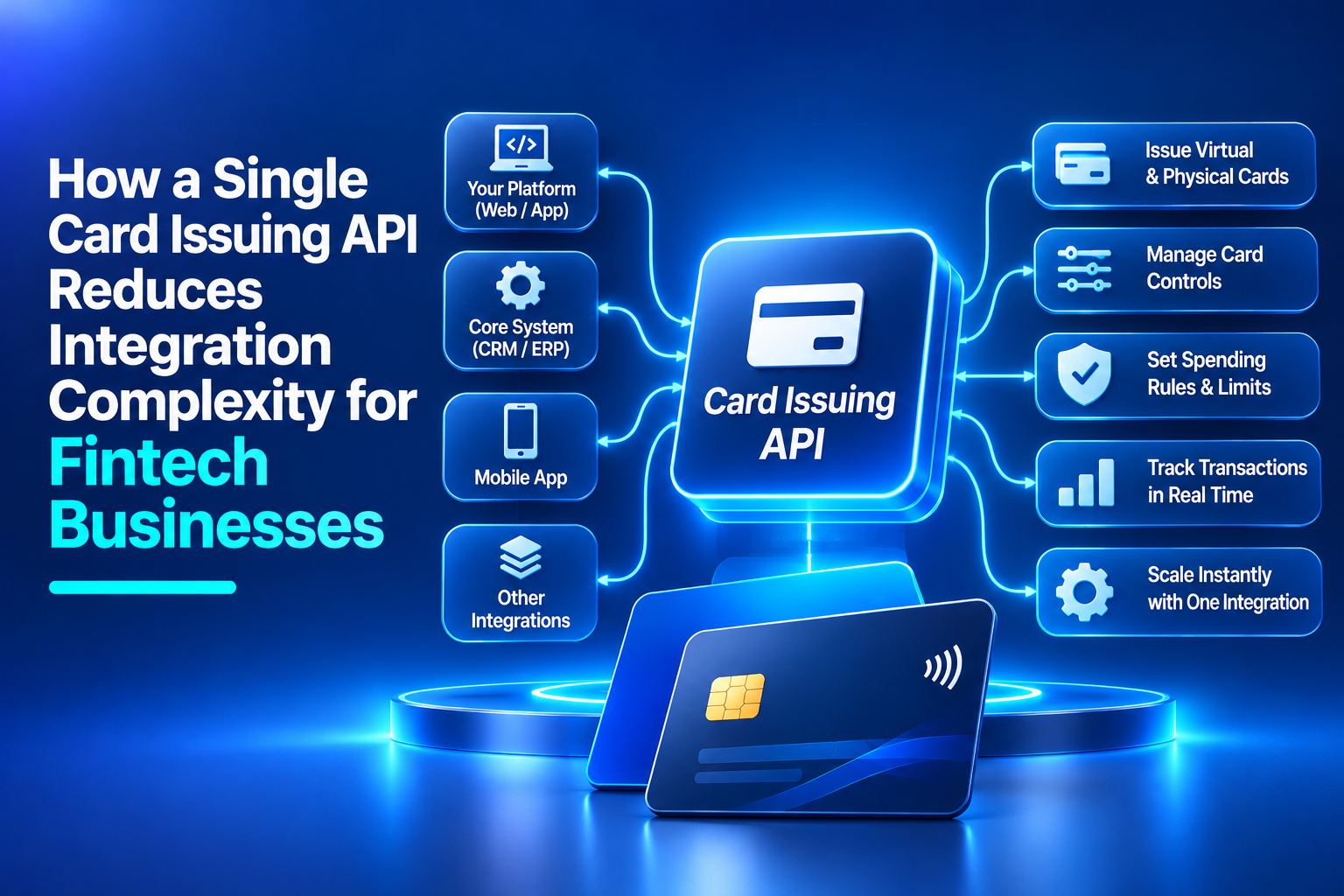
As fintech businesses expand their services, managing different card products can become technically challenging. A company may want to offer virtual cards, physical cards, corporate expense cards, or prepaid cards to meet different customer requirements. However, connecting separate systems for each card product can increase development time, operational effort, and maintenance costs. This is where a single card issuing API can make a difference. It allows businesses to connect with one card issuing infrastructure and manage multiple card-related operations through a unified integration. For fintech companies looking to expand their card services, this approach can simplify development and create a more connected payment experience.
What Is a Single Card Issuing API?
A card issuing API is a technology interface that allows businesses to connect their applications or platforms with card issuing infrastructure. Through API requests, businesses can perform activities such as creating cardholders, issuing cards, setting spending limits, managing card status, and accessing transaction information. With a single card issuing API, these operations can be handled through one connected integration instead of building separate connections for different card products. For example, a fintech company can use the same underlying API infrastructure to support virtual cards, physical cards, and corporate expense cards, depending on the platform's capabilities and program configuration.
How Does a Single API Reduce Integration Complexity?
A unified card issuing API can simplify several technical and operational processes
1. One Integration for Multiple Card Products
Instead of connecting different systems for each card program, businesses can use one API integration to access supported card issuing capabilities. This can reduce repeated development work and make it easier to introduce additional card products.
2. Simplified Cardholder Management
Managing cardholders is an important part of any card program. A connected API can help businesses create, manage, and update cardholder information through structured API requests.
3. Centralised Card Controls
Businesses need control over how cards are used. Through a unified card issuing platform, they can manage spending limits, transaction restrictions, card activation, freezing, and other supported card controls.
4. Better Transaction Visibility
Managing transactions across different card systems can make reporting difficult. A shared infrastructure with API-based webhooks and reporting tools can help businesses receive transaction updates and connect them with their internal systems.
5. Easier Testing and Development
A card issuing API sandbox allows development teams to test card creation, management, and transaction workflows before moving to a live environment. This helps identify integration issues earlier in the development process.
What Card Programs Can Businesses Manage Through One Platform?
A flexible card issuing platform can support different card products based on business requirements. - Virtual Cards: Digital payment cards for online purchases, subscriptions, and controlled spending. - Physical Cards: Branded payment cards designed for in-store and everyday transactions. - Corporate Expense Cards: Cards that help businesses manage employee spending and company expenses. - Prepaid Cards: Cards funded with a predefined balance for payouts, incentives, benefits, and other use cases. - Crypto-Funded Card Programs: Supported card programs designed to connect eligible digital asset funding models with card-based spending. Each program may have different funding arrangements, spending rules, and onboarding requirements. A shared infrastructure helps businesses manage these products without necessarily building a completely separate integration for every use case.
How NetPay Simplifies Card Issuing Integration
NetPay provides a card issuing platform designed to help fintech businesses build and manage card programs through a connected API infrastructure. With the Card Issuing API businesses can create cardholders, issue virtual and physical cards, manage card controls, and access transaction-related information through API endpoints. The platform also supports important card management capabilities, including card activation, freezing, replacement, and termination. Its webhook integration helps businesses receive transaction events and connect payment activity with their internal systems. NetPay also provides a sandbox environment where development teams can test issuing workflows before launching their card programs. By bringing card issuing, processing, program management, controls, and reporting together, NetPay's card issuing infrastructure helps businesses reduce the complexity of managing multiple card products through separate technology connections.
Conclusion
As fintech businesses grow, their card issuing requirements can become more diverse. Managing separate integrations for every card product may increase development effort and make ongoing operations more complicated. A single card issuing API provides a more connected approach by bringing essential card management capabilities together through one integration. From virtual and physical cards to spending controls and transaction monitoring, businesses can build different card experiences on a shared technology foundation. With its single API card issuing infrastructure, NetPay helps fintech businesses develop, manage, and expand their card programs through a more unified approach.
What is a single card issuing API?
A single card issuing API allows businesses to connect with card issuing infrastructure through one integration and access supported card creation, management, controls, and transaction features.
How does a card issuing API help fintech businesses?
It helps fintech businesses simplify development, automate card-related operations, manage cardholders, and connect transaction information with their internal systems.
Can one card issuing API support virtual and physical cards?
Yes. A platform that supports both card formats can allow businesses to issue and manage virtual and physical cards through the same API infrastructure.
What card management features can an API provide?
Depending on the platform, features may include card creation, activation, freezing, replacement, termination, spending limits, transaction monitoring, and cardholder management.
Why is a sandbox important for card issuing API integration?
A sandbox allows developers to test API requests, card issuing workflows, and transaction events before using production credentials.

The NetPay247 team writes about card issuing, Virtual IBANs, cross-border payments and building products on embedded finance infrastructure.
Leave a reply
Your email address will not be published. Required fields are marked *