
Short answer
Discover how dedicated virtual and physical cards help marketplace platforms organize vendor payments, manage business spending, and improve transaction visibility.
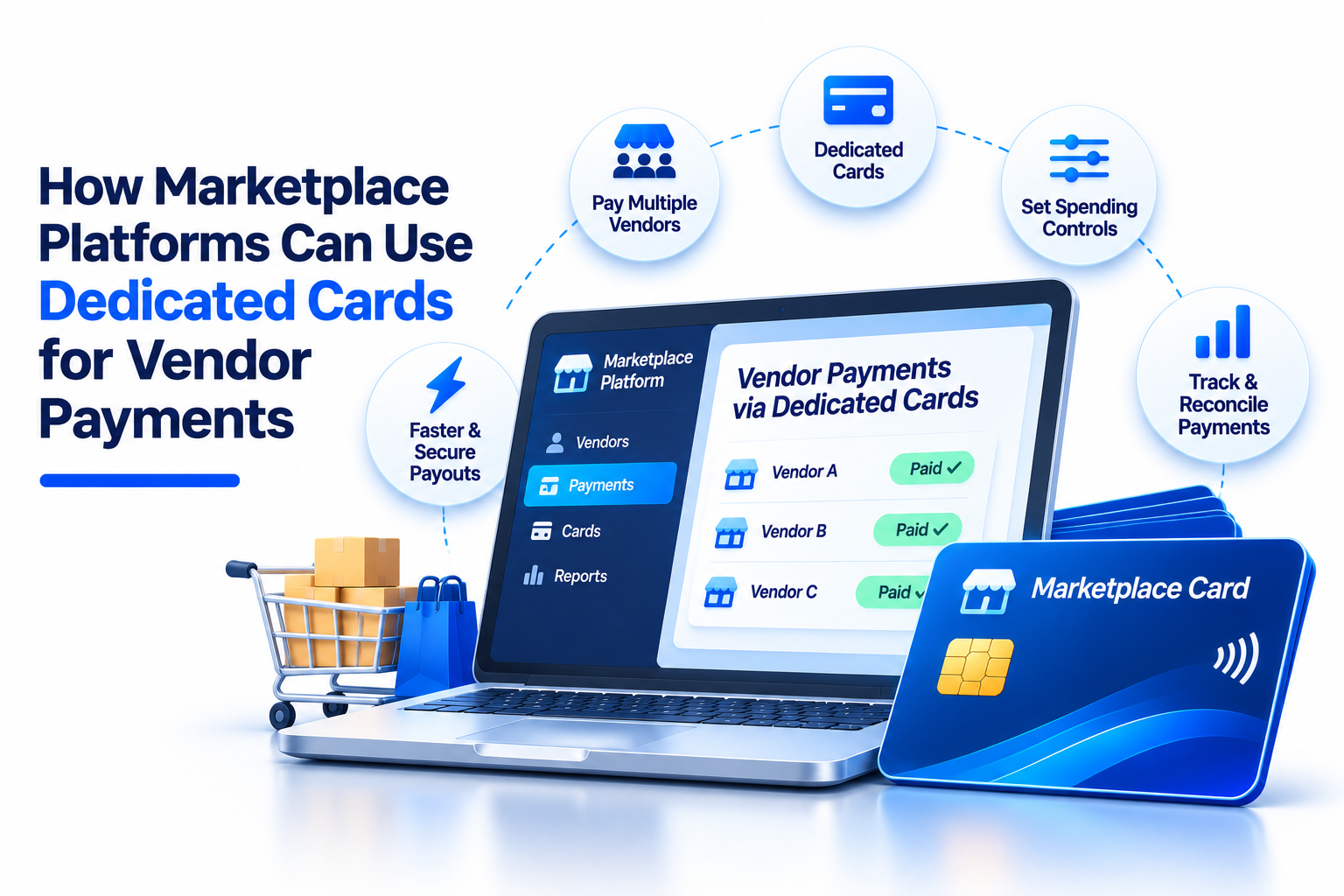
Marketplace platforms connect multiple sellers, suppliers, and service providers through a single digital ecosystem. As these businesses grow, managing vendor payments, operational expenses, and payment activities can become increasingly complex. Traditional payment methods may not always provide the flexibility and control required by growing marketplaces. This is where dedicated payment cards for marketplace platforms can offer a more organized approach to managing business spending and vendor-related operations. With modern card issuing infrastructure, marketplaces can create virtual or physical card programs designed around their operational requirements.
What Are Dedicated Cards for Marketplace Platforms?
Dedicated cards are payment cards issued for specific business purposes, users, teams, or operational activities. Marketplace platforms can use these cards to organize payments and manage spending across different business functions. For example, a marketplace may issue dedicated cards for vendor-related expenses, supplier payments, advertising campaigns, or operational purchases. Depending on the card program, businesses can use virtual cards for online transactions and physical cards for in-person payments. These programs can also support branded card experiences through white-label card issuing solutions.
How Can Dedicated Cards Support Vendor Payments?
Marketplace businesses often manage payments across multiple vendors and service providers. Dedicated cards can help organize these activities through a centralized card management system. Here are some practical ways they can be used: 1. Organized Vendor Spending Marketplaces can assign dedicated cards to specific business activities or authorized users. This helps businesses separate different spending categories and maintain better visibility over payment activities. 2. Simplified Online Payments Virtual cards can be useful for online vendor payments, digital services, software subscriptions, and other business-related expenses. They provide a digital payment option without requiring a physical card. 3. Better Spending Control With card management tools, businesses can monitor transactions, manage card status, and configure spending limits where supported. These controls help marketplace operators maintain better oversight of card usage. 4. Centralized Transaction Monitoring A centralized dashboard allows businesses to review card activity, check transaction history, and monitor spending across their card programs. This can make financial operations easier to manage.
Why Should Marketplaces Consider Virtual and Physical Cards?
Both card types serve different operational purposes. Virtual cards are suitable for digital payments, online services, and remote business operations. They can be issued quickly through digital card infrastructure. Physical cards are useful for in-person business expenses, supplier-related purchases, and other transactions where a physical payment method is required. By using both options, marketplace platforms can build a flexible business card program that supports different payment requirements.
The Role of Card Issuing Infrastructure
Managing dedicated cards at scale requires more than simply issuing payment cards. Businesses need reliable technology to manage card creation, activation, transactions, balances, and reporting. This is where card issuing APIs, dashboards, and integrated management tools become important. NetPay provides Visa and Mastercard card issuing infrastructure with physical and virtual card programs, API access, dashboard functionality, card controls, transaction monitoring, and reconciliation support. Through NetPay's card issuing solutions, marketplace businesses can explore branded card programs and connected payment infrastructure designed to support their operational requirements.
Final Thoughts
As marketplace platforms expand, managing vendor-related expenses and business payments becomes an important part of operational growth. Dedicated cards can help organize spending, improve transaction visibility, and provide more flexibility across different payment activities. With the right card issuing infrastructure, marketplaces can build structured payment workflows that support their growing business operations. NetPay helps businesses explore modern card issuing solutions with virtual and physical cards, API connectivity, and centralized card management capabilities.
What are dedicated cards for marketplace platforms?
Dedicated cards are payment cards assigned to specific users, teams, or business activities to help marketplaces organize and manage operational spending.
How can virtual cards help marketplace businesses?
Virtual cards support online payments, digital services, subscriptions, and other business expenses while providing a digital payment option.
Can marketplace platforms use both physical and virtual cards?
Yes. Businesses can use virtual cards for online transactions and physical cards for in-person payments, depending on their operational needs and card program features.
How does card issuing infrastructure help manage vendor payments?
Card issuing infrastructure provides tools for card creation, activation, transaction monitoring, spending controls, and reporting through APIs and centralized dashboards.
Does NetPay provide card issuing solutions for marketplace businesses?
Yes. NetPay offers Visa and Mastercard card issuing infrastructure with physical and virtual cards, API access, dashboard functionality, card controls, and reconciliation support.

The NetPay247 team writes about card issuing, Virtual IBANs, cross-border payments and building products on embedded finance infrastructure.
Leave a reply
Your email address will not be published. Required fields are marked *