
Short answer
Discover how digital wallets simplify business payments, improve transaction management, support global payments, and connect with modern fintech infrastructure.
Digital payments have changed how businesses collect, manage, and transfer money. Customers and businesses increasingly expect payments to be fast, convenient, and accessible through digital channels. One technology supporting this shift is the digital wallet. A digital wallet allows users to store payment credentials or access funds electronically and make transactions without relying on physical cash or traditional payment methods for every purchase. For businesses, digital wallets can become part of a wider payment ecosystem that connects customers, merchants, financial accounts, and payment providers. As digital financial services continue to grow, businesses need more than a simple payment option. They need reliable payment infrastructure, connected systems, and flexible financial tools. This is where digital wallets and platforms like NetPay become relevant.
What Is a Digital Wallet?
A digital wallet is an electronic solution that allows individuals or businesses to store payment information and perform financial transactions through a digital interface. Depending on the provider, digital wallets may support card payments, bank transfers, stored balances, and other payment methods. Some wallets also connect with virtual cards, multi-currency accounts, and international payment services. For businesses, digital wallets can be integrated into websites, mobile applications, marketplaces, and fintech platforms. This allows customers to complete payments digitally while businesses manage transactions through connected payment systems.
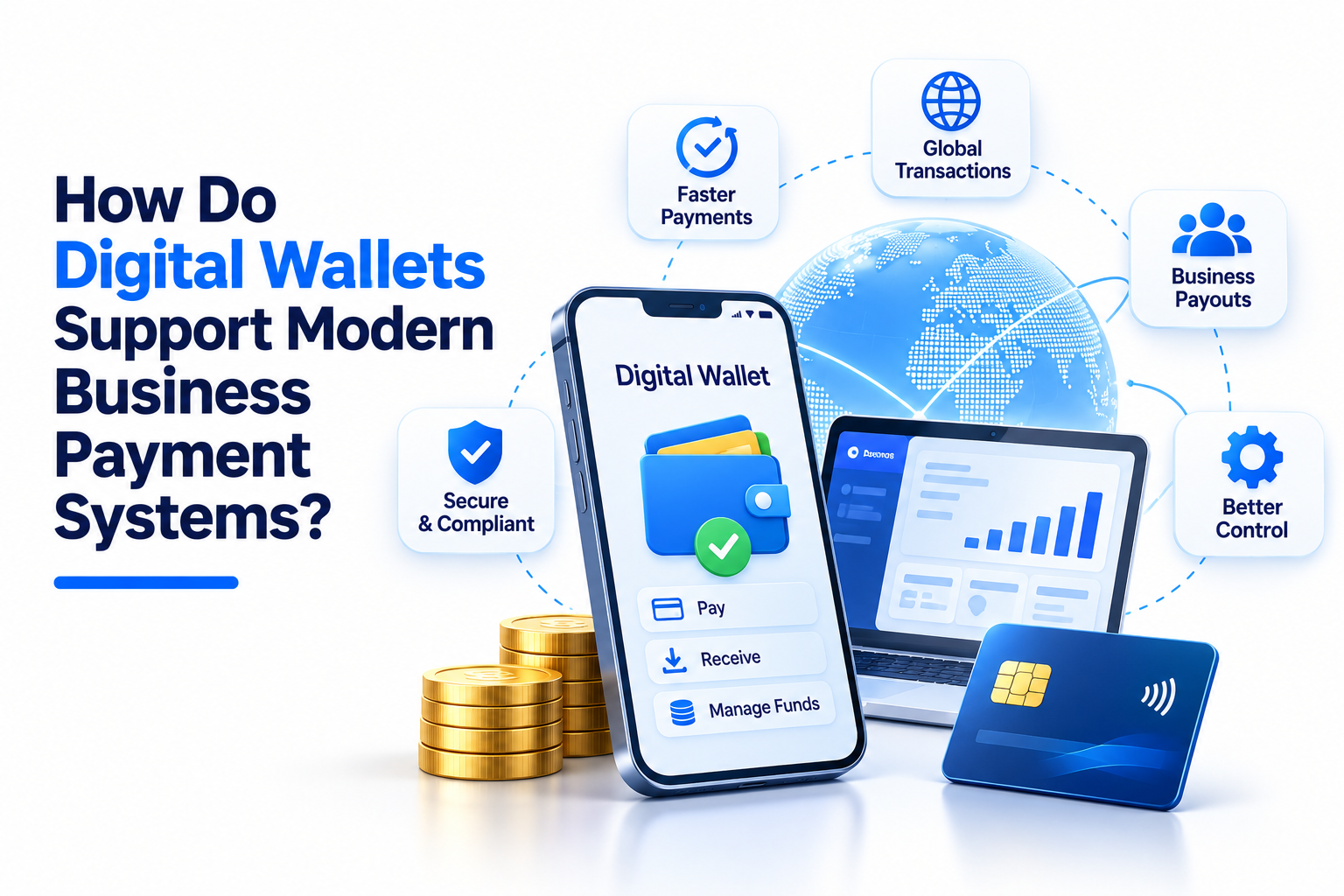
How Do Digital Wallets Support Modern Business Payment Systems?
1. Simplifying Digital Transactions
Digital wallets make payment experiences more convenient by reducing the need to enter payment details repeatedly. Customers can use supported wallet services to complete transactions through websites, applications, or compatible payment terminals. For businesses, this can help create a smoother checkout experience and support different customer payment preferences.
2. Supporting Faster Payment Operations
Modern business payment systems often need to handle multiple transactions across different channels. Digital wallets can connect with payment processing systems and APIs to support automated transaction workflows. For example, a digital platform may allow users to add funds, make payments, view transaction activity, and receive payment updates through one application. The underlying payment APIs help connect these functions with the business's internal systems.
3. Making International Payments More Accessible
Businesses operating across countries often deal with different currencies, payment methods, and financial networks. Digital wallets that support international payment services can make it easier to manage funds across markets. When connected with global payment infrastructure, businesses can support cross-border collections, transfers, and currency conversion through integrated financial services. This is especially useful for marketplaces, international service providers, and fintech platforms that manage payments between customers, partners, and suppliers.
4. Improving Payment Visibility and Tracking
Keeping track of transactions is important for businesses managing regular payment activity. Digital payment systems can provide transaction histories, payment statuses, and account information through dashboards or connected applications. With real-time payment updates, APIs, and webhooks, businesses can connect transaction information with their internal systems. This can support monitoring, reporting, and payment reconciliation. Better visibility also helps finance and operations teams identify payment issues and maintain more organized records.
5. Connecting Digital Wallets With Card Services
Digital wallets can work alongside virtual and physical card programs. Depending on the wallet and card provider, eligible cards may be added to supported wallet services for convenient digital payments. For fintech businesses, this creates opportunities to combine wallet experiences with virtual card issuing, white-label card programs, and card management features. A connected card issuing platform can help businesses manage card creation, activation, spending controls, and transaction activity through their own applications.
How NetPay Supports Modern Business Payment Systems
NetPay provides payment infrastructure that helps businesses connect card services, accounts, and international money movement through API-based solutions. Its capabilities include white-label Visa and Mastercard card programs, virtual and physical card issuing, Virtual IBANs, multi-currency accounts, and global payments and payouts. Through REST APIs and webhooks, businesses can integrate supported financial services into their own platforms and applications. NetPay also supports international payment operations through SEPA and SWIFT rails, with coverage across 150+ countries and settlement in 35+ currencies, subject to service availability and eligibility. For fintech companies and businesses developing digital financial products, these capabilities can support payment experiences that connect accounts, cards, and money movement within a broader platform. Digital wallets are one part of this evolving ecosystem. The infrastructure connecting them to accounts, cards, payment services, and transaction data is equally important.
Conclusion
Digital wallets are helping businesses make payments more convenient, connected, and accessible. They support digital transactions, improve payment experiences, and can connect with card services, accounts, and international payment systems. However, a successful digital payment experience depends on more than the wallet interface. Businesses also need secure integrations, reliable payment APIs, transaction visibility, and scalable payment infrastructure. With connected capabilities across card issuing, Virtual IBANs, multi-currency accounts, and global payments, NetPay helps businesses explore the financial infrastructure needed to build and manage modern digital payment experiences.
What is the role of digital wallets in business payment systems?
Digital wallets provide an electronic way to access payment methods or funds and complete transactions. They can connect with business applications, payment gateways, card services, and financial accounts.
How do digital wallets benefit businesses?
They can simplify checkout, support digital payment preferences, improve transaction visibility, and connect with automated payment workflows.
Can digital wallets support international payments?
Some digital wallets support international transactions and multiple currencies. Their capabilities depend on the provider, supported countries, currencies, and payment networks.
Are digital wallets connected to virtual cards?
Some digital wallets support eligible virtual and physical cards. This allows users to access supported card payment functionality through compatible digital wallet services.

The NetPay247 team writes about card issuing, Virtual IBANs, cross-border payments and building products on embedded finance infrastructure.
Leave a reply
Your email address will not be published. Required fields are marked *