
Short answer
Discover why card issuing infrastructure needs lifecycle management, transaction processing, spending controls, APIs, risk management, and reporting.
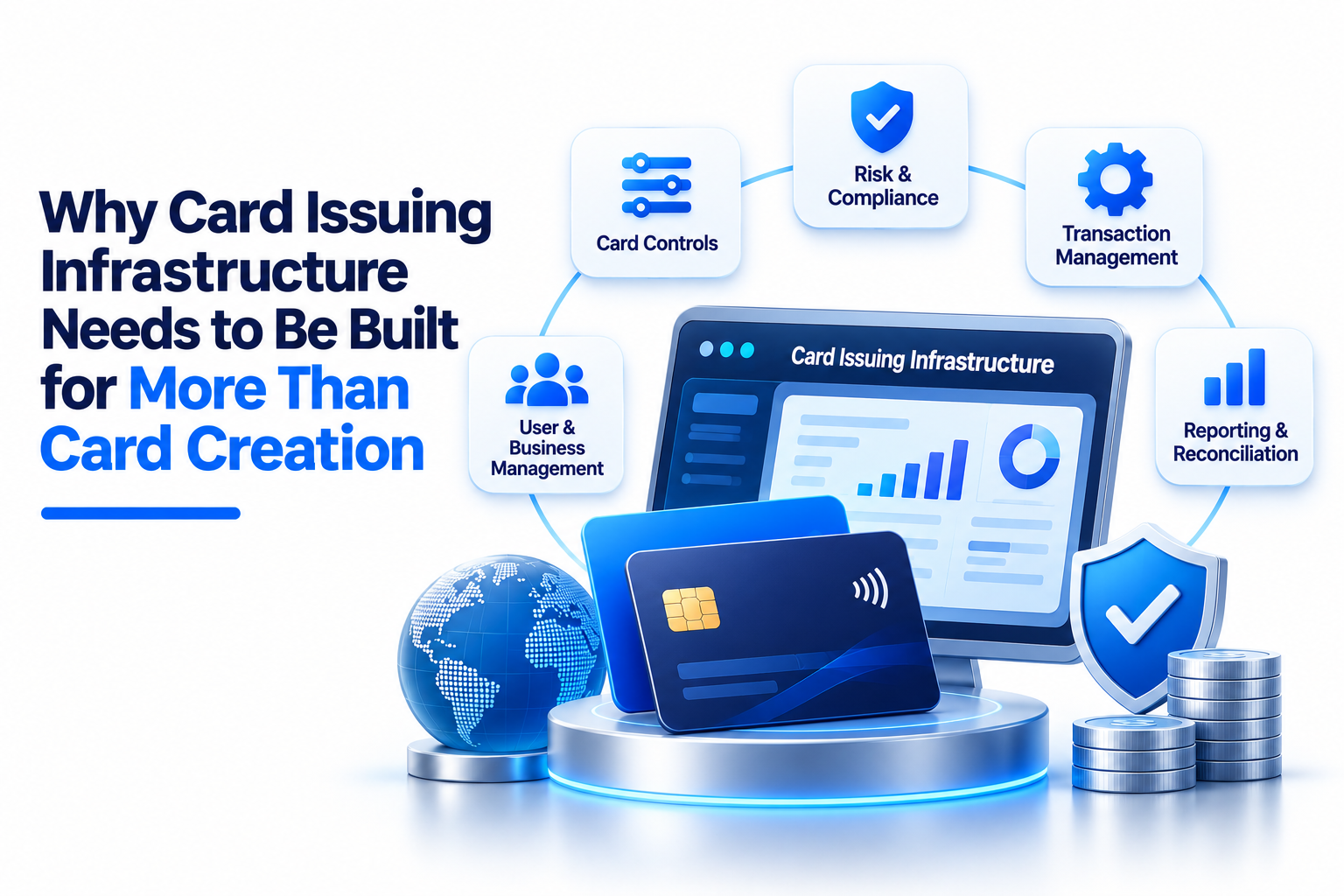
Launching a card programme involves much more than creating a physical or virtual card. Businesses also need systems to manage transactions, control spending, monitor activity, handle security requirements, and support customers throughout the card's lifecycle. This is why modern card issuing infrastructure needs to go beyond basic card creation. For fintech businesses, payment platforms, and financial service providers, the right infrastructure should support the complete card programme, from issuance and activation to transaction processing and ongoing management.
Why Card Creation Is Only the Beginning
Creating a card is the first step in launching a card programme. Once a card is issued, businesses need to manage how it is used, monitor transactions, and respond to different operational requirements. For example, customers may need to activate, freeze, or replace their cards. Businesses may also need to set spending limits, manage payment permissions, and review transaction activity. Without the right systems in place, these activities can become difficult to manage, especially as the number of cardholders and transactions increases. A complete card issuing platform should therefore support both card creation and the operations that follow.
What Should Modern Card Issuing Infrastructure Include?
A reliable infrastructure should bring together several important capabilities.
1. Complete Card Lifecycle Management
Card lifecycle management covers the different stages of a card, including creation, activation, freezing, replacement, and termination. Businesses need flexible tools to manage these activities efficiently. For example, if a card is lost or compromised, it should be possible to freeze or replace it through the available management system.
2. Transaction Processing and Authorization
Once cards are in use, every payment needs to pass through the relevant transaction processing systems. Card authorization helps determine whether a transaction should be approved or declined based on available funds, card status, and configured controls. Infrastructure should also support clearing, settlement, and transaction updates so businesses can manage payment activity beyond the initial authorization.
3. Spending Controls and Risk Management
Different businesses have different spending requirements. A corporate card programme, for example, may need separate limits for employees, teams, or departments. Modern card controls can include transaction limits, merchant category restrictions, country restrictions, and other usage rules. Alongside these controls, appropriate fraud prevention and transaction monitoring capabilities help businesses identify unusual activity and manage potential risks.
4. APIs and System Integration
Fintech businesses often need to connect card services with their existing applications, customer platforms, and financial systems. Payment APIs make this possible by allowing applications to communicate with the issuing infrastructure. Through supported API endpoints and webhooks, businesses can manage card operations and receive transaction-related updates. Good integration capabilities can also reduce manual work and make it easier to build card features directly into digital products.
5. Reporting and Reconciliation
Managing a card programme requires accurate transaction records and clear operational visibility. Transaction reconciliation helps businesses compare payment records, authorization activity, clearing information, and settlement data. Reporting tools can also help finance and operations teams review card activity and identify discrepancies. These capabilities become increasingly important as transaction volumes grow.
Why Card Programme Management Matters
Building a successful card programme is not just a technical task. Businesses also need to manage onboarding, operational workflows, customer support, security, and applicable compliance requirements. Effective card programme management brings these activities together and helps ensure that different parts of the programme work consistently. For example, a business issuing corporate expense cards may need employee onboarding, spending policies, transaction monitoring, and reporting. A fintech offering virtual cards may have different requirements around digital issuance, card controls, and customer account management. The infrastructure should be flexible enough to support the intended business model and its future requirements.
How NetPay Supports Modern Card Issuing Infrastructure
NetPay provides a card issuing platform designed to support businesses beyond basic card creation. Its infrastructure brings together card issuing, processing, programme management, risk controls, and reporting through API-based integration. Businesses can explore capabilities such as: - Physical and virtual card issuance for different card programme requirements. - Card lifecycle management to create, activate, freeze, replace, and manage cards. - Spending controls with configurable limits and merchant category restrictions. - Transaction processing covering authorization, clearing, and settlement. - KYC/KYB onboarding and AML transaction monitoring risk and compliance capabilities. - APIs and webhooks for integration and transaction updates. - Reporting and reconciliation to support operational visibility. With these capabilities connected through one platform, businesses can manage more parts of their card programmes without treating card creation as the only requirement. The available features, supported markets, and programme structure depend on the selected solution and onboarding requirements.
Conclusion
Card creation is only one part of running a successful card programme. Businesses also need reliable systems for transaction processing, lifecycle management, spending controls, risk monitoring, and reconciliation. Investing in complete card issuing infrastructure helps fintech businesses build card programmes that are easier to operate, manage, and expand. With its integrated card issuing platform, NetPay helps businesses explore the infrastructure needed to launch and manage modern card programmes beyond basic card creation.
Why is card creation not enough for a card programme?
After issuing a card, businesses still need to manage activation, transactions, spending controls, security, reporting, and customer support. Card creation alone does not cover these ongoing requirements.
What is included in a modern card issuing platform?
A modern platform may include card creation, lifecycle management, transaction authorization, processing, spending controls, APIs, risk management, and reporting.
How do APIs help with card issuing?
APIs allow businesses to integrate card services into their applications. They can support card creation, management, transaction updates, and other functions depending on the provider.
Why are spending controls important in card issuing?
Spending controls help businesses define how cards can be used through transaction limits, merchant restrictions, and other configurable rules. They support better control over card activity.
Can one card issuing platform support multiple card programmes?
Yes. Depending on the platform's capabilities and programme configuration, one infrastructure can support different card products, such as corporate expense cards, virtual cards, and other branded card programmes.

The NetPay247 team writes about card issuing, Virtual IBANs, cross-border payments and building products on embedded finance infrastructure.

Leave a reply
Your email address will not be published. Required fields are marked *