
Short answer
Learn what a Payment API is, how it works, its benefits for fintech businesses, and how APIs connect payments, cards, accounts, and payouts.
As digital financial services continue to grow, businesses need reliable ways to connect payment systems with their websites, applications, and platforms. Managing payments manually or relying on disconnected systems can make operations more complicated. This is where a Payment API becomes useful. A Payment API (Application Programming Interface) allows different software systems to communicate and exchange payment-related information. It helps fintech businesses integrate payment capabilities into their platforms, automate transactions, and manage financial operations more efficiently. For businesses building digital wallets, fintech applications, card programmes, or online payment platforms, understanding how payment APIs work is an important step towards developing a connected financial ecosystem.
What Is a Payment API?
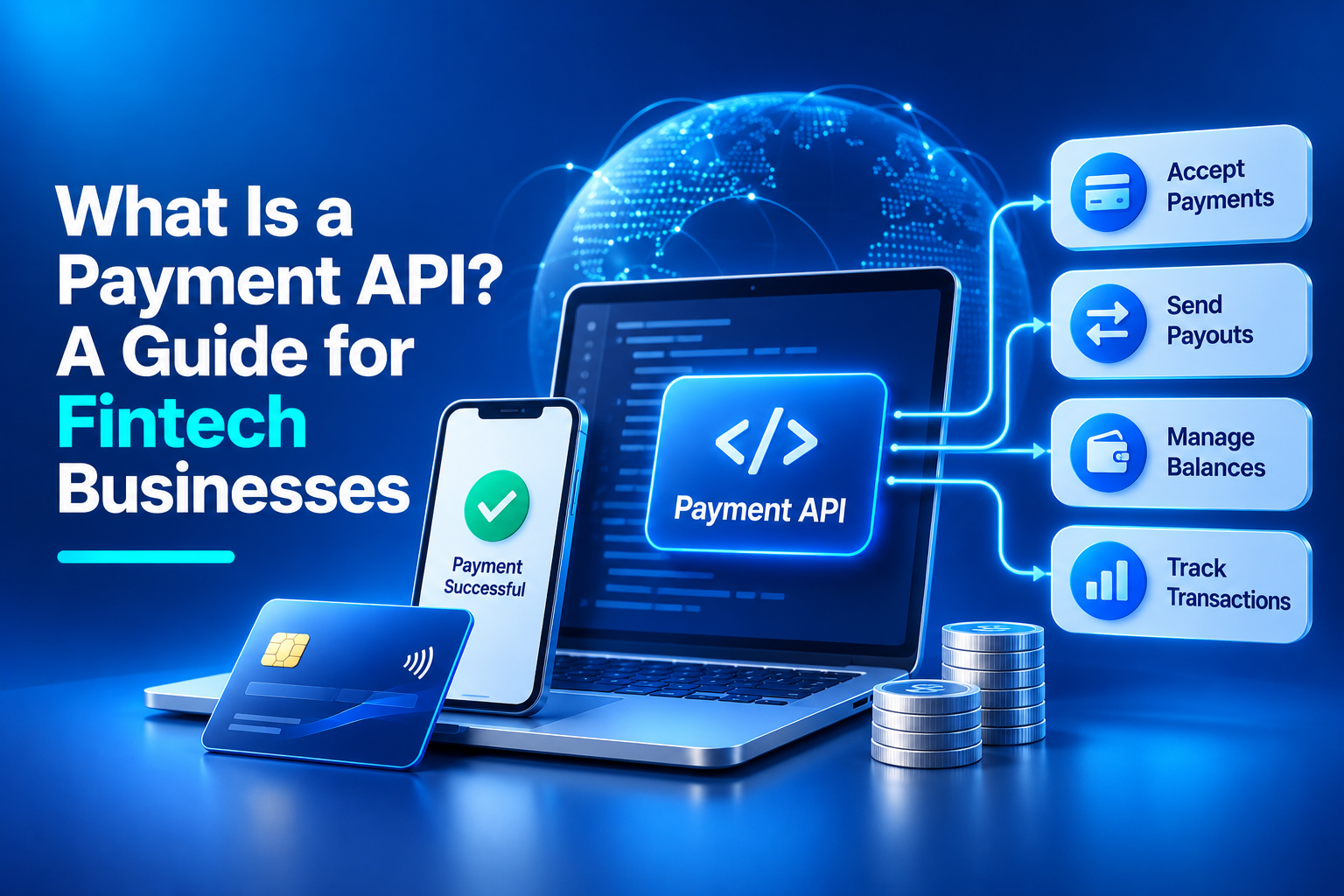
A Payment API is a software interface that allows an application to connect with payment services and perform supported payment-related operations. Instead of developing every payment function independently, businesses can use APIs provided by payment infrastructure providers to integrate services into their existing systems. Depending on the provider, these APIs may support: Payment collection and processing Card issuing and management Global payments and payouts Refunds and transaction management Currency conversion Payment status updates and reporting For example, a fintech application can use a payment API to initiate a transaction and receive a response indicating whether it was approved, declined, or requires further action.
How Does a Payment API Work?
A Payment API integration connects a business application with a payment provider's infrastructure. Although the technical setup may vary, the general process follows a few steps. 1. Customer Initiates a Payment A customer selects a product, service, or payment option within a website or application. 2. Application Sends an API Request The business application securely sends the relevant transaction information to the payment provider through an API request. 3. Payment Provider Processes the Request The provider processes the request and communicates with the relevant financial institutions, payment networks, or other services involved in the transaction. 4. API Returns a Response The application receives a response containing the transaction status and relevant reference information. 5. Business Updates Its Records The application uses the response to update its transaction records, display payment status, or trigger the next step in its workflow. Webhooks can also help businesses receive event-based updates when supported payment events occur, reducing the need to repeatedly check transaction status.
Why Do Fintech Businesses Need Payment APIs?
For growing fintech businesses, APIs offer more than a way to process transactions. They help connect different financial services and simplify daily operations. 1. Easier System Integration Payment APIs allow businesses to connect payment services with their existing applications, websites, CRM systems, and financial software. 2. Automated Payment Operations Businesses can automate supported activities such as payment initiation, transaction updates, and payouts. This can reduce repetitive manual work. 3. Better Transaction Visibility API responses and webhooks can provide transaction information that helps businesses monitor payment statuses, identify failures, and manage records. 4. Flexible Financial Products Fintech businesses can integrate different payment capabilities based on their requirements without building every feature from scratch. 5. Scalable Infrastructure As transaction volumes and business requirements grow, API-based integrations can help businesses introduce additional payment services and improve existing workflows.
Different Types of Payment APIs
Not every payment API performs the same function. Fintech businesses should understand the available API types before choosing an integration. Payment Processing APIs: Help businesses initiate and manage payment transactions through supported payment methods. Card Issuing APIs: Allow eligible businesses to integrate card creation, card management, and related card programme functions into their platforms. Payout APIs: Help businesses initiate transfers to customers, employees, suppliers, or other recipients through supported payment channels. Account APIs: Enable applications to connect with account-related services, such as virtual accounts or account information, depending on the provider. Transaction and Webhook APIs: Help businesses retrieve transaction information and receive updates when supported events occur. Choosing the right combination depends on the business model, target markets, technical requirements, and available provider services.
How NetPay Supports API-Based Payment Infrastructure
NetPay provides API-based payment infrastructure designed to help businesses connect different financial services through a more integrated platform. Its offerings include white-label Visa and Mastercard card programmes, virtual IBANs, global payments, and global payouts. Through REST APIs and webhooks, businesses can integrate supported services into their applications and receive relevant transaction updates. For fintech companies looking to connect card issuing, payment processing, accounts, and payouts, NetPay offers infrastructure that can be explored according to their business requirements. The available services, supported markets, and technical integration requirements depend on the selected solution and onboarding process.
Conclusion
A Payment API plays an important role in modern fintech operations by connecting applications with payment services. It helps businesses integrate financial capabilities, automate supported workflows, and improve transaction visibility. For fintech businesses planning to expand their digital financial products, choosing the right API infrastructure can make a significant difference in how efficiently their systems operate. With its API-based card and payment infrastructure, NetPay247 helps businesses explore connected financial solutions and build payment workflows that support their operational goals.

The NetPay247 team writes about card issuing, Virtual IBANs, cross-border payments and building products on embedded finance infrastructure.
Leave a reply
Your email address will not be published. Required fields are marked *