
Short answer
Discover how global business payments work behind the scenes, from payment initiation and FX conversion to routing, delivery, webhooks, and reconciliation.
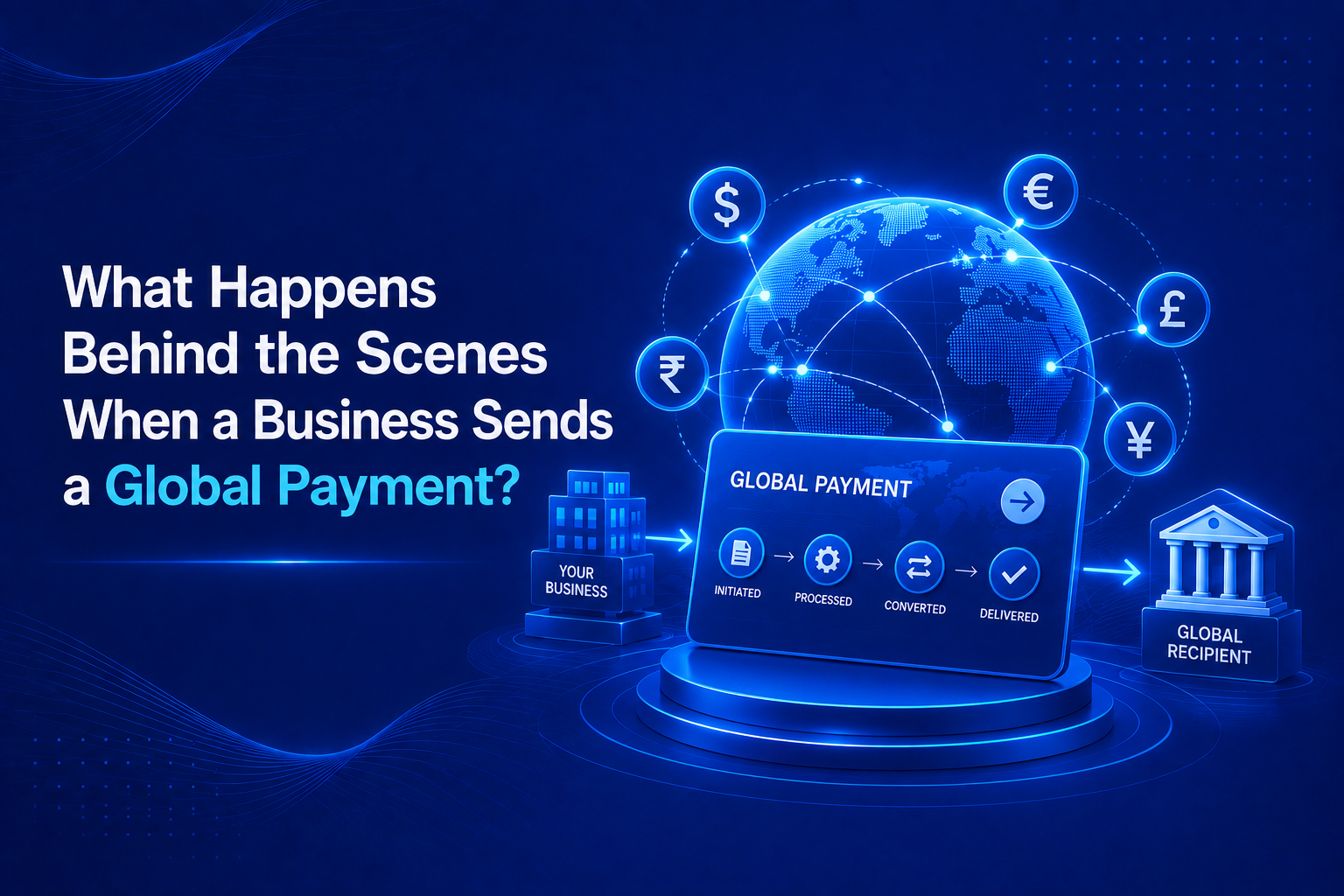
When a business sends money internationally, the process may look simple from the outside: enter the recipient details, select an amount, click send, and wait for delivery. But behind that single transaction, several systems may be working together. The payment needs to be validated, the currency may need to be converted, the right payment rail needs to be selected, the transaction needs to reach the recipient, and every stage needs to be tracked and reconciled. This is what makes modern global payment infrastructure much more than simply moving money from one account to another. Let’s look at what happens behind the scenes when a business sends a global payment.
1. The Payment Is Initiated
Everything starts when a business creates a payment instruction. This could happen through a business dashboard, payment platform, accounting system, or API. The payment request typically contains information such as: Recipient details Payment amount Currency Destination country Payment reference Business transaction ID At this stage, the payment infrastructure needs to validate the information before the transaction can move forward. For businesses processing payments at scale, API connectivity becomes particularly important. Instead of manually entering every transaction, businesses can connect their own platforms directly with payment infrastructure and automate payment instructions.
2. The Payment Is Checked and Validated
Before money moves, the transaction may go through multiple validation and compliance checks. The system can verify whether the recipient information is complete, whether the requested currency and destination are supported, and whether the transaction meets applicable requirements. This layer is important because an error at the beginning of a payment can result in delays, returns, or additional operational work later. For businesses handling large payment volumes, automated validation can also reduce dependence on manual processes.
3. FX Conversion May Take Place
International payments often involve different currencies. For example, a business may hold funds in USD but need to pay a supplier in EUR. The payment therefore requires FX conversion before the recipient can receive the required currency. The conversion process can involve: Source currency → FX conversion → Destination currency Modern payment infrastructure can connect currency management and international transfers within the same payment flow. This is particularly useful for companies operating across multiple markets because they may need to collect, hold, convert, and send funds in different currencies without creating completely disconnected processes.
4. The Payment Is Routed Through the Appropriate Rail
Once the payment and currency requirements are established, the infrastructure needs to determine how the money should reach its destination. Different payment corridors can involve different payment rails. For example, international payment infrastructure may support rails such as SEPA and SWIFT, depending on the currency, destination, and transaction requirements. The objective is not simply to “send money internationally.” The infrastructure needs to connect the payment with an appropriate route for the specific transaction. This routing layer is one of the reasons global payments can become operationally complex as a business expands into more countries.
5. The Payment Moves to the Recipient
After routing, the payment moves through the relevant financial network toward the recipient. At this point, the transaction may pass through multiple stages before the recipient's account is credited. From the business's perspective, however, the experience should ideally remain simple. A well-connected global payment solution can provide transaction status information throughout the process rather than leaving the business without visibility after clicking “send.” This visibility becomes increasingly important when businesses are processing payments to suppliers, partners, customers, contractors, or other recipients around the world.
6. Webhooks Keep Systems Updated
Sending the payment is only part of the process. The business also needs to know what happened to it. This is where webhooks can play an important role. Instead of repeatedly checking a dashboard or sending manual status requests, a payment platform can send automated events to the business's system when the transaction status changes. For example: Payment created → Processing → Completed Or, if something goes wrong: Payment created → Processing → Returned These real-time status updates can be connected to internal systems, allowing businesses to automatically update transaction records, notify customers, trigger workflows, or flag exceptions. For payment operations teams, this can make a significant difference when managing large numbers of transactions.
Why the Infrastructure Behind Global Payments Matters
As businesses become more international, payment complexity doesn't necessarily come from sending one payment overseas. It comes from managing hundreds or thousands of payments across different currencies, countries, payment rails, recipients, and internal systems. A business may need to: Receive funds in multiple currencies | Convert currencies | Send international payments | Track transaction status | Manage payment references | Handle returned transactions | Reconcile payments automatically | Connect payment activity with internal systems Trying to manage each part through separate providers and manual processes can create operational friction. This is why modern global payment infrastructure focuses on connecting the entire payment lifecycle rather than providing only a way to transfer money.
How NetPay Supports Global Payment Operations
NetPay provides infrastructure designed to help businesses manage modern international payment operations through connected payment capabilities. Its global payments infrastructure supports capabilities such as multi-currency payment flows, international collections and transfers, FX conversion, SEPA and SWIFT connectivity, APIs, webhooks, and reconciliation. This allows businesses to build a more connected approach to moving money internationally instead of managing every payment process separately. NetPay's broader infrastructure also connects global payments with capabilities such as Virtual IBANs and card solutions, giving businesses more options for building financial products and payment experiences around their own platforms.
How does a business send an international payment?
A business typically initiates a payment through a banking platform, payment provider, or API. The transaction is validated, converted if necessary, routed through an appropriate payment rail, delivered to the recipient, and then recorded and reconciled.
Why is FX conversion important for global payments?
FX conversion allows a business to send or receive funds in a currency different from the currency it currently holds. Integrating FX into the payment flow can simplify international transactions involving multiple currencies.
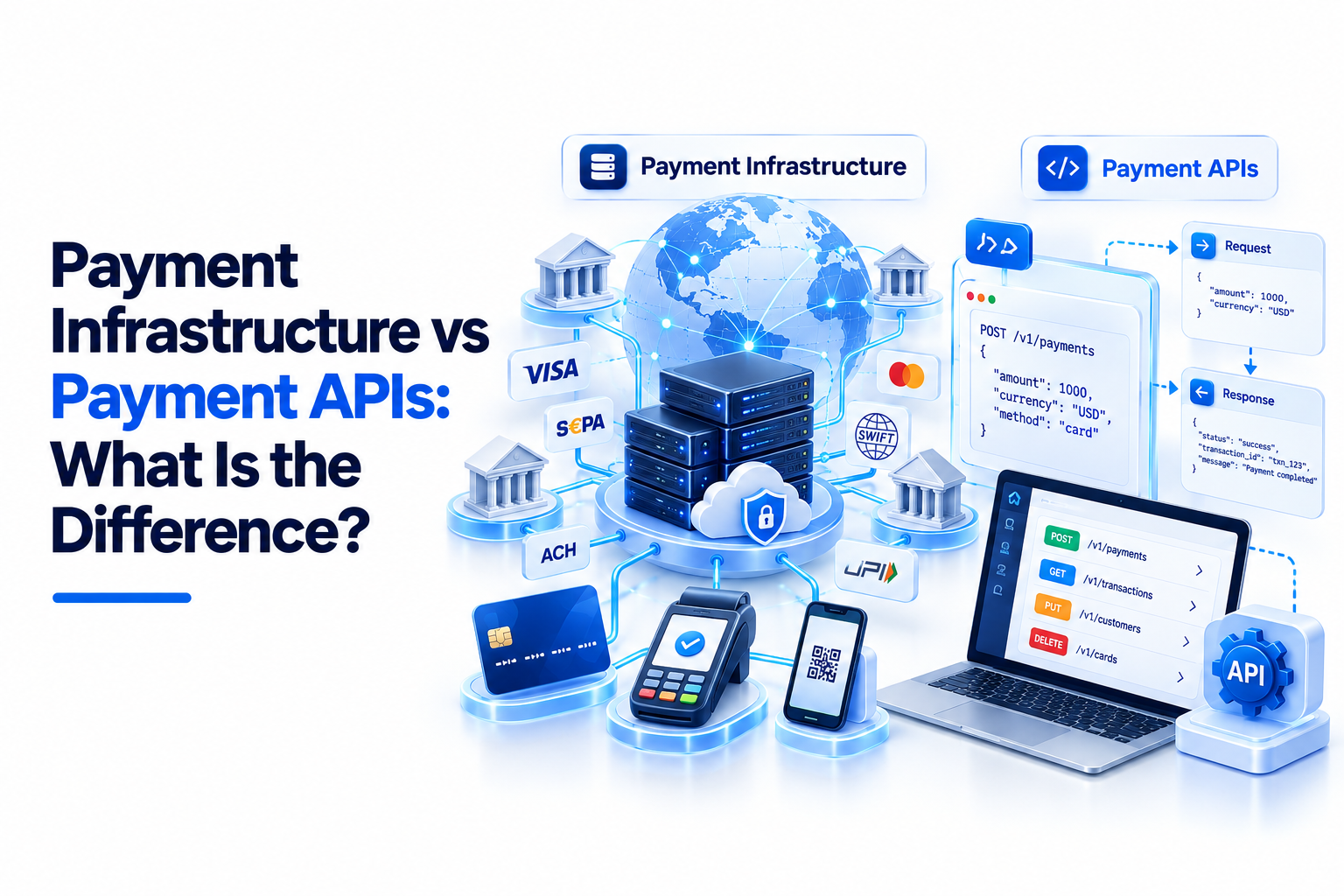
What role do APIs play in global payment infrastructure?
Payment APIs allow businesses to connect their own platforms and systems directly with payment infrastructure. This can help automate payment initiation, transaction tracking, status updates, and reconciliatio
What are payment webhooks?
Payment webhooks are automated notifications sent by a payment platform when an event or transaction status changes. They can help businesses receive updates such as payment processing, completion, or return events without continuously checking manually.
Why is payment reconciliation important?
Reconciliation helps businesses match payment activity with their internal financial records. Automated reconciliation can reduce manual work and provide better visibility into completed, pending, or returned transactions.

The NetPay247 team writes about card issuing, Virtual IBANs, cross-border payments and building products on embedded finance infrastructure.

Leave a reply
Your email address will not be published. Required fields are marked *