
Short answer
Understand stablecoin settlement, its benefits, key challenges, and role in modern fintech payment infrastructure.
Stablecoins are becoming an important part of the digital finance ecosystem because they are designed to maintain a relatively stable value against an underlying asset, often a traditional currency such as the US dollar. For crypto platforms and fintech businesses, they can support digital transactions and payment workflows. However, transferring stablecoins is only one part of the process. Businesses also need to understand how funds move, how transactions are confirmed, and how recipients receive their money. This is where stablecoin settlement becomes important. It helps businesses understand how digital asset transactions are completed and how they fit into broader payment operations.
What Is Stablecoin Settlement?
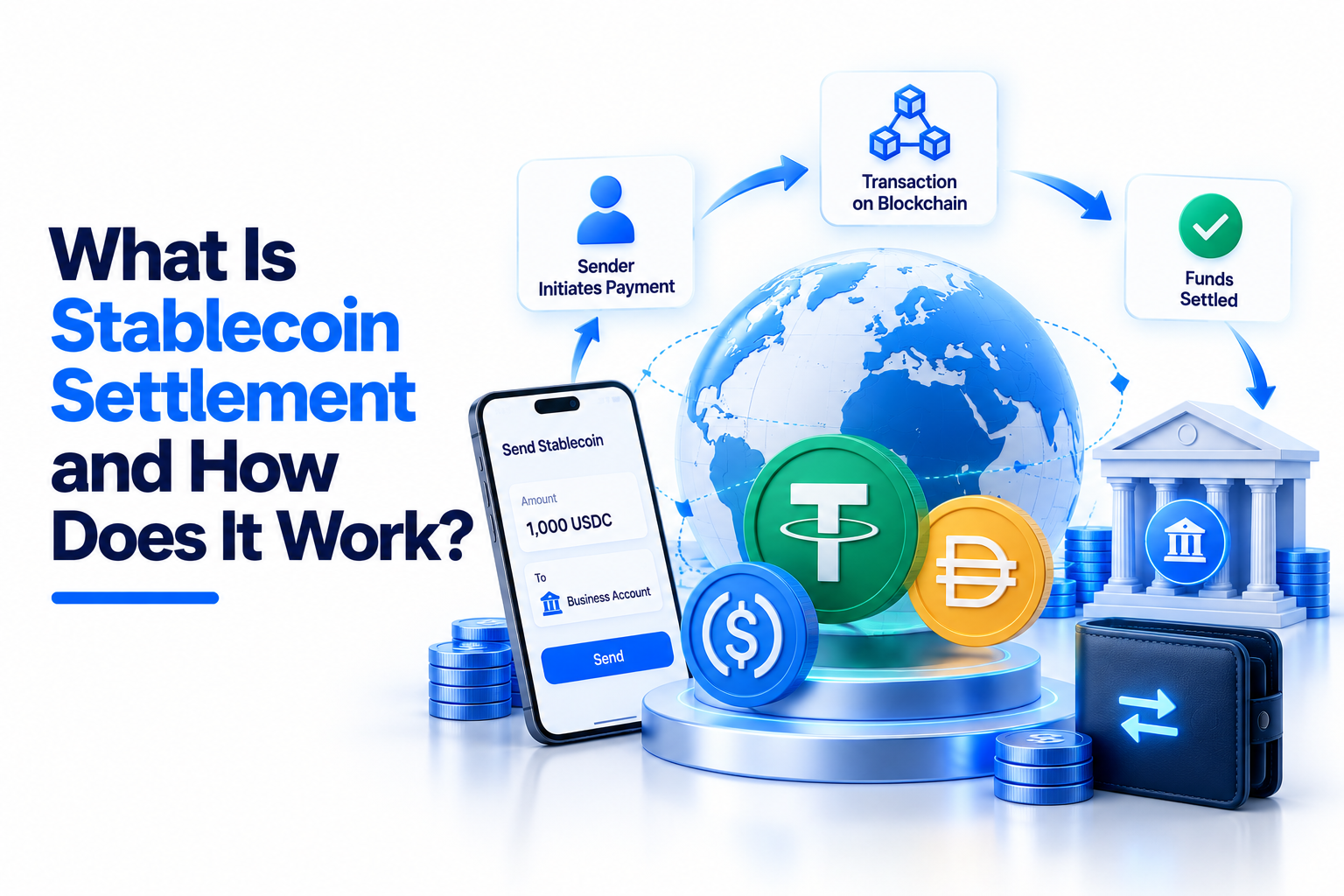
Stablecoin settlement refers to the process through which a stablecoin transaction is completed and the transfer of the relevant digital assets is confirmed. Depending on the arrangement, it may involve transferring stablecoins between wallets, settling obligations between businesses, or connecting digital asset transactions with fiat currency payment systems. Unlike traditional payment settlement, which may involve banks, payment processors, and clearing systems, stablecoin payments can use blockchain networks to record and confirm transfers. However, the settlement experience depends on the blockchain, transaction fees, network congestion, custody arrangements, and the requirements of the businesses involved. It is also important to distinguish between on-chain settlement and fiat settlement. A stablecoin transfer can be confirmed on a blockchain without automatically meaning that fiat currency has been credited to a bank account.
How Does Stablecoin Settlement Work?
The process can vary depending on the platform and transaction type, but a typical stablecoin settlement flow includes the following stages.
1. Transaction Initiation
A sender initiates a transaction by transferring a supported stablecoin, such as a token designed to track the US dollar, to the recipient's wallet address. The sender must ensure that the correct token and blockchain network are selected.
2. Blockchain Processing
The transaction is submitted to the relevant blockchain network. Network participants validate the transaction according to that network's rules, and the transfer is recorded on-chain.
3. Transaction Confirmation
Once the transaction receives the required confirmations or reaches the platform's defined finality threshold, the receiving platform can update the transaction status. The number of confirmations required depends on the network and the platform's risk policies.
4. Settlement and Reconciliation
The recipient or platform verifies the transaction details, such as the amount, token, network, and transaction reference. Internal records are then updated to reflect the transfer. If the transaction involves a business obligation or a conversion into fiat currency, additional steps may be required before the overall payment process is considered complete.
Why Is Stablecoin Settlement Important for Businesses?
Supports Digital Asset Transfers
Stablecoin settlement allows businesses to transfer supported digital assets through blockchain networks. For eligible use cases, this can provide an alternative to certain traditional transfer methods.
Helps International Payment Operations
Businesses operating across borders may explore stablecoin payments for selected transactions. However, the benefits depend on the countries involved, supported networks, conversion arrangements, regulatory requirements, and the recipient's ability to access or convert the funds.
Supports Connected Payment Workflows
Stablecoins may form one part of a broader digital payment infrastructure that connects digital assets, fiat currency services, accounts, and payout processes. Businesses need clear procedures to manage each stage of the transaction and understand when funds are available for use.
How NetPay Fits into Modern Payment Infrastructure
For fintech companies and crypto platforms, stablecoin transactions may need to connect with other financial services, including card programs, accounts, payment processing, and payouts. Managing these capabilities across disconnected systems can make operations more complicated. NetPay provides payment infrastructure for businesses exploring connected card and payment capabilities, including card issuing infrastructure, virtual IBANs, multi-currency accounts, payments, payouts, and API-based integrations. For businesses considering stablecoin-related payment workflows, it is important to confirm which digital assets, conversion arrangements, networks, and settlement options are supported by the selected solution. The availability of stablecoin settlement or crypto-to-fiat services should not be assumed without confirmation. By choosing suitable infrastructure and defining clear operational processes, businesses can better connect payment activities with transaction monitoring, record-keeping, and financial operations.
Conclusion
Stablecoin settlement is an important concept for businesses exploring blockchain-based transactions and digital payment services. Understanding how transactions are initiated, confirmed, recorded, and reconciled helps businesses manage digital asset transfers more effectively. For fintech businesses, the goal is not simply to transfer stablecoins but to connect those transactions with reliable payment operations, suitable compliance controls, and accurate financial records. With the right technology and carefully selected partners, businesses can evaluate how stablecoins may fit into their wider payment infrastructure strategy.
What is stablecoin settlement?
Stablecoin settlement is the process of completing and confirming a transfer of stablecoins. Depending on the transaction, it may also involve reconciling the transfer with a business obligation or connecting it to a fiat currency payment.
How does stablecoin settlement work?
A sender initiates a transfer, the blockchain network processes it, and the transaction receives the required confirmations. The receiving platform then verifies the transaction and updates its records according to its settlement procedures.
Is stablecoin settlement the same as fiat settlement?
No. Stablecoin settlement involves transferring digital tokens, typically recorded on a blockchain. Fiat settlement involves completing the transfer of traditional currency through the relevant financial institutions or payment systems. A transaction involving both may require separate steps.
What are the benefits of stablecoin settlement?
Depending on the use case, it can support blockchain-based transfers, transaction traceability, and selected international payment workflows. Actual speed, cost, and accessibility depend on the network, service providers, liquidity, and applicable regulations.

The NetPay247 team writes about card issuing, Virtual IBANs, cross-border payments and building products on embedded finance infrastructure.

Leave a reply
Your email address will not be published. Required fields are marked *