
Short answer
Learn how a cross-border payment tracking system works, monitor international transactions, identify payment delays, and improve payment visibility.
As businesses expand into international markets, sending and receiving money across countries becomes a regular part of their operations. However, cross-border payments are not always straightforward. Transactions may pass through multiple banks, payment providers, currencies, and processing networks before reaching the recipient. For businesses, knowing that a payment has been initiated is not enough. They also need to understand where the transaction stands, whether it has been processed, and when the funds are expected to arrive. This is where a cross-border payment tracking system becomes important.
What Is a Cross-Border Payment Tracking System?
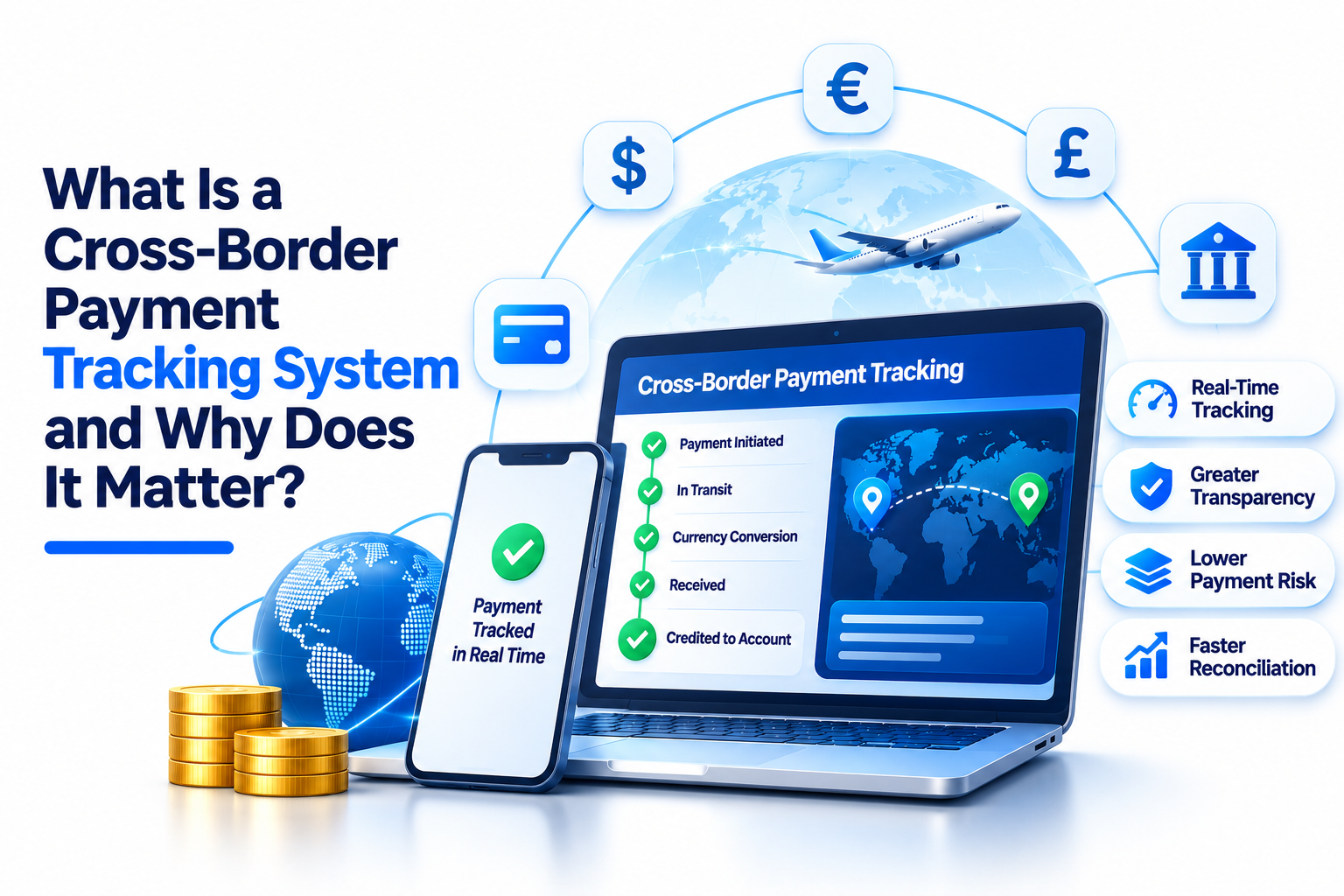
A cross-border payment tracking system is a technology solution that helps businesses monitor international transactions from initiation to completion. It provides information about the payment status, processing progress, transaction references, and settlement updates. Depending on the payment network and service provider, tracking information may include whether a payment is pending, processing, completed, rejected, or returned. Instead of relying entirely on manual follow-ups with banks or payment providers, businesses can use tracking tools to get better visibility into their international payment activity.
How Does Cross-Border Payment Tracking Work?
A typical international payment tracking process involves several stages: 1. Payment Initiation: The sender starts an international payment by entering the recipient's details, payment amount, and required information. 2. Transaction Processing: The payment is processed through the relevant payment provider, banking network, or intermediary institutions. 3. Payment Status Updates: The tracking system receives available transaction updates, helping businesses understand whether the payment is still processing, completed, or facing an issue. 4. Settlement Confirmation: Once the payment reaches the recipient or the relevant settlement stage is confirmed, the transaction status is updated according to the provider's reporting. The exact tracking information and available status updates depend on the payment method, provider, and banking network involved.
Why Does Cross-Border Payment Tracking Matter?
For businesses handling international transactions, payment visibility can make daily financial operations easier to manage. Better Transaction Visibility: Businesses can monitor payment progress instead of depending only on initial payment confirmation. This makes it easier to identify delayed or unsuccessful transactions. Improved Cash Flow Management: Knowing the status of incoming and outgoing payments helps finance teams plan expenses, manage working capital, and track expected funds. Faster Issue Identification: When a payment is delayed, rejected, or returned, available tracking information can help businesses identify where further investigation may be required. Reduced Manual Follow-Ups: Centralised transaction information can reduce the need to repeatedly contact different payment providers for basic status updates. Better Customer Experience: Businesses can provide more informed responses when customers, suppliers, or partners ask about the progress of international payments.
How NetPay Supports Connected Payment Operations
For businesses managing international payments, having connected payment infrastructure can help simplify different parts of the payment journey. NetPay provides payment infrastructure designed to support business payment operations through solutions such as multi-currency accounts, virtual IBANs, card issuing, payment processing, payouts, and API-based integrations. These capabilities can help businesses connect payment-related workflows and improve operational visibility. With suitable integrations, businesses can also connect transaction information with their internal systems, supporting more organised payment monitoring and reconciliation. The specific tracking features, transaction updates, and settlement information available depend on the selected payment solution and its supported providers.
Conclusion
As international business transactions continue to grow, knowing where money is moving is just as important as being able to send and receive it. A cross-border payment tracking system helps businesses monitor transaction progress, identify payment issues, and improve financial visibility. By combining effective transaction monitoring with connected payment infrastructure, businesses can manage international payment operations with greater clarity and control. With its range of payment and financial infrastructure solutions, NetPay supports businesses looking to build more connected and organised payment operations.
What is a cross-border payment tracking system?
A cross-border payment tracking system helps businesses monitor international transactions and view available updates about their payment status and processing progress.
How can I track an international payment?
You can usually track an international payment using the transaction reference number or tracking facility provided by your bank or payment provider. Available updates depend on the payment method and network.
Why are cross-border payments sometimes delayed?
International payments may be delayed due to intermediary bank processing, compliance checks, incorrect recipient details, currency conversion, or banking network delays.
Can cross-border payments be tracked in real time?
Some payment providers offer near-real-time tracking, while others provide updates at specific processing stages. Real-time visibility depends on the payment network and provider.
How does payment tracking help businesses?
It helps businesses monitor transaction progress, identify delays, manage cash flow, reduce manual follow-ups, and provide better updates to customers and partners.

The NetPay247 team writes about card issuing, Virtual IBANs, cross-border payments and building products on embedded finance infrastructure.

Leave a reply
Your email address will not be published. Required fields are marked *