
Short answer
Learn how card payment disputes and chargebacks work, why they happen, what evidence merchants need, and how fintech businesses can manage them
Card payments make online transactions convenient, but not every payment goes smoothly. Customers may sometimes notice an unfamiliar transaction, receive an incorrect charge, or fail to receive the product or service they paid for. In such situations, they can raise a card payment dispute with their card-issuing bank. For fintech businesses, merchants, and payment service providers, understanding how disputes work is important for managing payment operations and reducing financial risks. A well-organised payment dispute management process can help businesses respond on time, provide relevant evidence, and maintain better transaction records.
What Is a Card Payment Dispute?
A card payment dispute occurs when a cardholder questions a transaction and asks their issuing bank to investigate it. If the dispute progresses through the card network process, it may result in a chargeback, where the transaction amount is reversed from the merchant's side. Customers can raise disputes for several reasons, including: Unauthorised transactions: The cardholder claims they did not make or approve the payment. Duplicate charges: The same transaction appears more than once. Product or service not received: The customer paid but did not receive what was promised. Incorrect transaction amount: The amount charged differs from the agreed price. Refund issues: A promised or expected refund has not been received. Unrecognised transactions: The customer does not recognise the merchant name appearing on their statement. Understanding the reason behind a dispute helps businesses identify what information is needed to respond.
How Does the Card Payment Dispute Process Work?
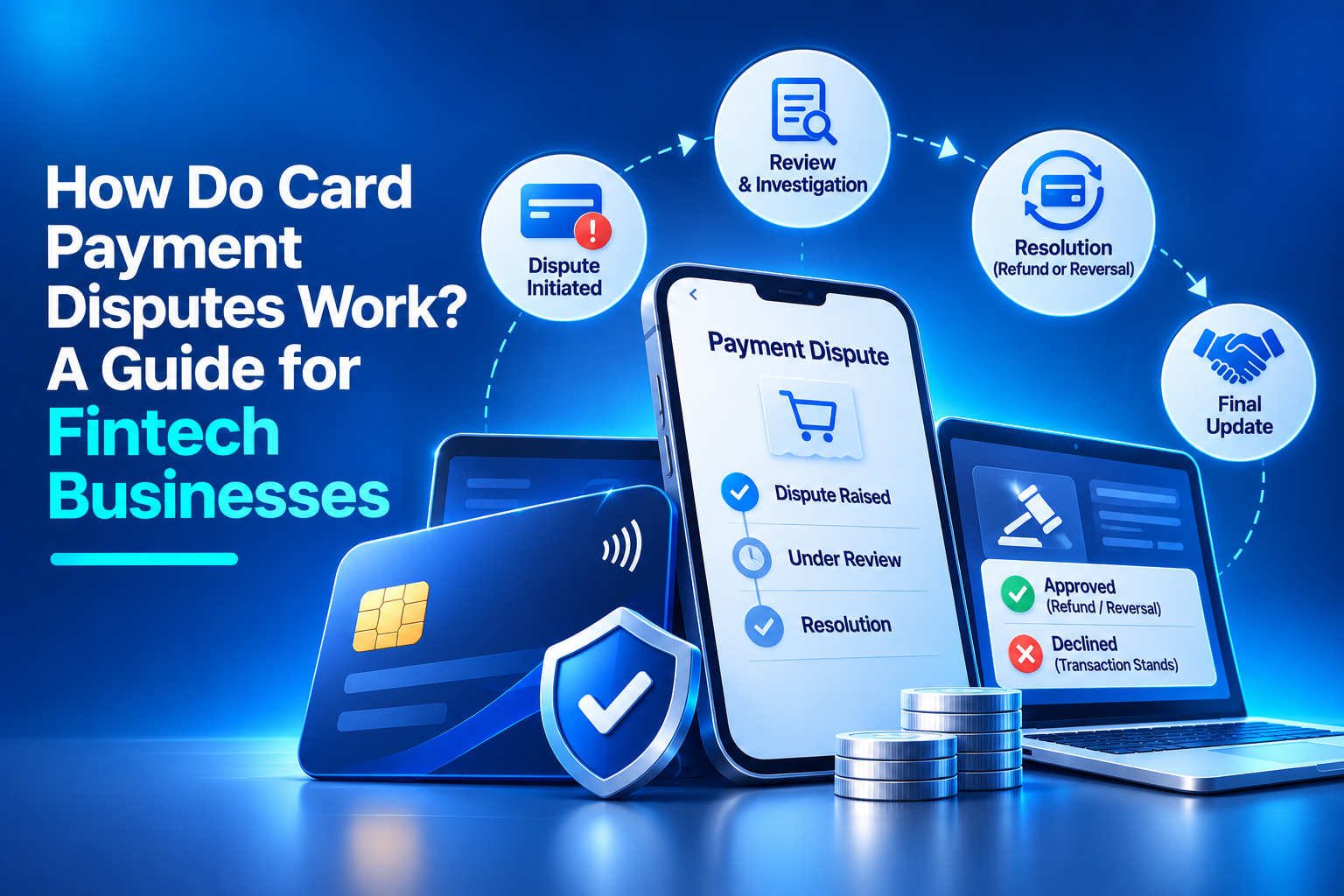
Although the exact process and timelines vary between card networks and payment providers, a typical chargeback process involves the following stages
1. Customer Raises a Dispute
The cardholder contacts their issuing bank to report a transaction they believe is incorrect, unauthorised, or otherwise problematic. The bank reviews the complaint and may initiate a formal dispute.
2. Issuing Bank Starts the Dispute Process
The issuing bank processes the claim under the applicable card network rules. If the dispute proceeds as a chargeback, the disputed amount may be debited from the merchant's payment balance, depending on the payment arrangement.
3. Merchant Receives a Dispute Notification
The acquiring bank or payment processor notifies the merchant about the dispute. The notification generally includes the reason for the dispute, transaction details, and the deadline for submitting a response.
4. Merchant Reviews and Submits Evidence
The merchant can review the claim and decide whether to accept the dispute or challenge it. If the merchant believes the transaction was legitimate, it can submit supporting documents through the relevant payment provider or acquiring channel. This response is commonly known as chargeback representment.
5. Evidence Is Reviewed
The submitted information is forwarded through the relevant payment channels for review. The issuing bank evaluates the available evidence according to applicable card network rules.
6. Final Decision Is Made
The dispute may be resolved in favour of the cardholder or merchant. If the merchant successfully challenges the chargeback, the disputed amount may be returned. If the dispute is upheld, the reversal remains. Some cases may involve additional stages, such as pre-arbitration or arbitration, depending on the card network and dispute circumstances.
What Evidence Can Help Businesses Challenge a Dispute?
When responding to a payment dispute, businesses should provide clear and relevant information that directly addresses the customer's claim. Useful supporting evidence may include: Transaction records: Payment date, amount, transaction reference, and payment status. Customer communication: Relevant emails, messages, or support conversations. Delivery confirmation: Shipping details, tracking information, or proof of delivery. Service records: Login activity, usage logs, or confirmation that a digital service was accessed. Refund policies: Relevant terms and conditions shown to the customer during checkout. Authentication details: Available verification records, such as 3D Secure results or other transaction security information. Evidence requirements depend on the dispute reason and applicable network rules. Submitting relevant documents within the required deadline is essential.
How NetPay Fits Into Modern Payment Operations
Managing card disputes requires accurate transaction information, connected payment systems, and reliable operational workflows. NetPay provides payment infrastructure solutions, including card issuing, global payments, global payouts, and API-based integrations. Its API and webhook capabilities can help businesses integrate supported payment services and receive transaction-related updates. Access to organised transaction information can support internal payment monitoring, reconciliation, and dispute investigation workflows. For fintech businesses managing card programmes, having connected payment infrastructure can make it easier to organise transaction records and coordinate operational processes. Specific dispute management tools and workflows should be confirmed based on the selected service and payment provider arrangement.
Conclusion
Card payment disputes are a normal part of the payment ecosystem, but poor dispute management can create additional financial and operational challenges for businesses. By maintaining accurate transaction records, monitoring payment activity, communicating clearly with customers, and submitting relevant evidence on time, fintech businesses can manage disputes more effectively. With connected payment infrastructure and reliable transaction information, businesses can build more organised payment operations. NetPay offers payment and card infrastructure solutions that businesses can explore as part of their broader payment management strategy.
What is a card payment dispute?
A card payment dispute occurs when a cardholder questions a transaction and asks their issuing bank to investigate it. Depending on the outcome and process, it may result in a chargeback.
What is the difference between a payment dispute and a chargeback?
A payment dispute is the customer's formal complaint about a transaction. A chargeback is a transaction reversal initiated through the card network dispute process.
What are the most common reasons for card payment disputes?
Common reasons include unauthorised transactions, duplicate charges, incorrect billing amounts, products not received, and refund-related issues.
How can a merchant respond to a chargeback?
A merchant can review the dispute reason, collect relevant transaction records and supporting documents, and submit a response through its acquiring bank or payment provider within the specified deadline.
What is chargeback representment?
Chargeback representment is the process through which a merchant challenges a chargeback by submitting evidence to demonstrate that the original transaction was legitimate or that the dispute is not justified.

The NetPay247 team writes about card issuing, Virtual IBANs, cross-border payments and building products on embedded finance infrastructure.


Leave a reply
Your email address will not be published. Required fields are marked *