
Short answer
Learn how 3D Secure authentication improves online card security, how frictionless and challenge flows work, and the roles of merchants and card issuers.
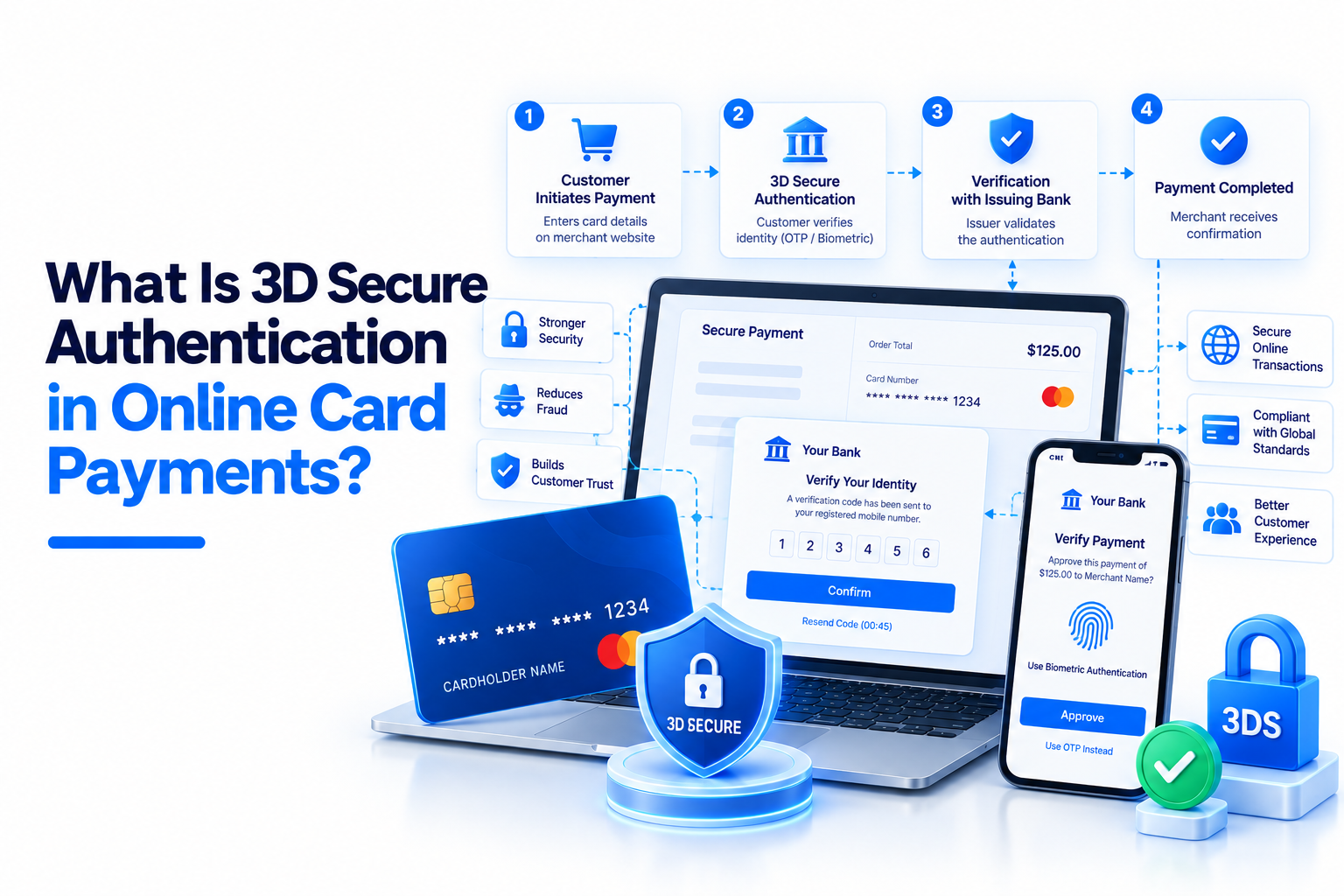
Online card payments make shopping and digital transactions convenient, but they can also expose businesses and customers to fraud. To add an extra layer of protection, payment systems use 3D Secure authentication, a security protocol designed to help verify a cardholder’s identity during online payments. Also known as 3DS, this technology allows merchants and card issuers to exchange transaction information and assess whether additional verification is needed. It plays an important role in online card security, helping reduce unauthorised card-not-present transactions while supporting a smoother checkout experience.
How Does 3D Secure Authentication Work?
When a customer pays online using an eligible debit or credit card, the merchant’s payment system can initiate a 3D Secure authentication request. Relevant transaction, payment method, and device information is shared through the 3DS system with the card issuer. The issuer assesses the transaction and decides whether the customer can be authenticated without additional action or whether further verification is required. Once authentication is completed, the payment proceeds to the authorisation stage. Authentication does not automatically mean the payment will be approved; the issuer still makes a separate authorisation decision. This process helps strengthen payment authentication without necessarily adding extra steps to every transaction.
Frictionless Flow vs Challenge Flow
3D Secure generally supports two primary authentication flows, depending on the transaction risk and the issuer’s assessment.
1. Frictionless Flow
In a frictionless flow, the issuer evaluates the available transaction and device information and authenticates the cardholder without asking them to complete an additional verification step. For customers, this can mean a faster checkout experience. For merchants, it helps balance security with convenience by reducing unnecessary interruptions during legitimate transactions.
2. Challenge Flow
A challenge flow is used when the issuer determines that additional verification is needed. The customer may be asked to enter a one-time password (OTP), approve the payment through a banking app, or complete another supported verification method. This additional step can help protect against suspicious transactions, although the experience may vary depending on the issuer, card, device, and applicable requirements. The aim is to apply stronger verification when needed without creating unnecessary friction for every customer.
What Roles Do Card Issuers and Merchants Play?
Both merchants and card issuers have important roles in the 3D Secure process. Merchants initiate authentication through their payment systems and provide the relevant transaction information. They also need to ensure their checkout experience can handle authentication requests and return customers to the payment process correctly. Card issuers, usually banks or financial institutions that issue the cards, assess the authentication information and determine whether further verification is required. They manage the cardholder verification experience and return the authentication result. Payment service providers and payment infrastructure platforms may help businesses connect the systems required to support this process. The exact setup depends on the provider and the merchant’s payment configuration.
Why Is 3D Secure Important for Online Card Security?
3D Secure adds an authentication layer to online card payments and can help businesses manage card-not-present fraud risks. Its main benefits include: Additional protection: Helps verify that the person making a payment is the legitimate cardholder. Risk-based verification: Allows issuers to request additional authentication when a transaction needs closer review. Easier checkout: Frictionless authentication can reduce needless interruptions for consumers. Improved payment confidence: A well-designed authentication process can help customers feel more confident when paying online. However, 3D Secure is not a complete fraud prevention solution. Businesses should combine it with appropriate fraud monitoring, secure payment processing, and other relevant security controls.
How NetPay Supports Modern Payment Infrastructure
For businesses managing online card payments, authentication is one part of a broader payment infrastructure strategy. Reliable integration, transaction visibility, card management, and secure payment workflows are also important. NetPay provides modern payment infrastructure solutions, including card issuing capabilities and API-based integrations, that businesses can explore when building or managing digital payment products. Its solutions can support card and payment workflows, while the specific availability of 3D Secure functionality depends on the relevant card programme, issuer, and integration setup. Businesses should confirm authentication support and implementation requirements with their payment provider before launching a card payment programme. By considering authentication alongside transaction monitoring and payment operations, businesses can build a more secure and dependable online payment experience.
Conclusion
3D Secure authentication is an important part of modern online card security. By enabling card issuers to assess transaction risk and request additional verification when necessary, it helps protect online payments while allowing many legitimate transactions to proceed with minimal friction. For merchants and fintech businesses, understanding frictionless and challenge flows can help improve checkout design and payment operations. With the right payment infrastructure and security measures in place, businesses can offer their customers a more convenient and secure experience.
What is 3D Secure authentication?
3D Secure authentication is a security protocol that helps verify a cardholder’s identity during online card payments and helps reduce card-not-present fraud.
What is the difference between frictionless and challenge authentication?
Frictionless authentication takes place without additional customer interaction, while challenge authentication requires the customer to complete an extra verification step, such as an OTP or banking app approval.
Does 3D Secure guarantee that an online payment is safe?
No. It adds an extra layer of authentication but does not eliminate every type of fraud. Businesses should use it alongside other security and fraud prevention measures.
Who is responsible for 3D Secure authentication?
The merchant initiates the authentication process through its payment system, while the card issuer evaluates the transaction information and determines whether additional cardholder verification is needed.
Does 3D Secure automatically approve a payment?
No. Authentication and payment authorisation are separate steps. Even after successful authentication, the issuer may decline the payment for other reasons.

The NetPay247 team writes about card issuing, Virtual IBANs, cross-border payments and building products on embedded finance infrastructure.
Leave a reply
Your email address will not be published. Required fields are marked *