
Short answer
Discover how real-time data improves card management through transaction monitoring, balance visibility, card controls, APIs, webhooks, and NetPay infrastructure.
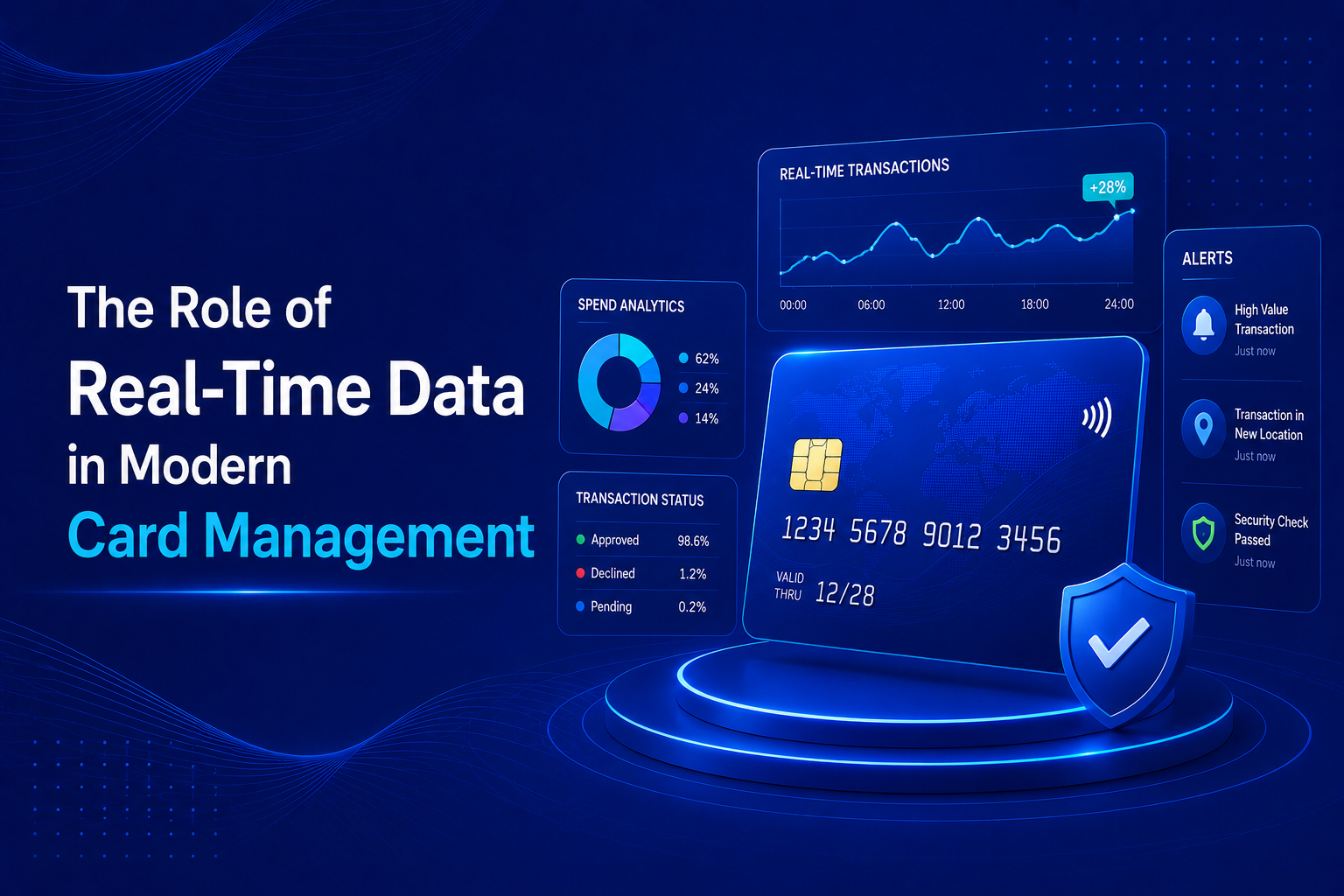
Modern card programs generate a constant flow of information. Every card activation, balance check, transaction, spending decision, and status change creates data that businesses can use to manage their payment operations more effectively. This is why real-time data has become an important part of modern card management. Businesses no longer want to wait for delayed reports to understand what is happening across their card programs. They need faster visibility into transactions, cardholder activity, spending patterns, balances, and potential risks. For businesses building physical or virtual card programs, NetPay provides card issuing infrastructure with APIs, dashboards, transaction monitoring, card controls, reconciliation, and reporting capabilities.
What Is Real-Time Data in Card Management?
Real-time data refers to information that becomes available as card-related activity takes place or with minimal delay. In a modern card management environment, this can include information related to: Card status Transaction history Available balances Spending activity Cardholder activity Loading history Spending reports Risk-related events Instead of relying only on end-of-day or periodic reports, businesses can use connected card infrastructure to maintain greater visibility into ongoing activity. NetPay's technology includes balance checks, transaction history, webhook notifications, spending limits, transaction monitoring, and reconciliation capabilities.
Why Real-Time Visibility Matters
Card programs can become difficult to manage as transaction volumes and cardholder numbers increase. A business operating hundreds or thousands of cards needs to know more than whether cards have been issued successfully. Operational teams may need to understand which cards are active, how they are being used, what balances are available, and whether certain transactions require attention. Real-time or near-real-time visibility helps businesses react more quickly instead of discovering issues only after reviewing historical reports. This becomes particularly useful for corporate cards, platform payouts, brokerage cards, advertising spend cards, and other card-based financial products supported by NetPay's infrastructure.
Real-Time Transaction Monitoring
One of the most important uses of real-time data is card transaction monitoring. Transaction monitoring gives businesses visibility into card activity as part of their ongoing payment operations. It can help operational teams identify activity that requires further attention and understand how cards are being used. NetPay's dashboard includes transaction monitoring, spending reports, cardholder management, load history, user management, and reconciliation reports. NetPay's compliance and security framework also includes real-time transaction monitoring, suspicious activity detection, card blocking, and program suspension capabilities.
Card Status Management Becomes Faster
Real-time information is also important when managing card status. A card may need to be activated when issued, temporarily frozen, blocked because of unusual activity, or cancelled when it is no longer required. NetPay's API infrastructure supports card activation and blocking, while its broader card controls include freeze, unfreeze, cancellation, and spending limits. When businesses have timely access to card information, these controls can become more useful because teams can make decisions based on current card activity.
Balance Data Improves Financial Visibility
Balance information is another important part of modern card management. Businesses managing corporate cards, payout cards, or customer card programs may need to understand how funds are distributed across cards and how available balances change over time. NetPay's APIs include balance checks, while its full-stack card infrastructure supports USD-based card balances and settlements. Having access to current balance information can help businesses maintain better oversight of their card operations.
Better Data Can Support Faster Risk Decisions
Modern card management is closely connected with risk management. When businesses can see transaction activity quickly, they are better positioned to investigate unusual behavior and decide whether additional action is required. NetPay's risk framework includes transaction holds, loading reviews, document requests, settlement delays, suspicious activity detection, card blocking, and program suspension capabilities. Real-time data does not replace compliance or risk processes, but it can provide important information that supports those processes.
Real-Time Data and Reconciliation
Fast transaction visibility is useful, but businesses also need accurate financial records. This is where reconciliation becomes important. NetPay provides reconciliation through its API infrastructure and reconciliation reports through its dashboard. Combining transaction visibility with reconciliation allows businesses to connect day-to-day card activity with their wider financial operations.
How NetPay Supports Modern Card Management
NetPay provides card issuing infrastructure for businesses launching physical and virtual Visa and Mastercard card programs. Its technology combines: Card creation and issuance Card activation and blocking Balance checks Transaction history Webhook notifications Spending limits Cardholder management Transaction monitoring Spending reports Reconciliation These capabilities provide businesses with a connected infrastructure for managing card programs beyond the initial issuance stage.
Conclusion
Real-time data is becoming an essential part of modern card management because businesses need faster visibility into what is happening across their payment operations. From transaction monitoring and balance checks to card controls, spending limits, webhooks, and reconciliation, timely information can help businesses manage cards more efficiently and respond faster when activity requires attention. With NetPay, businesses can access card issuing infrastructure that combines physical and virtual cards with APIs, dashboards, transaction monitoring, reporting, controls, and reconciliation. As card programs grow, the ability to access and use real-time data can help businesses move from simply issuing cards to managing a more connected, scalable, and visible payment operation.
What is real-time data in card management?
Real-time data in card management refers to card and transaction information that becomes available as activity occurs or with minimal delay. This can include card status, balances, transaction history, spending activity, and other operational information.
Why is real-time data important for card programs?
Real-time data can help businesses maintain better visibility over transactions, balances, cardholders, and spending while enabling faster responses when card activity requires attention.
How does real-time transaction monitoring work?
Transaction monitoring provides businesses with ongoing visibility into card activity. NetPay's infrastructure includes real-time transaction monitoring and suspicious activity detection as part of its compliance and security capabilities.
How do APIs support real-time card management?
APIs allow businesses to connect card functionality with their own systems. NetPay's APIs support card creation, activation, blocking, balance checks, transaction history, webhook notifications, spending limits, and reconciliation.
What are webhooks in card management?
Webhooks are notifications that can help connected systems respond to supported card-related events. NetPay includes webhook notifications within its API capabilities.

The NetPay247 team writes about card issuing, Virtual IBANs, cross-border payments and building products on embedded finance infrastructure.
Leave a reply
Your email address will not be published. Required fields are marked *