
Short answer
Learn how fintech platforms can build better internal controls around cards using spending limits, card controls, APIs, monitoring, reporting, and NetPay infrastructure.
For fintech platforms, issuing cards is only one part of building a successful financial product. Once cards are being used by customers, employees, partners, or businesses, platforms need effective internal controls to manage spending, monitor activity, protect funds, and maintain operational visibility. As card programs grow, relying on manual processes can make it harder to control thousands of transactions and cardholders. A well-designed card management system can help fintech platforms automate important functions while keeping teams informed about card activity. This is where modern card issuing infrastructure becomes important. NetPay provides card infrastructure with APIs, dashboard functionality, card controls, transaction monitoring, reporting, and reconciliation capabilities designed to support different card program use cases.
What Are Internal Controls in a Card Program?
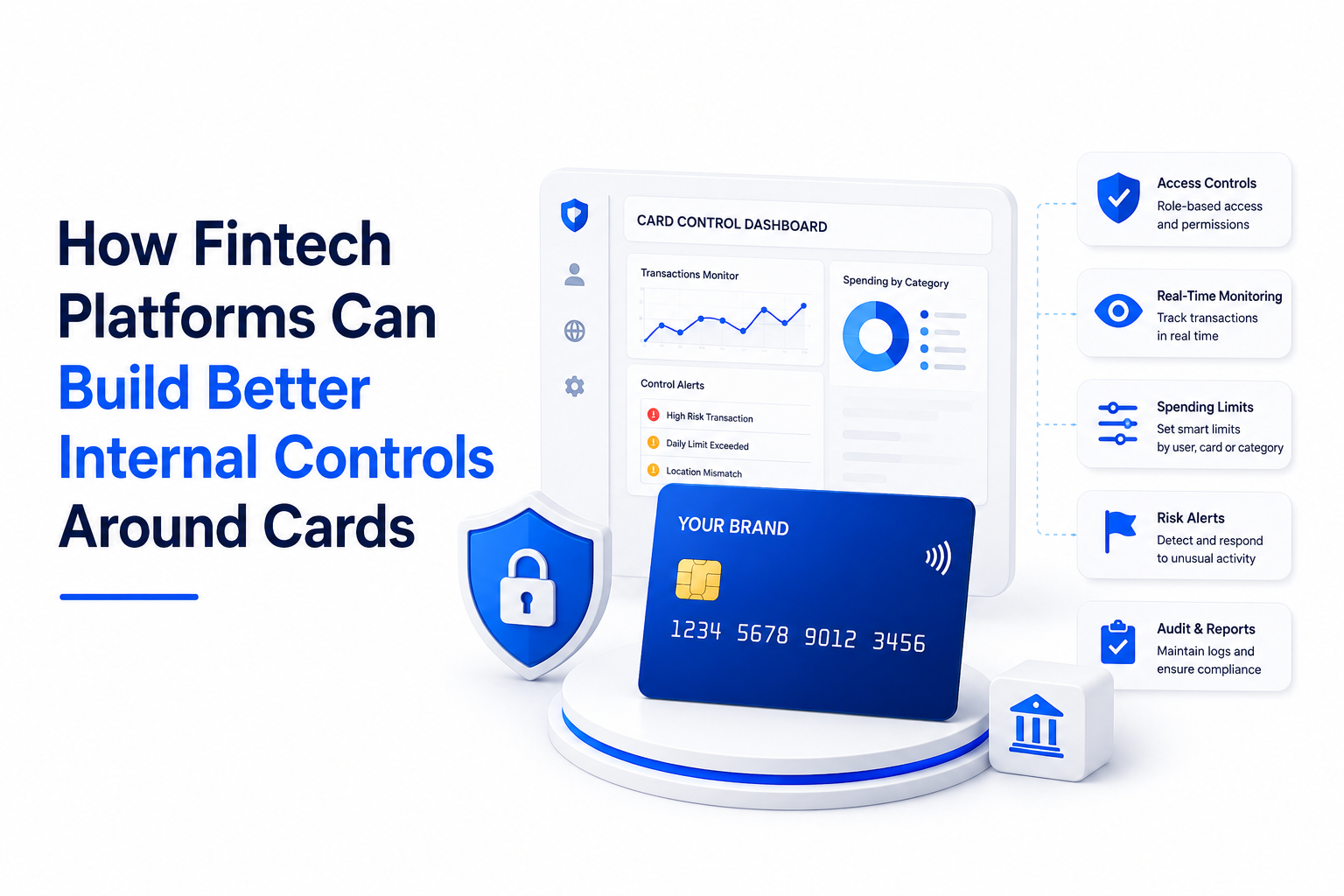
Internal controls are the processes and tools a fintech platform uses to manage how cards and funds are accessed and used. Depending on the business model, these controls can include: Card activation and blocking Spending limits Freeze and unfreeze controls Transaction monitoring Balance checks Cardholder management Reporting and reconciliation Risk and compliance processes The objective is not simply to restrict card usage. Good internal controls should help businesses create a structured environment where card activity can be managed according to their operational requirements.
1. Start With Clear Spending Rules
Different cardholders may have different spending needs. For example, a corporate card may be used for business expenses, while a platform payout card may serve a completely different purpose. Creating appropriate spending limits can help fintech platforms establish boundaries around card usage. NetPay supports spending limits as part of its card management capabilities. Its API infrastructure also allows businesses to manage supported card functions programmatically. The right limits will depend on the business model, risk framework, and applicable requirements.
2. Control Card Status
Card status management is another important internal control. Fintech platforms may need to activate cards, temporarily freeze them, block them, or cancel them depending on the situation. NetPay supports card controls including freeze, unfreeze, cancellation, and spending limits, while its API capabilities include card activation and blocking. Having these controls available can give operational teams more flexibility when managing individual cards or card programs.
3. Monitor Transactions
Internal controls are more effective when businesses can see what is happening across their card programs. Transaction monitoring can help platforms maintain visibility into card activity and identify transactions or patterns that may require further review. NetPay's dashboard includes transaction monitoring, spending reports, cardholder management, load history, user management, and reconciliation reports. For growing fintech platforms, centralized visibility can make day-to-day card operations easier to manage.
4. Use APIs to Automate Controls
Manual card management can become inefficient as a fintech platform grows. APIs can connect card infrastructure with a fintech company's own application, dashboard, or internal systems. This can allow supported card functions to become part of existing workflows rather than requiring every action to be handled manually. NetPay provides API capabilities for card creation and issuance, activation and blocking, balance checks, transaction history, webhook notifications, spending limits, and reconciliation. This can help fintech platforms create more connected operational processes.
5. Maintain Balance Visibility
Knowing the status of funds is another important part of internal control. Balance checks can help platforms understand available funds associated with their card programs and support better financial oversight. NetPay includes balance checks within its API capabilities and provides dashboard functionality for managing card-related information. When combined with transaction history and reporting, balance visibility can provide a clearer picture of card activity.
How NetPay Supports Card Controls
NetPay provides infrastructure that combines card issuing with the operational tools needed to manage card programs. Its capabilities include: Card Issuing → Card Controls → APIs → Transaction Monitoring → Reporting → Reconciliation NetPay supports physical and virtual cards, card management, spending limits, transaction monitoring, balance checks, API integration, and dashboard-based reporting. This allows fintech platforms to build internal control processes around the infrastructure instead of treating card issuing as an isolated function.
Conclusion
Strong internal controls are essential for fintech platforms that want to operate card programs efficiently. Spending limits, card status controls, transaction monitoring, balance visibility, APIs, reporting, reconciliation, and risk processes can work together to create a more structured card management environment. The key is to build these controls into the card program from the beginning and ensure that the infrastructure can support the business as it grows. With NetPay, fintech platforms can access card issuing infrastructure designed to support physical and virtual cards alongside APIs, card controls, transaction monitoring, reporting, and reconciliation. A successful card program is not just about issuing cards. It is about having the right controls behind every card.
What are internal controls in a fintech card program?
Internal controls are processes and technologies used to manage card access, spending, transactions, balances, users, and operational risks.
Why are internal controls important for fintech card programs?
They can help fintech platforms manage card usage, maintain operational visibility, apply spending rules, monitor transactions, and respond to activity that requires attention.
What card controls should fintech platforms consider?
Common controls include card activation, blocking, freezing, unfreezing, cancellation, and spending limits. NetPay supports these card management capabilities.
Why is reconciliation important for fintech card programs?
Reconciliation helps connect card transaction activity with financial records and can support more organized finance and operational processes.
How does transaction monitoring support internal controls?
Transaction monitoring provides visibility into card activity and can help businesses identify transactions or patterns that may require further review.

The NetPay247 team writes about card issuing, Virtual IBANs, cross-border payments and building products on embedded finance infrastructure.


Leave a reply
Your email address will not be published. Required fields are marked *