
Short answer
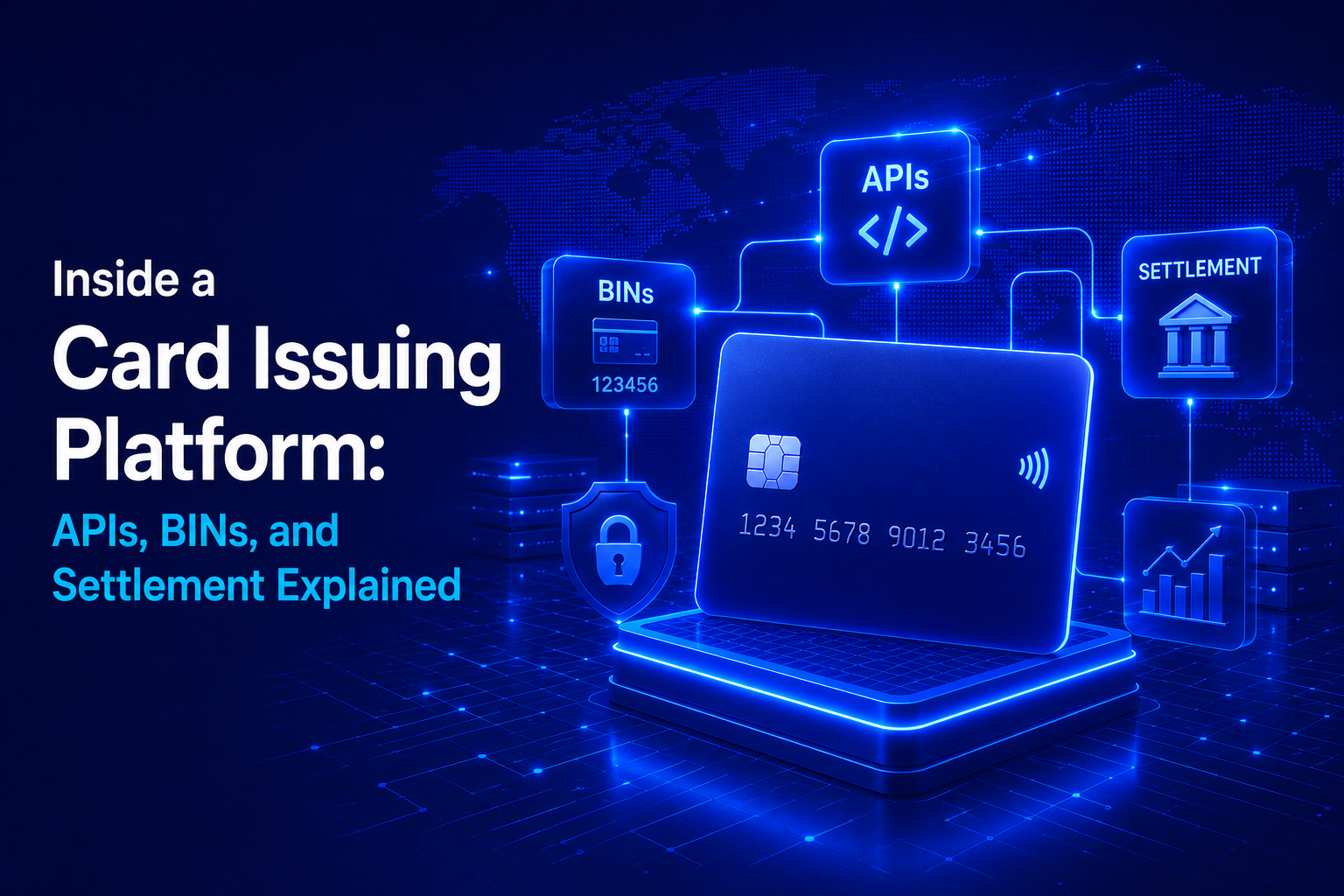
Card issuing explained in plain terms: who the players are, what happens when a card is created and used, and how modern platforms let any business issue cards.
Card Issuing, Answered in One Paragraph
Card issuing is the process of creating payment cards and operating the accounts behind them. An issuer opens a card account, generates the card credentials, approves or declines each transaction in real time, and settles with the card networks. Traditionally only banks could do this; today a card issuing platform exposes the same capability through APIs, so software companies can launch branded Visa or Mastercard programs without becoming banks themselves.
The Players Behind Every Card
Four parties touch every card transaction. The cardholder holds and uses the card. The issuer creates the card and stands behind its spending. The card network — Visa or Mastercard — routes messages between the parties and sets the rules. The acquirer represents the merchant and collects the payment on their behalf. When you tap a card at a terminal, a message travels from the merchant through the acquirer and network to the issuer, which answers within moments: approve or decline.
What Happens When a Card Is Created
- A cardholder record is created and verified through KYC checks
- The platform generates the card credentials — number, expiry, CVV — under the program's BIN
- Controls are attached: spending limits, merchant categories, allowed countries and channels
- A virtual card becomes usable immediately; a physical card goes to production and fulfilment
- Every later transaction is checked against those controls in real time before approval
What Happens When a Card Is Used
A purchase triggers three stages. Authorization happens in seconds: the issuer checks the balance and the card's rules, then approves or declines. Clearing follows, usually within a day or two, when the final transaction details arrive from the merchant. Settlement is the actual movement of money between the parties through the network. Modern platforms stream each stage to the program operator as webhook events, which is how banking apps show a purchase notification before the receipt finishes printing.
Why Businesses Issue Their Own Cards
A card is a daily touchpoint with your brand, a source of transaction data, and a product feature competitors cannot copy overnight. Expense platforms issue cards to control company spending at the point of purchase. Neobanks issue cards because a bank account without a card is half a product. Marketplaces and payroll platforms issue cards to deliver earnings instantly. In every case the economics improve too: program operators typically participate in interchange revenue on card spend.
Do I need a banking license to issue cards?
Usually not. Card issuing platforms and their sponsoring partners hold the scheme memberships and regulatory permissions; your business operates the branded program on top. Requirements vary by market and are confirmed during onboarding.
What is the difference between an issuer and an issuer processor?
The issuer is the institution responsible for the card; the issuer processor runs the technology that authorizes and settles its transactions. Platforms like NetPay bundle both roles behind one API.
How fast can a business start issuing cards?
With a platform handling BIN sponsorship, certification and compliance, most programs reach a live pilot in weeks — integration is a REST API with sandbox access.

The NetPay247 team writes about card issuing, Virtual IBANs, cross-border payments and building products on embedded finance infrastructure.

Leave a reply
Your email address will not be published. Required fields are marked *