
Short answer
Learn how webhooks in payment systems work and help fintech businesses automate payment updates, monitor transactions, connect APIs, and streamline workflows.
Modern fintech businesses process payments, card transactions, account updates, and payouts across multiple systems. Keeping this information updated in real time can be challenging, especially when teams rely on manual checks or repeated requests to their systems. This is where webhooks in payment systems become useful. Webhooks help applications communicate automatically when a specific event occurs. For fintech businesses, they can improve transaction visibility, streamline workflows, and keep connected platforms updated without requiring constant manual intervention.
What Are Webhooks in Payment Systems?
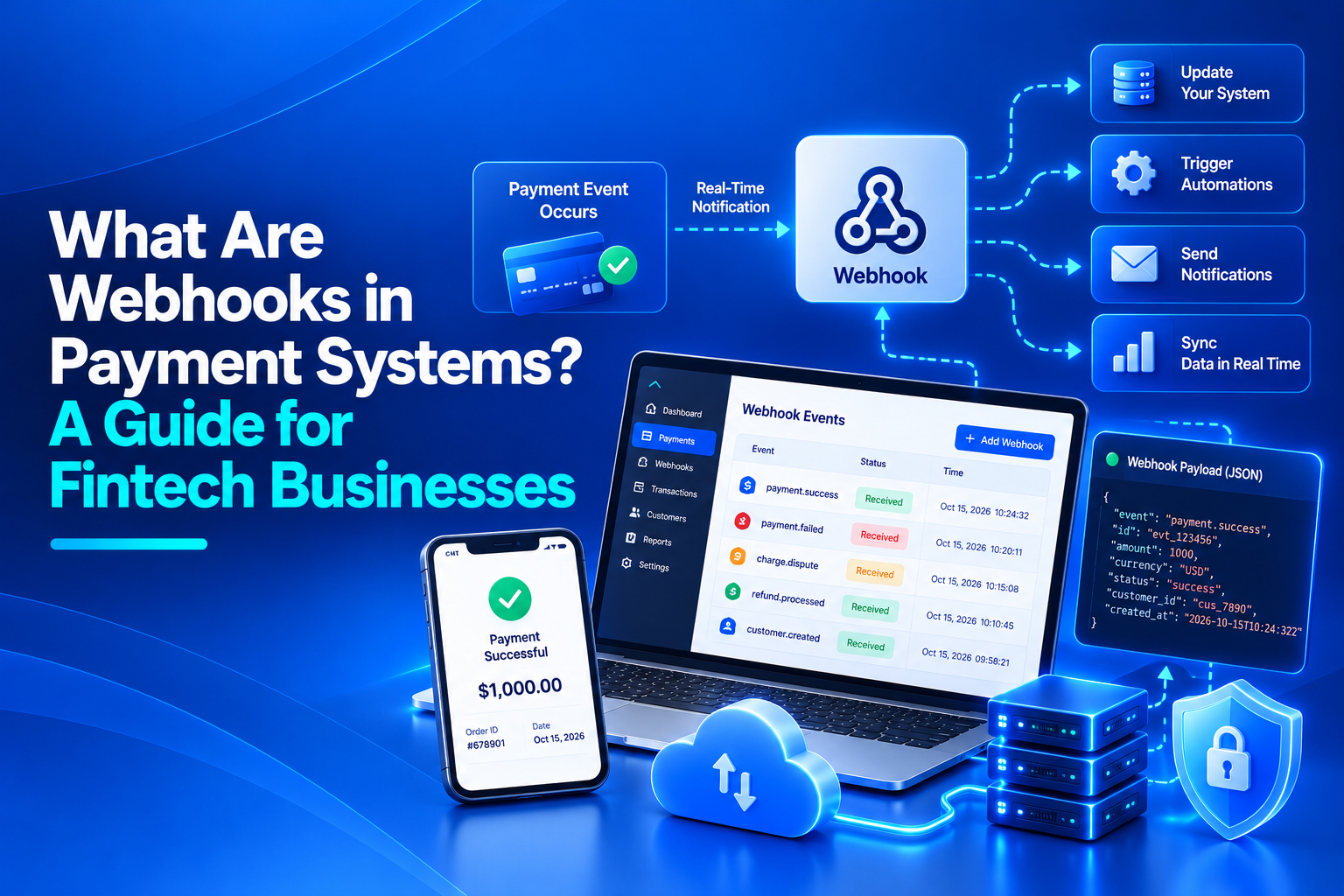
A webhook is an automated message sent from one application to another when a predefined event takes place. Instead of repeatedly checking whether something has changed, a system receives a notification when the relevant event occurs. For example, when a payment is completed, a payment platform can send a webhook notification to a business's application. The application can then update the transaction status, display the latest information on a dashboard, or trigger another workflow. In payment infrastructure, webhooks may support events related to payment status, card transactions, account activity, refunds, and payouts, depending on the provider's capabilities.
How Do Payment Webhooks Work?
The webhook process typically follows a few straightforward steps: 1. An event occurs: A payment is initiated, a card transaction is processed, or a payout status changes. 2. A notification is generated: The payment system identifies the event and creates a message containing relevant information. 3. The webhook is delivered: The system sends the message to a configured endpoint in the receiving application's infrastructure. 4. The application processes the event: The receiving system validates the message and performs the required action, such as updating a transaction record or notifying a user. 5. The result is recorded: The application stores the event details to support monitoring, troubleshooting, and accurate record-keeping. This event-driven approach helps businesses exchange payment information efficiently and keep their systems better synchronized.
Why Are Webhooks Important for Fintech Businesses?
1. Real-Time Payment Updates
Webhooks help applications receive payment event notifications as they occur, subject to delivery and processing times. This can reduce the need for frequent manual checks and help businesses present more timely transaction information to customers and internal teams.
2. Automated Payment Workflows
Businesses can use webhook events to trigger actions automatically. For example, a confirmed payment event could update an order status, while a payout update could trigger an internal notification. The receiving application should verify the event and apply the appropriate business rules before taking action.
3. Better Transaction Visibility
For fintech platforms, tracking payment and transaction statuses across multiple systems can be complex. Webhooks help bring event information into internal dashboards and operational tools, making it easier to monitor activity and investigate issues.
4. Improved System Integration
Webhooks can connect payment infrastructure with customer portals, business applications, accounting systems, and internal databases. This helps reduce disconnected workflows and supports more consistent information across the technology stack.
5. More Efficient Operations
By automating event notifications and routine updates, webhooks can reduce repetitive tasks for operational teams. Staff can spend less time checking systems manually and more time handling exceptions that need attention.
How NetPay Fits into Connected Payment Infrastructure
For fintech businesses, webhooks are one part of a broader technology and payment ecosystem. Connecting payment events with card programs, accounts, transaction records, and payout workflows can help businesses manage their operations more efficiently. NetPay provides payment infrastructure for businesses exploring connected card and payment capabilities, including card issuing infrastructure, virtual IBANs, multi-currency accounts, payments, payouts, and API-based integrations. When supported by the relevant solution, API and webhook integrations can help businesses connect payment events with their own applications and operational workflows. The available events, integration methods, and supported capabilities should be confirmed for the specific NetPay solution and business requirements.
Conclusion
Webhooks in payment systems help fintech businesses respond to payment events, automate workflows, and keep connected applications updated. From payment status notifications to card transaction monitoring and payout tracking, they can improve operational visibility while reducing repetitive manual work. For businesses building or scaling financial products, combining reliable webhook integrations with payment infrastructure can support more connected and efficient operations. With a clear integration strategy, fintech companies can create workflows that are easier to monitor, maintain, and scale.
What is a webhook in a payment system?
A webhook is an automated notification sent from one application to another when a specific payment-related event occurs, such as a payment status change or payout update.
How do webhooks work in fintech?
A fintech application receives an event notification from a connected system, validates it, and processes the information to update records, notify users, or trigger an appropriate workflow.
What is the difference between a webhook and an API?
An API allows applications to request data or perform actions. A webhook sends an event notification when a predefined event occurs. Both can work together in a payment integration.
What are common payment webhook use cases?
Common use cases include payment status updates, card transaction notifications, payout tracking, refund events, account activity updates, and customer notifications.
Are payment webhooks secure?
Webhooks can be implemented securely by verifying signatures or authentication, using encrypted connections, preventing duplicate processing, and monitoring failed deliveries.

The NetPay247 team writes about card issuing, Virtual IBANs, cross-border payments and building products on embedded finance infrastructure.

Leave a reply
Your email address will not be published. Required fields are marked *