
Short answer
Discover how virtual card management helps businesses set spending limits, monitor transactions, control card access, and improve expense management.
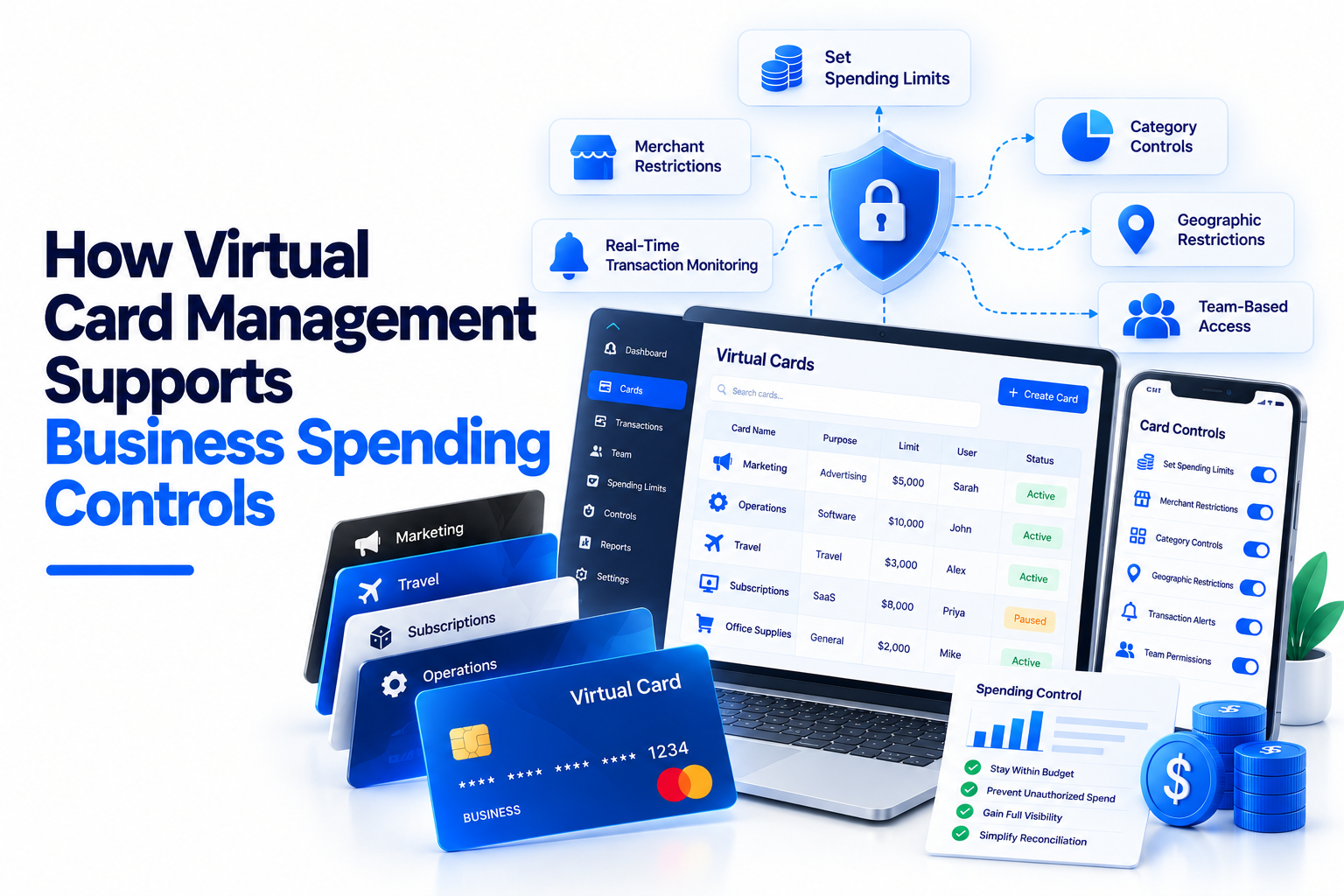
Businesses today need more than convenient payment methods. They need better visibility into expenses, clear spending policies, and greater control over how company funds are used. As teams increasingly rely on digital tools, subscriptions, online purchases, and remote operations, managing business expenses manually can become difficult. This is where virtual card management plays an important role. It helps businesses issue digital cards, set spending limits, monitor transactions, and manage card usage from a centralized system. With the right virtual card management platform, companies can improve financial oversight while giving employees the flexibility to make approved purchases.
What Is Virtual Card Management?
Virtual card management is the process of creating, controlling, monitoring, and managing payment cards that exist digitally rather than as physical cards. Businesses can use virtual cards for employee expenses, software subscriptions, advertising payments, vendor purchases, and other online transactions. Unlike traditional company cards, virtual cards can offer more flexible controls. Depending on the platform and card program, businesses may be able to assign cards to specific employees, teams, projects, or spending purposes. They can also manage card status, adjust limits, and review transaction activity through a digital interface. These features make virtual cards a useful part of modern business expense management and payment infrastructure.
How Virtual Card Management Improves Business Spending Controls
1. Set Clear Spending Limits
One of the biggest advantages of virtual card management is the ability to establish spending limits. Businesses can define how much a cardholder can spend within a particular period or for a specific business need, depending on the available platform controls. For example, a marketing team may need a card for advertising campaigns, while an operations team may require one for software tools or vendor payments. Setting appropriate limits helps align spending with approved budgets and reduces the risk of unnecessary expenses.
2. Monitor Transactions More Effectively
Without centralized oversight, tracking company card transactions can involve multiple spreadsheets, statements, and manual checks. Virtual card management can bring transaction information into one place, making it easier for finance teams to review spending activity. Depending on the platform's capabilities, businesses may be able to access transaction histories, identify unusual activity, and review expenses sooner. Better visibility helps finance teams understand where money is going and address discrepancies before they become larger problems.
3. Control Card Access and Status
Business spending needs can change quickly. An employee may change roles, a subscription may no longer be required, or a project may come to an end. In these situations, companies need a practical way to manage access to payment cards. A virtual card management system may allow authorized administrators to activate, freeze, block, or cancel cards based on the available functionality. These controls help businesses respond to changing requirements and reduce the risk of cards remaining active when they are no longer needed.
4. Improve Employee and Department-Level Accountability
When multiple employees use company funds, it can be challenging to determine who made a purchase and why. Assigning virtual cards to specific employees, departments, or business activities can make expense tracking more organized. Clear card ownership and transaction records help finance teams connect spending with the relevant business purpose. This can simplify internal reviews, support expense reconciliation, and encourage employees to follow company spending policies.
5. Support Faster Financial Reporting and Reconciliation
Manual expense tracking often takes time, particularly when a business handles a high volume of transactions. Virtual card management can help streamline this process by making transaction data easier to access and review. When card transaction records are available alongside other payment information, finance teams can reconcile expenses more efficiently and prepare more accurate reports. Integration with accounting or business systems can further reduce repetitive work, depending on the platform's capabilities.
Why Businesses Need a Scalable Virtual Card Management Platform
As companies grow, their spending becomes more complex. They may have employees in different locations, multiple departments, recurring subscriptions, and a growing number of vendors. Managing every expense through a single shared card or manual approval process can limit visibility and create operational bottlenecks. A scalable virtual card management platform helps businesses establish consistent controls without making routine payments unnecessarily difficult. Key capabilities to consider include card issuance, spending limits, card status management, transaction monitoring, reporting, and integration through APIs. The right setup depends on the company's operating model, risk requirements, and existing financial systems. Businesses should also consider access permissions, transaction alerts, security measures, and how card data will support their reporting and reconciliation processes.
How NetPay Supports Modern Card Management
For businesses and fintech platforms building digital payment experiences, the underlying card infrastructure is an important part of spending control. NetPay provides card issuing infrastructure designed to support digital card programs and card management workflows. Through card issuing capabilities, businesses can build programs around virtual and physical cards, with functionality such as card creation, activation or blocking, spending controls, and transaction visibility depending on the configured program and available features. Card issuing APIs can also help connect card functionality with business applications and financial workflows. By bringing card management and payment operations into a more structured digital environment, NetPay can support businesses looking to develop more organized card programs. This provides a foundation for managing card activity while aligning payment workflows with internal spending policies. For companies evaluating business payment infrastructure, the goal is not simply to issue virtual cards. It is to establish a reliable framework for managing how those cards are used, monitoring transactions, and maintaining oversight as operations grow.
Final Thoughts
Virtual card management gives businesses a more structured way to manage company spending. Spending limits, transaction visibility, card status controls, and organized reporting can help finance teams enforce policies while allowing employees to make legitimate business purchases. As digital expenses continue to grow, investing in suitable virtual card management solutions can help companies reduce manual work, strengthen accountability, and improve financial visibility. With card issuing infrastructure from providers such as NetPay, businesses and fintech platforms can build digital card programs around their operational needs and spending control requirements.

The NetPay247 team writes about card issuing, Virtual IBANs, cross-border payments and building products on embedded finance infrastructure.
Leave a reply
Your email address will not be published. Required fields are marked *