
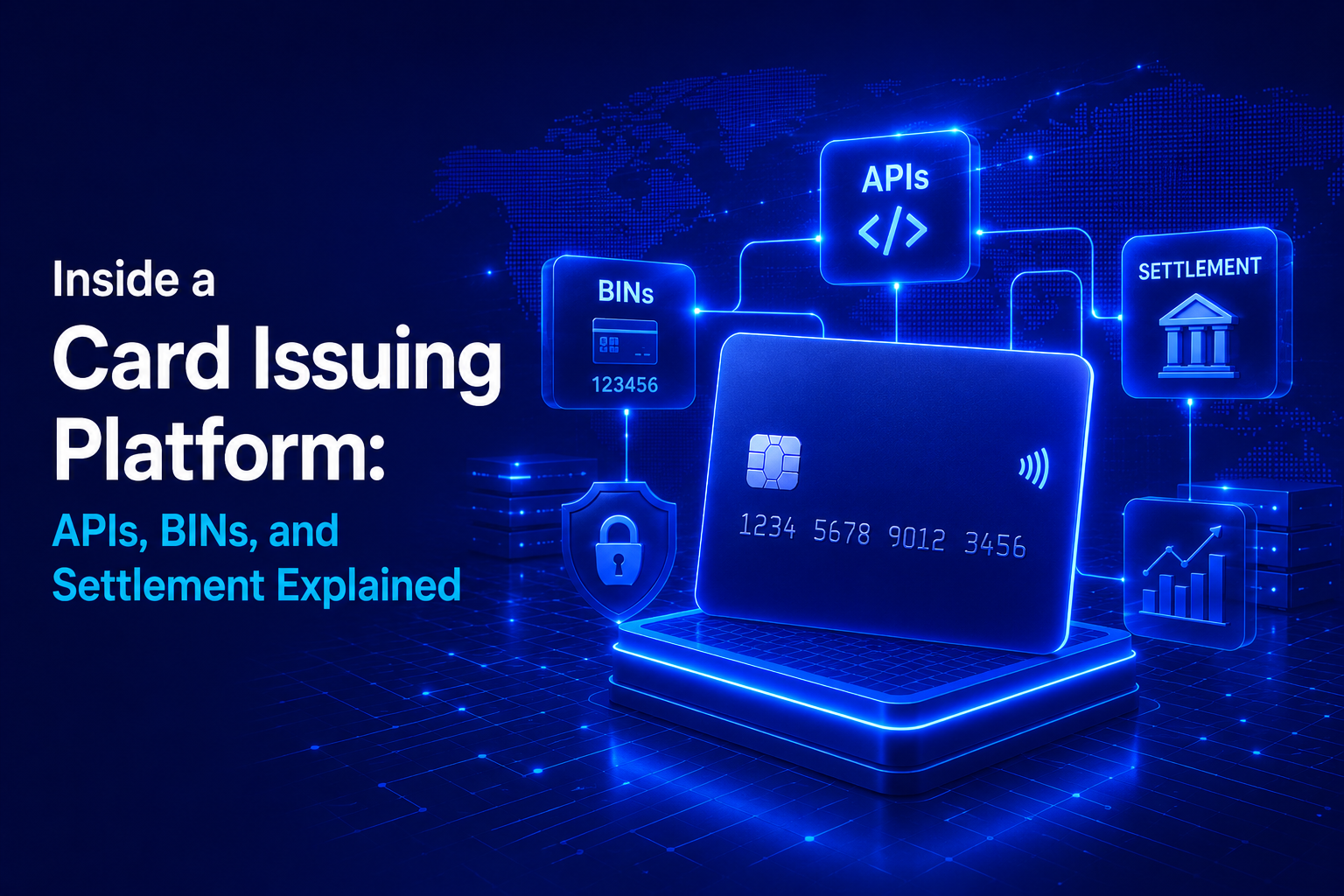
Short answer
Understand how a card issuing platform works — from APIs and BIN sponsorship to settlement and crypto-enabled card loading. Learn how NetPay helps businesses launch branded card programs without becoming a bank.
What is a Card Issuing Platform?
A card issuing platform is a fintech infrastructure layer that allows businesses to create and manage card programs without becoming a bank. Platforms like NetPay provide:
- Physical and virtual Visa/Mastercard cards
- USD-based card accounts
- Crypto (USDT) loading support
- API-based card management
- Dashboard for monitoring and control
- Compliance and fraud systems
Instead of building banking infrastructure from scratch, companies plug into this system and launch their own branded card programs.
APIs: The Brain of the Card Issuing System
APIs (Application Programming Interfaces) allow businesses to interact with the card system in real time. Key API functions include:
1. Card Creation & Issuance
Companies can instantly generate virtual cards or request physical card issuance.
2. Activation & Blocking
Cards can be activated, frozen, or blocked instantly based on user activity or risk signals.
3. Balance Management
APIs allow real-time tracking of card balances and available funds.
4. Transaction Monitoring
Every card transaction is logged and returned via webhooks or dashboards.
5. Spending Controls
Businesses can set limits such as:
- Daily spending caps
- Merchant restrictions
- Category-based controls
Why APIs Matter
APIs transform card issuing into a programmable financial system. Instead of manual banking operations, everything becomes automated, scalable, and real-time.
For example, a brokerage or fintech company using NetPay can issue thousands of cards automatically for users, affiliates, or internal teams without manual intervention.
BINs: The Hidden Identity of Every Card
Behind every Visa or Mastercard lies a critical element called the BIN (Bank Identification Number). A BIN is the first 6–8 digits of a card number that identifies:
- The issuing bank or program
- Card network (Visa or Mastercard)
- Card type (debit, credit, prepaid)
- Geographic and compliance rules
Why BINs Matter in Card Issuing
BINs are the foundation of any card program. Without a BIN, you cannot issue a functioning card on global networks. Platforms like NetPay operate through BIN sponsorship models, where they provide access to licensed BINs that allow businesses to:
- Launch branded card programs
- Issue cards globally
- Enable online and POS transactions
- Support ATM withdrawals (if enabled)
How BINs Work in Practice
When a user makes a payment:
- Card number is entered
- BIN identifies issuing program
- Network routes transaction to issuer
- Issuer approves or declines based on rules
- Transaction is processed in real time
This entire process happens in milliseconds.
Settlement: How Money Actually Moves
While APIs and BINs handle card usage, settlement is where money actually flows. Settlement is the process of transferring funds between:
- Merchant banks
- Card networks (Visa/Mastercard)
- Issuing platforms
- End-user accounts
Step-by-Step Settlement Flow
- Transaction Initiation — User spends money using a card.
- Authorization — Issuer checks balance and approves transaction.
- Clearing Phase — Card network groups transactions and sends settlement instructions.
- Funding Transfer — Funds move between acquiring and issuing banks.
- Card Balance Update — User account is updated in real time or batch cycles.
Crypto-Enabled Card Loading (Modern Layer)
A major innovation in platforms like NetPay is crypto-based loading. According to NetPay infrastructure, users can fund card balances using USDT or other approved crypto rails. How it works:
- User submits loading request
- Crypto is received via approved channels
- Compliance and risk review is performed
- Funds are converted and credited
- Card balances are updated
This model bridges traditional card networks with modern digital assets.
The Real Advantage: Full Stack Infrastructure
What makes modern card issuing platforms powerful is not just cards—it's the ecosystem. NetPay provides a full stack that includes:
- API access for developers
- Dashboard for operations teams
- Compliance and risk tooling
- Crypto + fiat payment rails
- White-label card programs
This means businesses can focus on growth while the infrastructure handles payments, settlement, and compliance.
Conclusion
A card issuing platform is a complex financial engine built on three core pillars:
- APIs → Control and automation layer
- BINs → Identity and network access layer
- Settlement → Money movement and clearing layer
When combined, these systems allow companies to launch global card programs without building a bank. Platforms like NetPay are driving this shift by making card issuing accessible, programmable, and scalable—powered by APIs, BIN infrastructure, and modern settlement rails including crypto integration.
As fintech continues to evolve, card issuing is becoming one of the most important building blocks of embedded finance—and one of the fastest-growing opportunities in global payments.
Frequently Asked Questions
Why is BIN sponsorship important?
BIN sponsorship allows companies to issue branded payment cards through licensed banking partners without obtaining banking licenses themselves.
How does settlement work in card payments?
Settlement is the process of transferring funds between merchants, acquiring banks, card networks, issuing platforms, and cardholders after a transaction is approved.
Can crypto be used to fund payment cards?
Yes. Some modern card issuing platforms, including NetPay, support USDT and other approved digital assets to load and fund card balances.
What businesses can benefit from card issuing platforms?
Fintech companies, brokerages, crypto platforms, payment service providers, affiliate networks, and corporate expense management businesses can benefit from card issuing solutions.

The NetPay247 team writes about card issuing, Virtual IBANs, cross-border payments and building products on embedded finance infrastructure.


Leave a reply
Your email address will not be published. Required fields are marked *