
Short answer
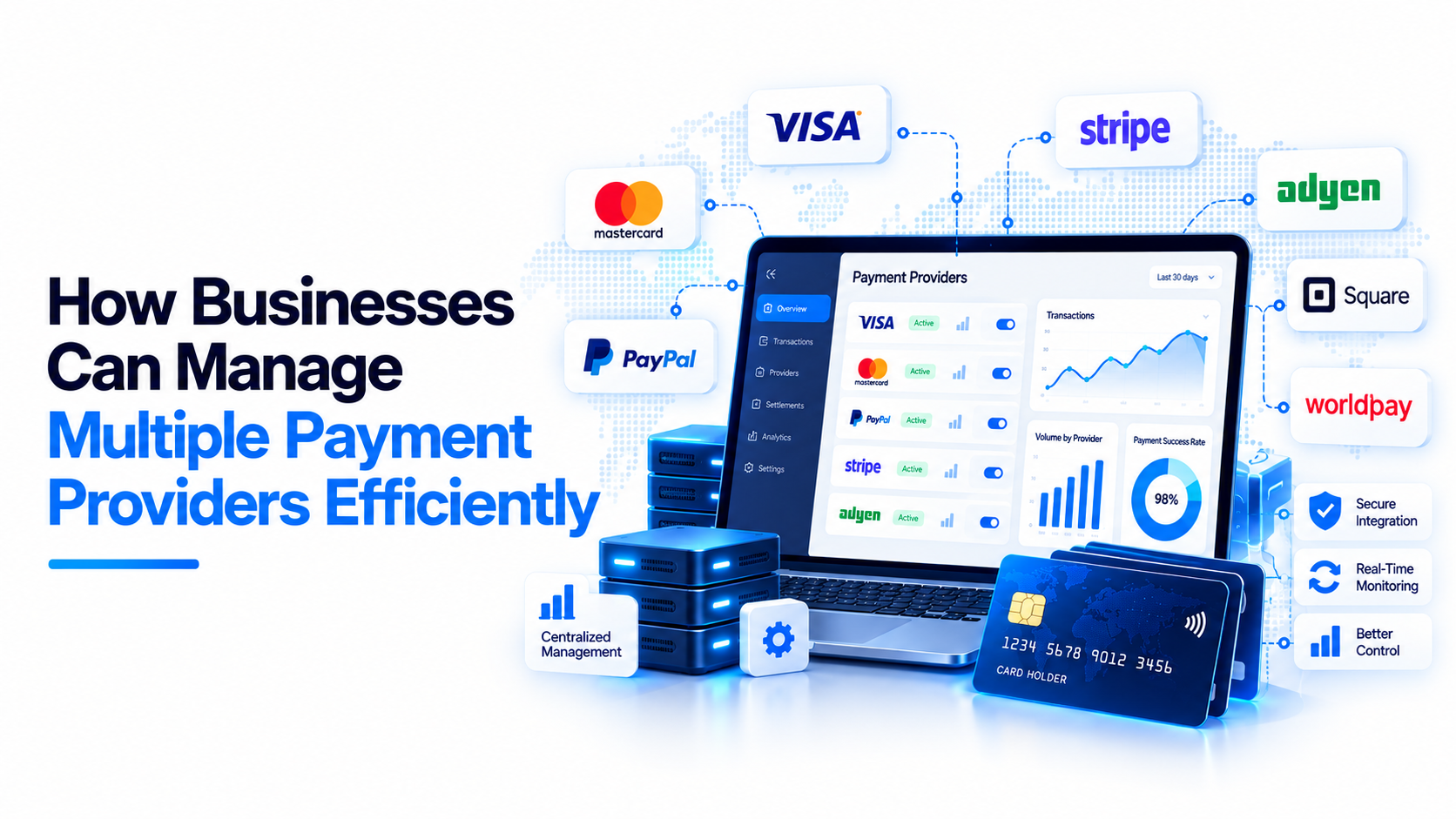
Learn how businesses can efficiently manage multiple payment providers using APIs, centralized data, payment monitoring, automation, and reconciliation.
As businesses expand into new markets, they often add more than one payment provider to their technology stack. One provider may offer better coverage in a particular country, while another may support a specific payment method, currency, or payout requirement. Using multiple providers can give businesses flexibility, but it can also create operational challenges. Different APIs, dashboards, transaction formats, settlement schedules, and reporting systems can make payment management more complicated than it needs to be. The key is not simply reducing the number of providers. It is creating a connected payment infrastructure that allows different payment services to work together efficiently.
Why Businesses Use Multiple Payment Providers
There are several reasons a business may work with multiple payment providers. A company operating internationally may need access to different payment methods across regions. An eCommerce platform may want alternative processing routes. A fintech business may use different providers for cards, accounts, payments, or payouts. Multiple providers can also provide operational flexibility and help businesses avoid depending entirely on one payment system. However, the more providers a business adds, the more important centralized management becomes.
The Challenges of Managing Multiple Providers
1. Different APIs and Integrations
Every payment provider may have its own API structure, authentication process, data format, and documentation. This means development teams may need to maintain several integrations at the same time. As payment infrastructure grows, managing these connections can consume significant technical resources. A standardized integration layer can help businesses reduce this complexity by providing a consistent way to interact with different payment systems.
2. Fragmented Transaction Data
When transactions are processed through different providers, payment information may be spread across multiple dashboards and databases. A finance or operations team may need to check several systems to understand: Transaction status Payment amount Currency Fees Settlement Refunds Failed transactions This fragmented data can make reporting and monitoring more difficult. Connecting payment data into a unified view can provide better operational visibility.
3. Reconciliation Becomes More Complex
Payment reconciliation is one of the biggest challenges when multiple payment providers are involved. Each provider may have different settlement schedules, fee structures, transaction references, and reporting formats. Businesses therefore need to match transactions across different systems and ensure that the amounts recorded internally correspond with actual settlements. A connected reconciliation process can reduce manual work and make it easier to identify discrepancies.
4. Different Settlement Timelines
Not every payment provider settles funds at the same time. One provider may settle transactions daily, while another may operate on a different schedule. When businesses rely on multiple providers, finance teams need to track these settlement cycles carefully to maintain accurate cash-flow visibility. Centralized transaction and settlement reporting can make this process easier to manage.
5. Monitoring Payment Performance
Businesses should also monitor how different providers perform. Important metrics can include: Success rates Failure rates Processing times Refund rates Settlement performance Without a unified view, comparing providers can require manually collecting information from different systems. Connected payment infrastructure can help businesses bring relevant transaction information into one operational view.
How APIs Can Simplify Multi-Provider Management
APIs can play an important role in managing multiple payment providers. Instead of building completely separate workflows throughout the business application, companies can create an integration layer that standardizes how payment information is exchanged. For example: Business Platform ↓ Payment Integration Layer ↓ Provider A | Provider B | Provider C This approach can make it easier for internal systems to communicate with different payment providers. Webhooks can also help businesses receive real-time or near-real-time events when supported, such as payment completion, failure, refund, or settlement updates.
Create a Single View of Payment Activity
One of the most effective ways to manage multiple providers is to create a centralized operational view. Instead of asking teams to monitor several dashboards, businesses can bring relevant information into their own internal systems. This can provide a single view of: Payments Cards Payouts Transaction status Currencies Fees Settlements Reconciliation The goal is not necessarily to replace every provider. It is to make the overall payment environment easier to manage.
Where NetPay Fits In
NetPay provides financial and payment infrastructure that can help businesses build connected payment workflows. Its capabilities include areas such as cards, accounts, global payments, FX, transaction data, APIs, webhooks, and reconciliation. For businesses managing multiple payment relationships, a connected infrastructure approach can help bring financial workflows together and reduce unnecessary operational fragmentation. Rather than treating every financial function as an isolated system, businesses can create a broader infrastructure layer around their payment operations.
Final Thoughts
Using multiple payment providers can give businesses flexibility and access to different markets and payment capabilities. But without the right architecture, it can also create fragmented data, complicated integrations, and additional reconciliation work. The solution is not always to reduce the number of providers. Instead, businesses can build a connected payment infrastructure that brings different payment services, transaction data, and financial workflows together. With APIs, webhooks, centralized visibility, and automated reconciliation, businesses can manage multiple payment providers more efficiently while keeping their payment architecture flexible. NetPay supports this broader approach to financial infrastructure, helping businesses connect payment and card capabilities with the systems they already use. Multiple providers don't have to mean multiple disconnected systems.
Why do businesses use multiple payment providers?
Businesses may use multiple providers to access different markets, currencies, payment methods, processing capabilities, or additional operational flexibility.
What are the challenges of using multiple payment providers?
Common challenges include managing different APIs, fragmented transaction data, different settlement schedules, inconsistent reporting, and more complex reconciliation.
How can businesses manage multiple payment providers efficiently?
Businesses can use standardized integrations, centralized transaction monitoring, automated reconciliation, APIs, webhooks, and a unified internal payment data layer.
Can APIs connect multiple payment providers?
Yes. Businesses can use APIs and an integration layer to connect different payment providers with their applications and internal systems.
Why is reconciliation important when using multiple payment providers?
Reconciliation helps businesses match transactions, fees, refunds, and settlements across different providers and maintain accurate financial records.

The NetPay247 team writes about card issuing, Virtual IBANs, cross-border payments and building products on embedded finance infrastructure.


Leave a reply
Your email address will not be published. Required fields are marked *