
Short answer
Learn what businesses should look for in payment infrastructure, from APIs and cards to global payments, FX, transaction data, and reconciliation.
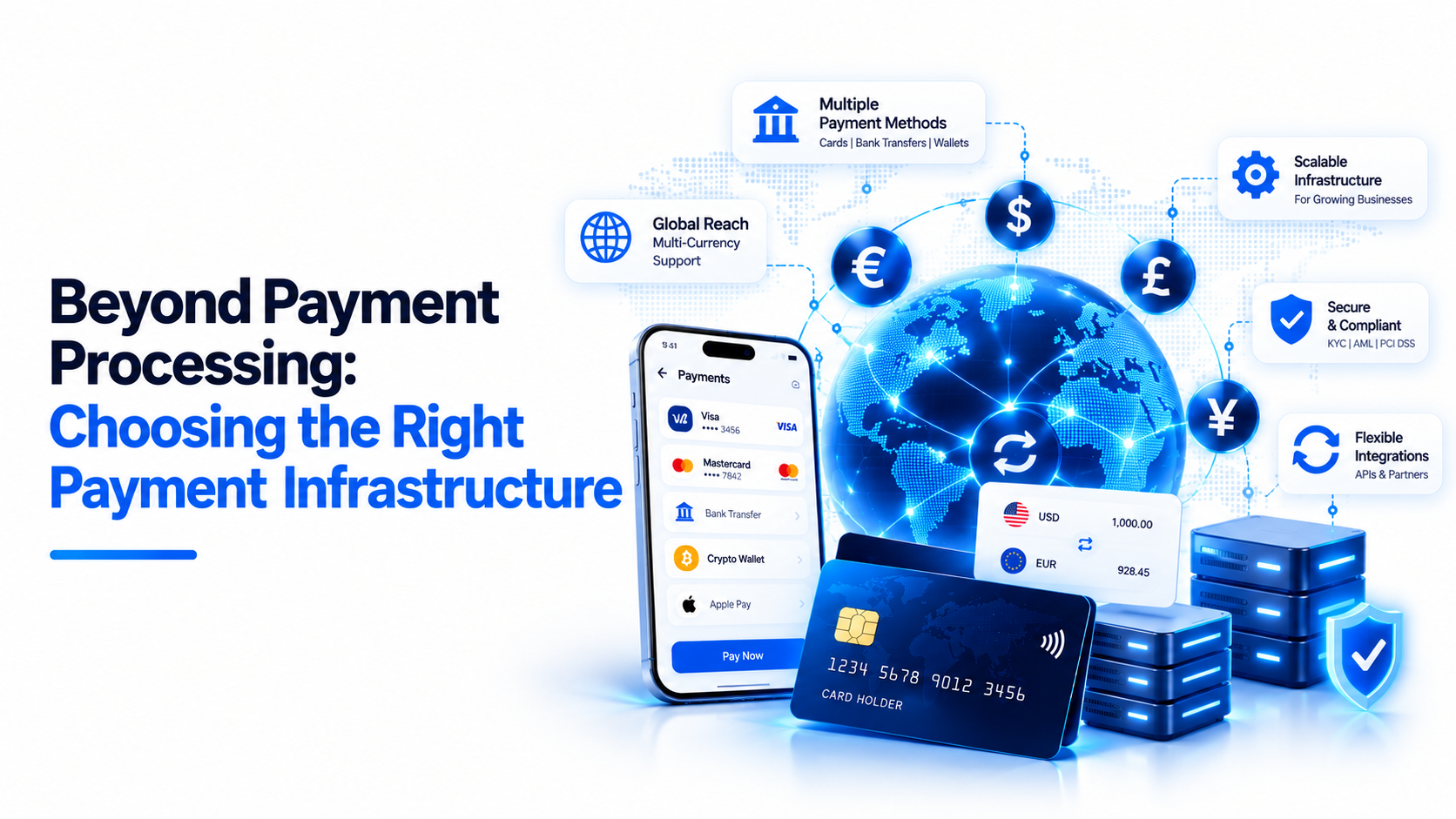
Payment processing is only one part of a modern financial system. As businesses expand their digital payment capabilities, they often need much more than the ability to accept or send transactions. They may need card issuing API, accounts, payouts, foreign exchange, transaction data, APIs, reconciliation, and tools to manage these functions together. This is where payment infrastructure becomes important. Instead of choosing a provider based only on whether it can process payments, businesses should consider whether the underlying infrastructure can support their wider financial operations and scale with their needs.
What Is Payment Infrastructure?
Payment infrastructure is the technology layer that connects different parts of the payment ecosystem. It can support functions such as: Payment processing | Card issuing | Accounts and balances | Global payments and payouts | FX conversion | Transaction management | APIs and webhooks | Reporting and reconciliation The exact capabilities vary between providers, but the goal is to create a reliable foundation that allows businesses to build financial products and payment experiences.
Payment Processing vs Payment Infrastructure
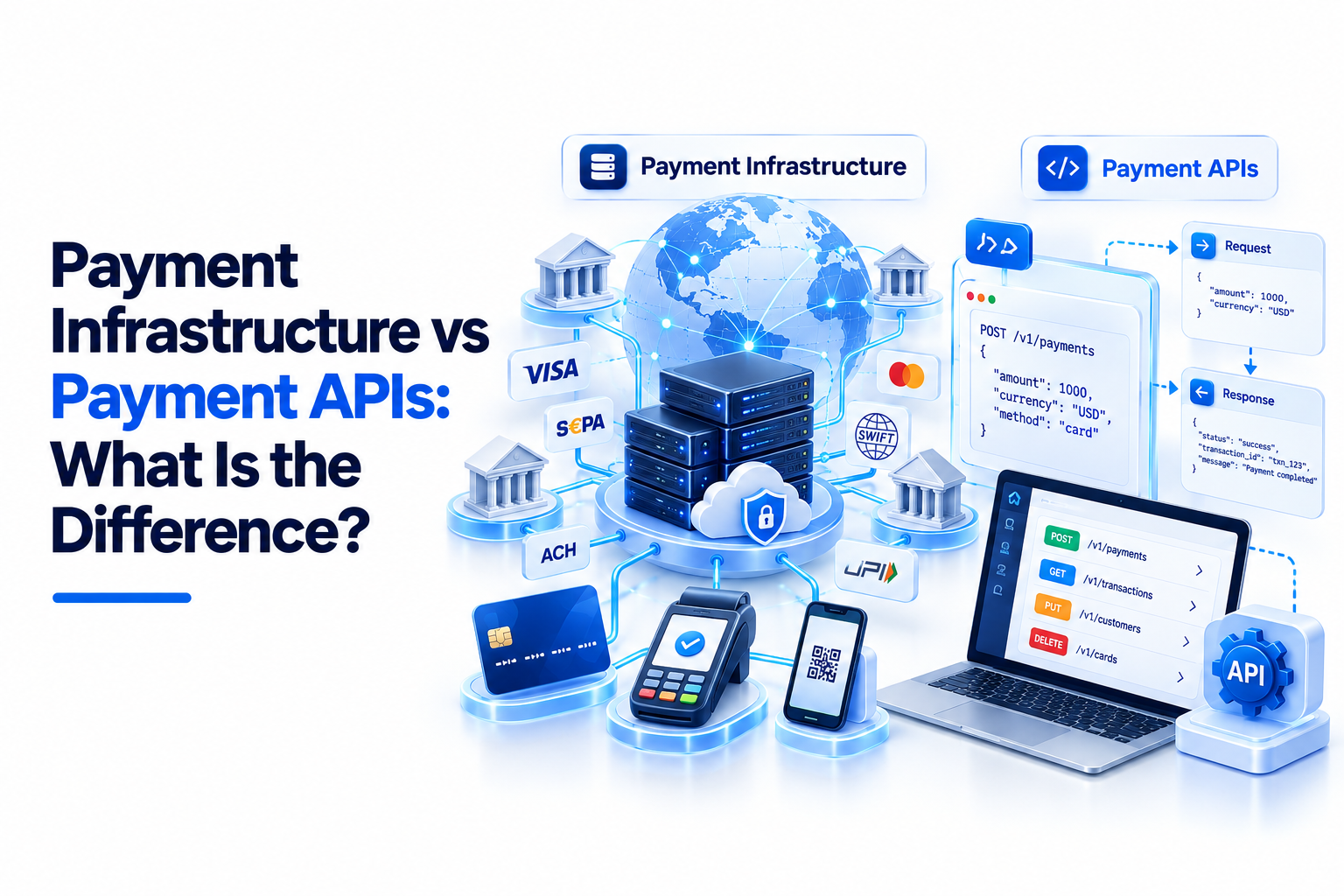
Payment processing focuses primarily on moving a transaction from one point to another. Payment infrastructure takes a broader approach. For example, a business may need to: Create a card → Process a transaction → Update a balance → Send transaction data → Reconcile the payment If each function requires a separate provider or integration, managing the overall payment operation can become complicated. A connected infrastructure layer can bring multiple capabilities together, allowing businesses to build more unified financial workflows.
1. Look at API Capabilities
APIs are one of the most important considerations when choosing a payment infrastructure provider. A strong API layer allows businesses to connect payment capabilities with their existing applications, platforms, dashboards, and internal systems. Businesses should consider whether the provider offers APIs for the functions they actually need, such as card management, payments, accounts, balances, transactions, and payouts. The easier it is to integrate the infrastructure, the easier it can be to create and manage financial products without rebuilding core functionality.
2. Consider Global Payment Requirements
Businesses operating internationally may need to support multiple currencies and payment destinations. An advanced infrastructure provider should therefore be able to support relevant global payment requirements, including currency conversion, payment routing, international payouts, and transaction visibility where applicable. This becomes particularly important for eCommerce businesses, fintech platforms, marketplaces, and companies serving customers across multiple countries.
3. Evaluate Card Infrastructure
If cards are part of the business model, payment processing alone may not be enough. Businesses may need: Virtual cards For online payments, subscriptions, or instant issuance. Physical cards For customers or employees who need physical payment access. Spending controls For managing how and where cards can be used. Card lifecycle management For activation, blocking, replacement, and other card operations. A provider that combines card issuing infrastructure with broader payment capabilities can reduce the need for multiple disconnected systems.
4. Look for Real-Time Data and Webhooks
Payment infrastructure is not only about moving money. It is also about moving information. Businesses need to know when transactions are created, authorized, completed, failed, refunded, or settled. APIs and webhooks can help connect these events with internal systems. For example: Payment Event → Webhook → Business Platform → Internal Record This can improve visibility and help automate operational workflows.
5. Don't Ignore Reconciliation
A payment may be successful, but the financial record still needs to be accurate. Reconciliation helps businesses match transactions with settlement records, balances, fees, refunds, and other relevant financial data. This becomes even more important when businesses manage multiple currencies, payment methods, and high transaction volumes. A payment infrastructure provider should therefore be evaluated not only on transaction processing but also on how it supports payment reconciliation and reporting.
6. Think About Scalability
The right infrastructure should support a business beyond its current transaction volume. A company may begin with one payment product and later introduce cards, accounts, payouts, or additional markets. If every new product requires a completely different technology stack, growth can become expensive and operationally difficult. Scalable fintech infrastructure allows businesses to build additional capabilities on an existing foundation.
How NetPay Fits Into Payment Infrastructure
NetPay provides financial infrastructure designed to support businesses building and managing modern payment experiences. Its capabilities cover areas such as card issuing, global payments, accounts, FX, transaction management, APIs, webhooks, and reconciliation. This connected approach allows businesses to integrate financial capabilities into their own products and workflows instead of building every payment function from scratch. For businesses that need cards, international payments, multi-currency capabilities, or connected transaction infrastructure, having these functions available through a broader infrastructure layer can simplify technology and operations.
Final Thoughts
Modern payment operations go far beyond processing a transaction. Businesses need infrastructure that can connect payments, cards, accounts, FX, transaction data, APIs, and reconciliation into a reliable ecosystem. The right payment infrastructure provider should therefore be evaluated on more than its ability to process payments. Integration, scalability, visibility, flexibility, and operational capabilities can be just as important. NetPay takes a broader infrastructure approach, helping businesses connect payment and card capabilities with the technology they already use. The goal is simple: Don't just process payments. Build the infrastructure behind them.
What is the difference between payment processing and payment infrastructure?
Payment processing focuses on processing individual transactions, while payment infrastructure can provide a broader technology foundation connecting multiple financial functions and business systems.
What should businesses look for in a payment infrastructure provider?
Businesses should consider API capabilities, scalability, global payment support, card infrastructure, transaction visibility, security, reporting, and reconciliation capabilities.
Why are APIs important in payment infrastructure?
APIs allow businesses to connect payment infrastructure with their own applications, platforms, dashboards, and internal systems, helping automate financial workflows.
Why is reconciliation important for payment infrastructure?
Reconciliation helps businesses match transactions with settlement records and maintain accurate financial records, particularly when transaction volumes and currencies increase.
Can payment infrastructure support both cards and payments?
Yes. Depending on the provider, payment infrastructure can support card issuing, virtual and physical cards, payments, accounts, payouts, and related financial capabilities.

The NetPay247 team writes about card issuing, Virtual IBANs, cross-border payments and building products on embedded finance infrastructure.

Leave a reply
Your email address will not be published. Required fields are marked *