
Short answer
Learn why end-user KYC matters for card-based financial products and how KYC, monitoring, and risk controls support responsible card programs
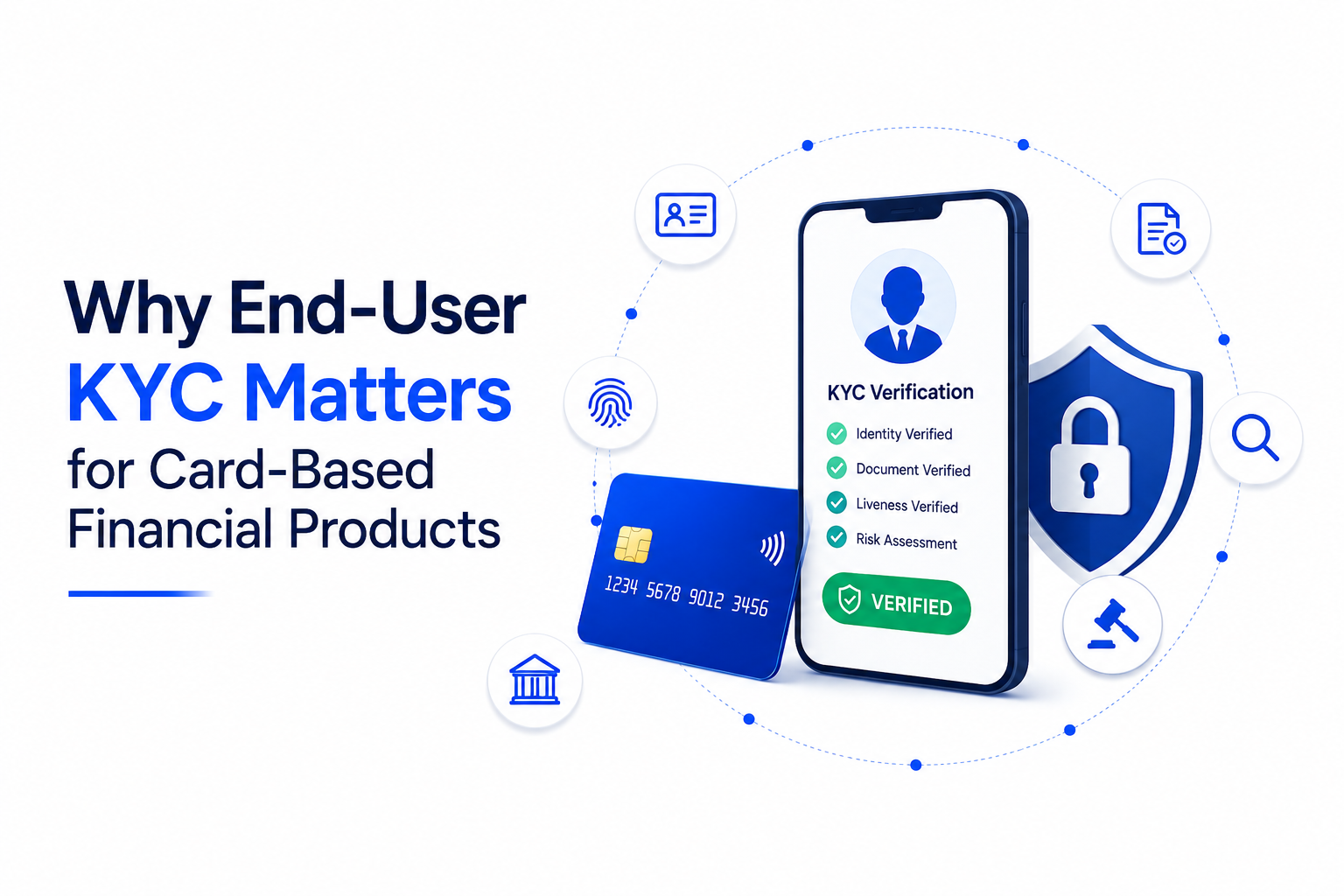
As financial products become increasingly digital, businesses need more than just convenient payment infrastructure. They also need processes that help identify users, understand their financial activity, and manage potential risks. Know Your Customer (KYC) is an important part of this process. For businesses offering card-based financial products, end-user KYC helps establish who is using the card program and supports the wider compliance framework surrounding payment operations. For businesses building card programs with NetPay, understanding the role of end-user KYC is an important part of creating a structured and responsible payment environment.
What Is End-User KYC?
End-user KYC refers to the process of verifying the identity and relevant information of the individuals who will use a financial product or payment service. In a card program, the business may provide cards to customers, employees, clients, or other end users. Before these users access the card-based product, appropriate information and documentation may need to be collected and reviewed according to the applicable compliance requirements. The goal is to establish a clear understanding of who the end user is and ensure that the card program has the necessary information to support its compliance processes.
Why Does KYC Matter for Card-Based Products?
Card-based financial products involve transactions, balances, and access to payment infrastructure. Without appropriate user identification and monitoring processes, businesses may have limited visibility into who is using their financial products. End-user KYC can help businesses: Verify customer identities Maintain appropriate user records Support compliance processes Reduce potential misuse of financial products Improve visibility into cardholder activity Establish a stronger foundation for transaction monitoring KYC therefore plays a role beyond simply collecting identity documents. It becomes part of the overall framework for managing a card program.
How End-User KYC Supports Risk Management
Identifying users is only one part of managing payment risk. Once a card program is active, businesses may also need visibility into transactions and unusual activity. NetPay's infrastructure includes real-time transaction monitoring, suspicious activity detection, card blocking, and program suspension capabilities. It also includes risk controls such as transaction holds, loading reviews, document requests, and settlement delays where required for risk mitigation. When combined with appropriate KYC processes, these capabilities can provide businesses with a more structured approach to managing cardholder activity.
KYC and Cardholder Management
Effective card programs require more than issuing cards. Businesses also need to manage cardholders throughout the lifecycle of the program. NetPay's dashboard capabilities include cardholder management, transaction monitoring, spending reports, user management, and reconciliation reports. This type of infrastructure can help businesses maintain better operational visibility as their cardholder base grows.
What Information May Be Relevant to KYC?
The exact KYC requirements depend on the product, jurisdiction, customer type, and applicable regulatory framework. Therefore, businesses should establish their KYC requirements based on the rules and compliance obligations relevant to their operations. The NetPay specifically references information such as trade licenses, shareholder documentation, UBO details, and source-of-funds verification as part of compliance onboarding. For end users, the required information can vary and should be determined through the appropriate compliance process.
The Importance of Ongoing Monitoring
KYC should not necessarily be viewed as a one-time activity. Financial products can involve ongoing transactions and changing user circumstances. Businesses may therefore need processes for reviewing activity and responding when transactions or account behavior require additional attention. NetPay's card infrastructure supports transaction monitoring, suspicious activity detection, card blocking, and other risk controls that can form part of ongoing payment operations.
How NetPay Supports Card Program Infrastructure
NetPay provides infrastructure for physical and virtual card programs on Visa and Mastercard networks. Its platform includes API access, dashboard functionality, reconciliation, card controls, and compliance-related tooling. For businesses building card-based financial products, this infrastructure can support the operational side of managing cards while businesses remain responsible for their applicable end-user KYC obligations.
Conclusion
End-user KYC is an important part of responsible card program management. It helps businesses understand who their users are and provides a foundation for compliance, risk management, and ongoing monitoring. However, KYC should be considered alongside other controls rather than as an isolated process. Transaction monitoring, card controls, reporting, reconciliation, and risk management all contribute to the broader infrastructure required to operate a card program. With NetPay, businesses can access card issuing infrastructure that combines physical and virtual cards with API capabilities, cardholder management, transaction monitoring, spending controls, and compliance-supporting tools. As card-based financial products continue to expand, building strong KYC and card management processes can help businesses create payment programs that are more structured, visible, and prepared for long-term growth.
Why is KYC important for card-based financial products?
KYC helps businesses establish who their users are, maintain appropriate records, support compliance processes, and improve visibility into cardholder activity.
Who is responsible for end-user KYC in a card program?
Responsibilities depend on the structure of the card program and applicable regulations. In the NetPay card issuing model described in the article, the client is responsible for end-user KYC, while NetPay provides tooling to support the process.
What information may be required for KYC?
Requirements vary depending on the jurisdiction, product, customer type, and regulatory framework. Information may include identity details and supporting documentation.
Is KYC a one-time process for cardholders?
Not necessarily. Businesses may need ongoing monitoring and additional verification when user activity or circumstances require further review.
How does KYC help manage card program risk?
KYC helps businesses understand who is using their card products, while transaction monitoring, suspicious activity detection, card controls, and other risk measures help manage ongoing payment activity.

The NetPay247 team writes about card issuing, Virtual IBANs, cross-border payments and building products on embedded finance infrastructure.
Leave a reply
Your email address will not be published. Required fields are marked *