
Short answer
From create-cardholder to real-time authorization webhooks: the request flow of a card issuing API and what developers actually integrate.
The Short Answer
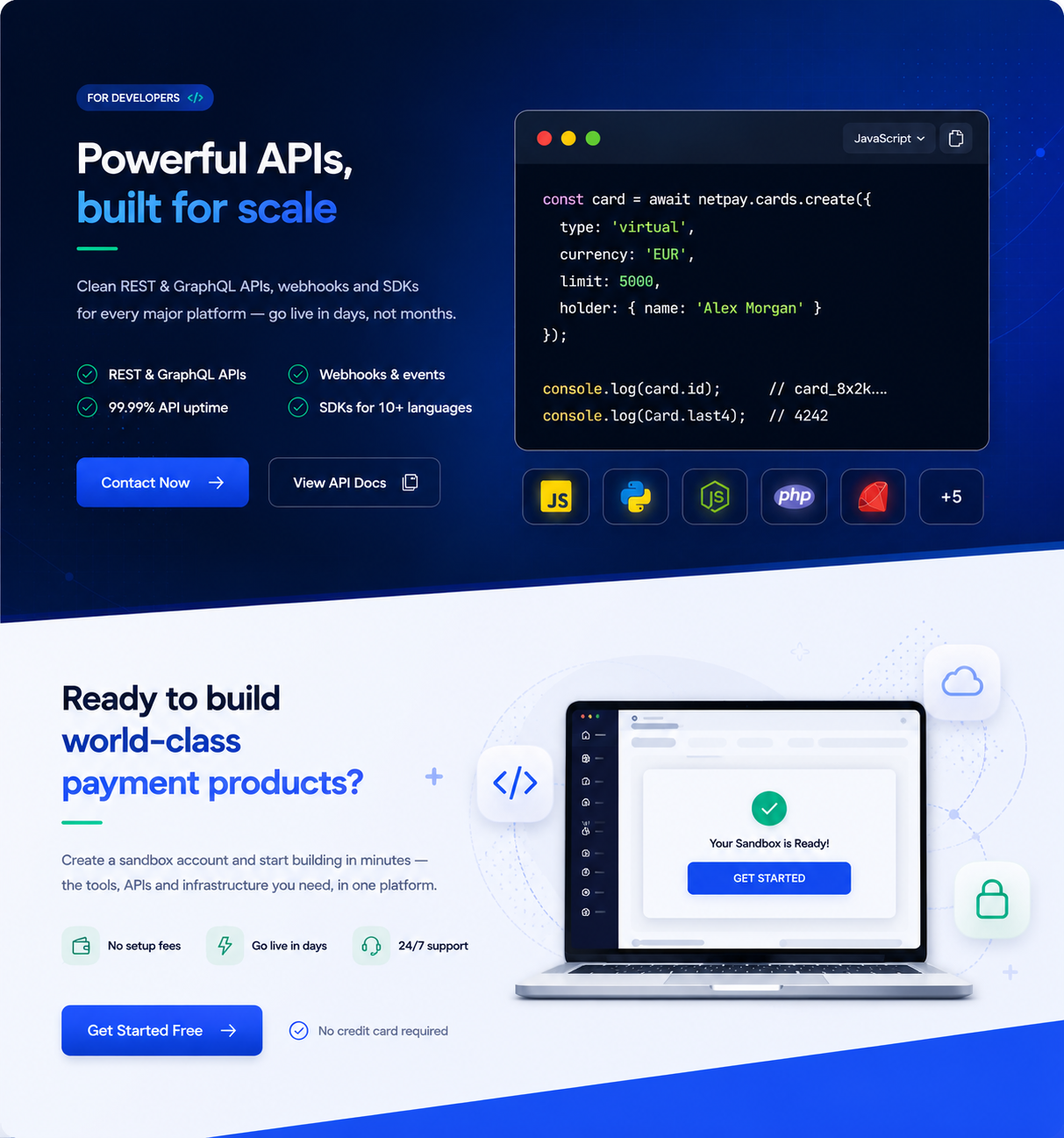
A card issuing API turns card infrastructure into programmable endpoints. Your application makes REST calls to create cardholders, issue cards and set spending rules; the platform executes those instructions against the card networks and pushes real-time events — authorizations, declines, settlements — back to your systems as webhooks. Developers integrate cards the way they integrate email or payments: with API keys and a sandbox.
The Core Objects
- Cardholder — the verified person or business that owns cards
- Card — credentials plus state (active, frozen, terminated) and its controls
- Transaction — an authorization and its lifecycle through clearing and settlement
- Webhook — the event stream that keeps your ledger in sync with the network
A Typical Integration Flow
First you create a cardholder with identity data; verification runs behind the endpoint. Next you issue a card — virtual cards return usable credentials in the same flow. Then you attach controls: limits per day or per transaction, allowed merchant categories, blocked countries or channels. Finally you subscribe to webhooks. From that point every swipe generates an event your backend consumes to update balances, notify users and feed reconciliation.
Why Webhooks Matter More Than Endpoints
Issuing a card is one API call; operating a program is thousands of events a day. Authorization webhooks arrive while the cardholder is still at the terminal, which powers instant notifications and fraud response. Clearing and settlement events carry the final amounts your ledger reconciles against. A program without webhook-driven architecture ends up polling and batching — the exact pain modern issuing platforms exist to remove.
Testing Before Production
Serious platforms give you a sandbox that simulates the whole lifecycle — issuing, spending, declines, settlements — before any real credentials exist. NetPay's Distributor Card API documentation shows the request and response shapes for cardholder creation and card issuance you can copy directly.
Can an entire card program be run through the API?
Yes — creation, issuance, controls, lifecycle and transaction data are all endpoint-driven, with dashboards available for operations teams.
How do declines reach my application?
As authorization webhooks carrying the decline reason, amount and merchant data, delivered in real time to your configured endpoint.
What languages can I integrate with?
Any language that speaks HTTPS — the API is REST with JSON payloads, so standard HTTP clients work everywhere.

The NetPay247 team writes about card issuing, Virtual IBANs, cross-border payments and building products on embedded finance infrastructure.

Leave a reply
Your email address will not be published. Required fields are marked *