
Short answer
Learn what businesses should consider before committing to a card program, including costs, APIs, compliance, card controls, scalability, and NetPay infrastructure.
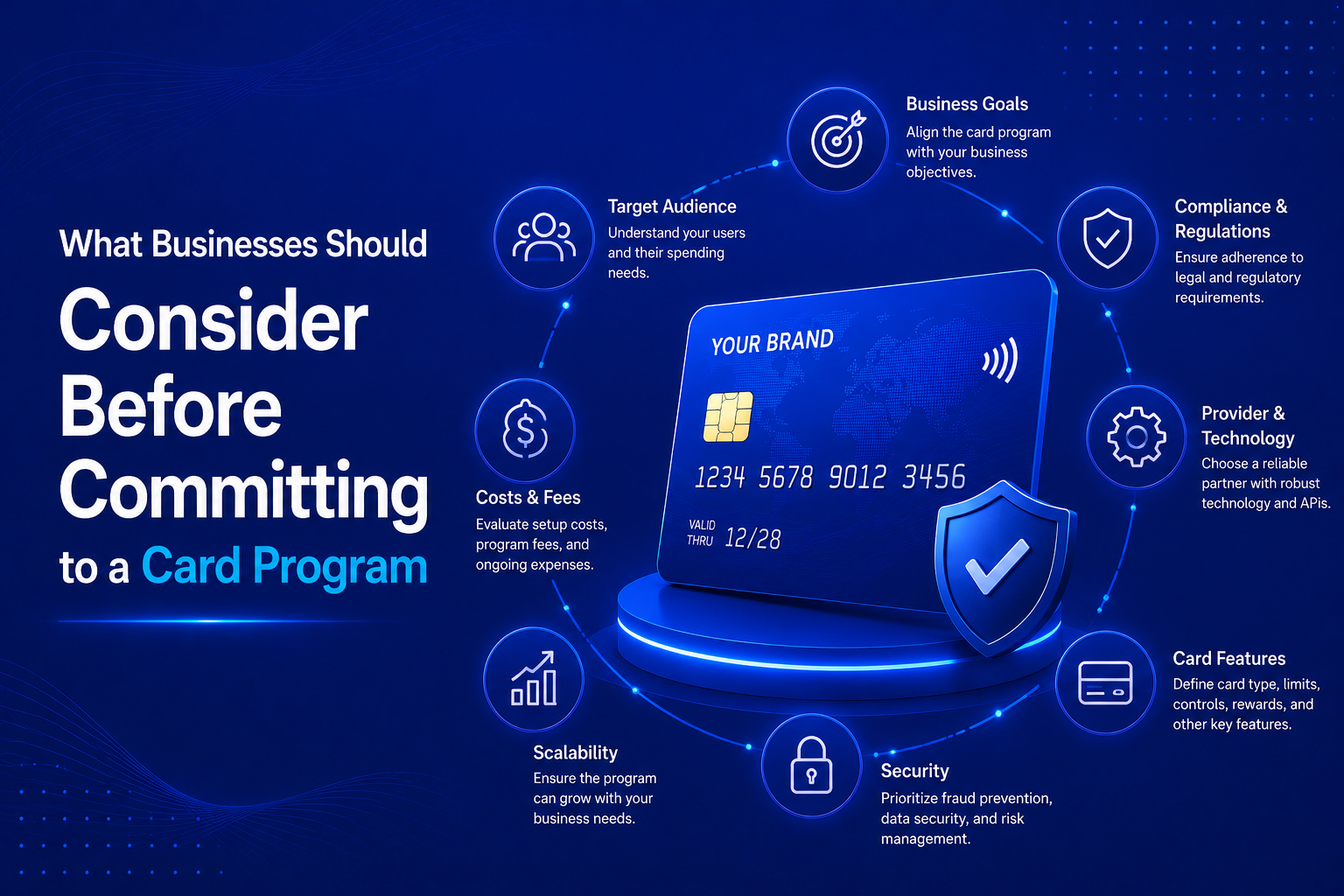
Launching a card program can give businesses new ways to manage payments, customer spending, payouts, and financial services. However, committing to a card program involves more than simply choosing physical or virtual cards. Businesses should evaluate the technology, operational requirements, compliance responsibilities, costs, scalability, and controls involved before moving forward. A clear understanding of these factors can help businesses choose card issuing infrastructure that fits their long-term requirements. NetPay provides physical and virtual card issuing infrastructure with API access, dashboards, reconciliation, card controls, and white-label capabilities.
1. Define the Purpose of Your Card Program
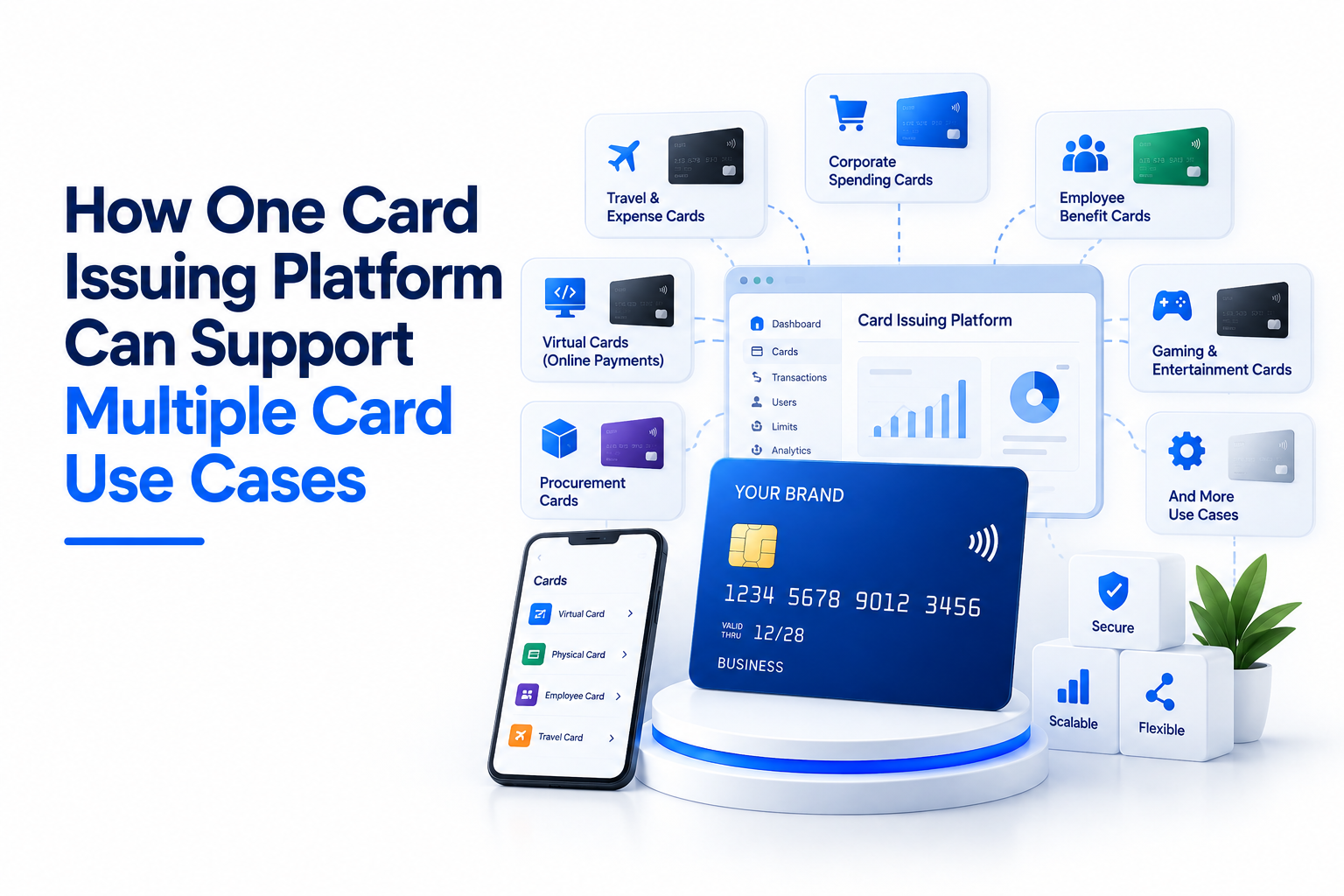
The first consideration should be the purpose of the card program. Different businesses may use cards for different purposes, including: Corporate and employee spending Marketplace and vendor payouts Brokerage or fintech customer programs Online advertising expenditure White-label financial products Neobank card products NetPay supports these types of card program use cases, allowing businesses to consider card infrastructure according to their specific operational model.
2. Physical or Virtual Cards?
Businesses should determine whether they need physical cards, virtual cards, or both. Physical cards can be useful for in-person and broader business spending, while virtual cards can support digital payments, online purchases, advertising spend, and platform payouts. NetPay Launch a Visa & Mastercard Card Program through Visa and Mastercard networks. Physical cards include EMV chip and NFC contactless capabilities, while virtual cards support instant issuance and online payments.
3. Evaluate the Technology and APIs
A card program needs technology that can support operations after the cards are issued. Businesses should consider whether the provider offers APIs for functions such as card creation, activation, blocking, balance checks, transaction history, webhooks, spending limits, and reconciliation. NetPay provides these capabilities through its card issuing API infrastructure. API access can be particularly important for businesses that want to integrate card functionality into their own applications and platforms.
4. Consider Card Controls and Risk Management
Businesses should also understand how they will manage cards after issuance. Important capabilities can include: Card activation Freeze and unfreeze Card blocking Cancellation Spending limits Transaction monitoring NetPay supports these card controls and provides transaction monitoring and suspicious activity detection as part of its compliance and security framework. These tools can provide businesses with greater control over card activity.
5. Understand Compliance Responsibilities
Compliance should be considered before committing to a card program. Businesses may need to complete KYB and other onboarding requirements. NetPay's proposal references trade license documentation, shareholder information, UBO details, and source-of-funds verification as part of compliance onboarding. Importantly, the proposal states that the client is responsible for end-user KYC, while NetPay provides tooling. Understanding these responsibilities in advance can help businesses plan their compliance processes appropriately.
6. Think About Scalability
A card program may start with a limited number of users but grow significantly over time. Businesses should consider whether their chosen infrastructure can support increasing card volumes without creating unnecessary operational complexity.
7. Review the Implementation Timeline
Businesses should also understand how long it may take to move from initial agreement to go-live. NetPay outlines an implementation timeline of approximately 6–8 weeks, covering commercial confirmation, KYB and compliance review, program setup, API and dashboard onboarding, card artwork approval, and go-live Planning around these stages can help businesses set realistic launch expectations.
8. Look at the Complete Infrastructure
Finally, businesses should evaluate the complete card infrastructure rather than focusing only on card issuance. A suitable platform may need to bring together: Card Issuing → APIs → Card Controls → Transaction Monitoring → Reporting → Reconciliation NetPay combines physical and virtual card issuing with API access, dashboard functionality, reconciliation, card controls, and white-label support.
Conclusion
Committing to a card program is a significant business decision. Companies should evaluate their intended use case, card types, technology, compliance responsibilities, costs, risk controls, scalability, implementation timeline, and contractual terms before moving forward. For businesses looking for card issuing infrastructure, NetPay provides physical and virtual card capabilities alongside APIs, dashboards, card controls, transaction monitoring, reconciliation, and white-label support. Taking the time to evaluate these areas can help businesses build a card program that is aligned with their operational needs and prepared for future growth.
What should businesses consider before launching a card program?
Businesses should consider their use case, physical or virtual cards, technology and APIs, compliance responsibilities, costs, card controls, scalability, implementation timeline, and contractual terms.
Should a business choose physical or virtual cards?
The choice depends on the intended use. Businesses can also use both to support different payment requirements. NetPay provides both physical and virtual card options.
Why are APIs important for a card program?
APIs allow businesses to connect card functions with their existing systems and applications. NetPay supports card creation, activation, blocking, balance checks, transaction history, webhooks, spending limits, and reconciliation through its API infrastructure.
How long does it take to launch a card program with NetPay?
The NetPay proposal outlines a go-live timeline of approximately 6–8 weeks, covering compliance, program setup, API onboarding, artwork approval, and launch activities.
What card management features should businesses look for?
Businesses should consider features such as activation, blocking, freeze/unfreeze, cancellation, spending limits, transaction monitoring, reporting, and reconciliation. NetPay supports these capabilities as part of its card infrastructure.

The NetPay247 team writes about card issuing, Virtual IBANs, cross-border payments and building products on embedded finance infrastructure.


Leave a reply
Your email address will not be published. Required fields are marked *