
Short answer
Learn what payment reconciliation is, how the process works, and why growing businesses need accurate and efficient payment reconciliation.
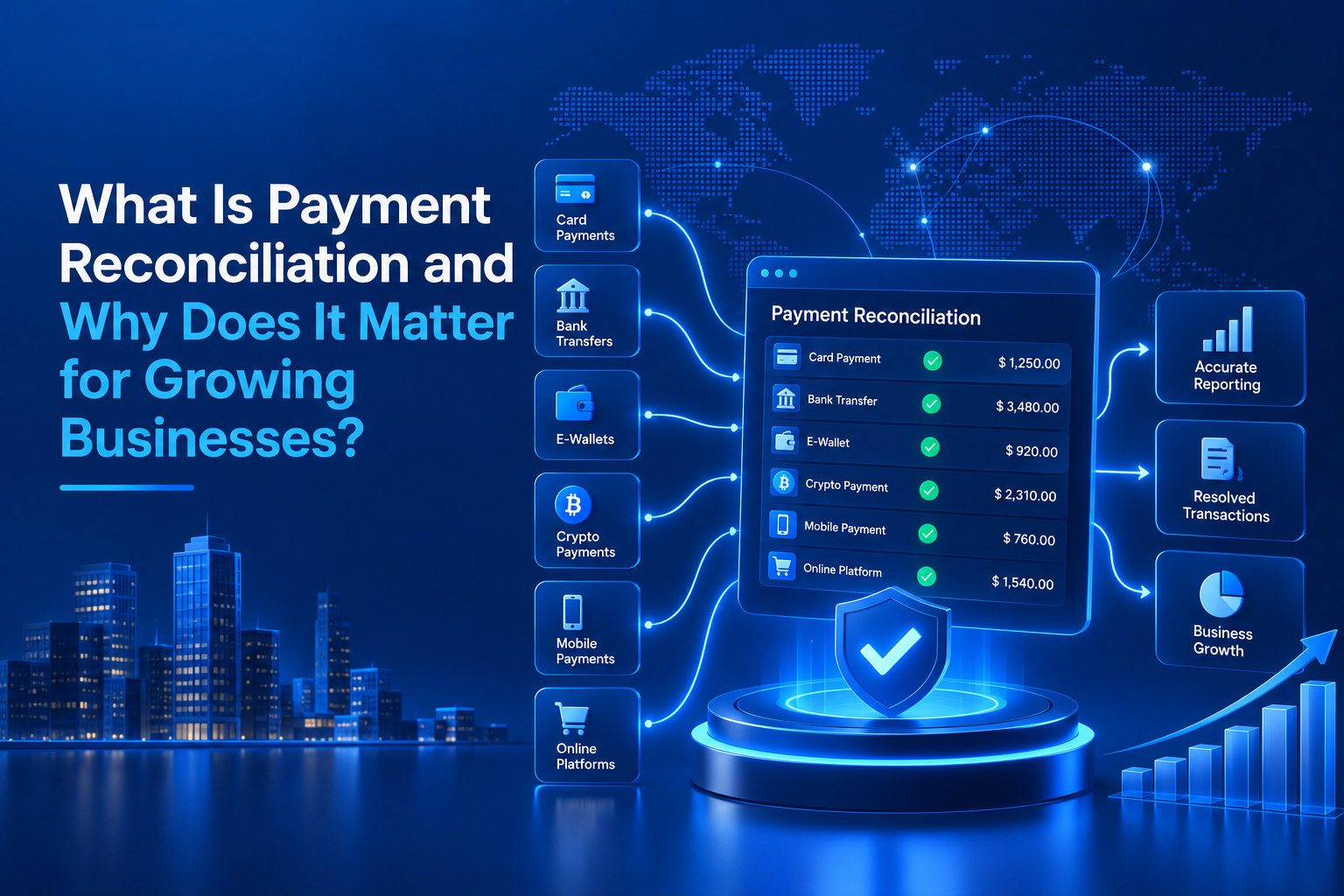
As a business grows, the number of payments it handles also increases. Customer payments, refunds, supplier payouts, card transactions, bank transfers, and settlements can quickly become difficult to track manually. This is where the payment reconciliation process becomes important. Payment reconciliation is the process of comparing payment records from different sources and making sure they match the actual transactions received or processed by a business. It helps businesses identify missing payments, duplicate transactions, incorrect amounts, failed transactions, and other discrepancies. For businesses managing multiple payment methods or operating across different markets, having an organized reconciliation process can make financial operations much easier.
What Is Payment Reconciliation?
Payment reconciliation is the process of matching internal financial records with external payment data. For example, a business may record a customer payment as received in its internal system. The payment provider, bank account, or payment gateway will also have a record of that transaction. Reconciliation checks whether these records match. The process can involve comparing: Customer payment records Bank transactions Card transactions Payment gateway reports Refunds and chargebacks Payouts and settlements Transaction fees Currency conversions When the records match, the transaction can be marked as reconciled. If they do not, the business can investigate the difference.
Why Is Payment Reconciliation Important?
As transaction volumes increase, manually checking every payment becomes difficult and time-consuming. Even a small mismatch can create problems for accounting, reporting, or cash-flow management. Payment reconciliation helps businesses maintain more accurate financial records and understand where their money is moving.
1. Helps Identify Payment Discrepancies
Payment reconciliation can help businesses detect differences between expected and actual transaction amounts. For example, a payment may appear in one system but not another, or a settlement may contain a different amount because of fees, refunds, or currency conversion. Finding these differences early makes them easier to investigate.
2. Improves Financial Accuracy
Accurate financial records are essential for growing businesses. Reconciliation provides an additional check that payment records are correctly reflected in accounting and financial systems. This can help reduce errors caused by manual data entry and disconnected payment systems.
3. Saves Operational Time
Businesses that process large numbers of transactions can spend significant time checking payment records manually. A structured or automated payment reconciliation process can reduce repetitive work by matching transaction information across different systems. This allows finance and operations teams to focus on higher-value activities instead of constantly checking individual transactions.
4. Makes Cash Flow Easier to Track
Knowing when money was received, settled, transferred, or refunded is important for cash-flow planning. Payment reconciliation gives businesses a clearer view of completed transactions and outstanding differences, helping teams understand their actual payment position.
5. Supports Better Payment Management
Modern businesses may use cards, bank transfers, virtual accounts, payment gateways, and other payment methods. Managing all these payment channels separately can make financial reporting more complicated. A centralized approach to payment data can make it easier to monitor transactions and understand how different payment channels are performing.
How Does Payment Reconciliation Work?
Although the exact process differs between businesses, payment reconciliation generally follows a few key stages.
Step 1: Collect Transaction Data
The business gathers transaction information from relevant sources, such as its internal system, bank, card provider, payment gateway, or payment infrastructure provider.
Step 2: Match the Records
Transaction details such as amount, transaction ID, date, currency, and payment status are compared between systems.
Step 3: Identify Differences
If records do not match, the transaction is flagged for review. Differences may happen because of refunds, failed transactions, processing fees, settlement timing, currency conversion, or other operational issues.
Step 4: Investigate and Resolve
The finance or operations team reviews the transaction and determines why the difference occurred.
Step 5: Update Financial Records
Once the discrepancy is resolved, the relevant records can be updated and the transaction can be marked as reconciled.
Why Growing Businesses Need Better Reconciliation
A small business may be able to manage payment reconciliation using spreadsheets and manual checks. However, this approach becomes harder as transaction volumes, currencies, payment methods, and markets increase. For a growing fintech, forex business, eCommerce company, or digital platform, payment operations can involve thousands of transactions across different systems. At this stage, businesses need payment infrastructure that can support organized transaction data, reporting, settlements, and operational workflows. This is where NetPay can fit into a broader payment infrastructure strategy.
How NetPay Supports Modern Payment Operations
NetPay provides payment infrastructure designed to help businesses manage modern financial operations. Its offering includes card infrastructure, virtual IBANs, multi-currency accounts, payment services, and API-based integrations. For businesses operating across multiple payment channels, having connected payment infrastructure can make it easier to manage transaction information and payment operations from a more organized environment. NetPay also supports businesses across areas such as fintech, forex, crypto, eCommerce, payroll, and remittance. The goal is not simply to process a payment. Modern payment infrastructure needs to support the wider journey around that payment, including accounts, cards, transfers, payouts, and operational management.
Final Thoughts
Payment reconciliation may not be the most visible part of a payment system, but it plays an important role behind the scenes. As businesses grow, accurate transaction records become increasingly important. A structured payment reconciliation process can help businesses identify discrepancies, improve financial accuracy, monitor cash flow, and reduce unnecessary manual work. With modern payment infrastructure, businesses can build more connected financial operations across cards, accounts, transfers, and payment channels. For businesses looking to scale their payment operations, NetPay provides infrastructure designed to support modern financial products and global payment requirements.
What is payment reconciliation?
Payment reconciliation is the process of comparing transaction records from different sources to ensure that payments, settlements, refunds, and other financial transactions match.
Why is payment reconciliation important for businesses?
It helps businesses identify discrepancies, improve financial accuracy, track cash flow, and reduce errors in payment records.
Can payment reconciliation be automated?
Yes. Businesses can use payment and financial technology to automatically compare transaction records and highlight exceptions that require investigation.
What causes payment reconciliation discrepancies?
Common causes include refunds, failed transactions, processing fees, settlement timing differences, currency conversion, and missing or duplicated transaction records.
How does NetPay support payment operations?
NetPay provides payment infrastructure covering areas such as card infrastructure, virtual IBANs, multi-currency accounts, payments, payouts, and API-based integrations for businesses.

The NetPay247 team writes about card issuing, Virtual IBANs, cross-border payments and building products on embedded finance infrastructure.

Leave a reply
Your email address will not be published. Required fields are marked *