
Short answer
Learn common corporate card management mistakes and how spending limits, transaction monitoring, and card controls can help businesses avoid them.
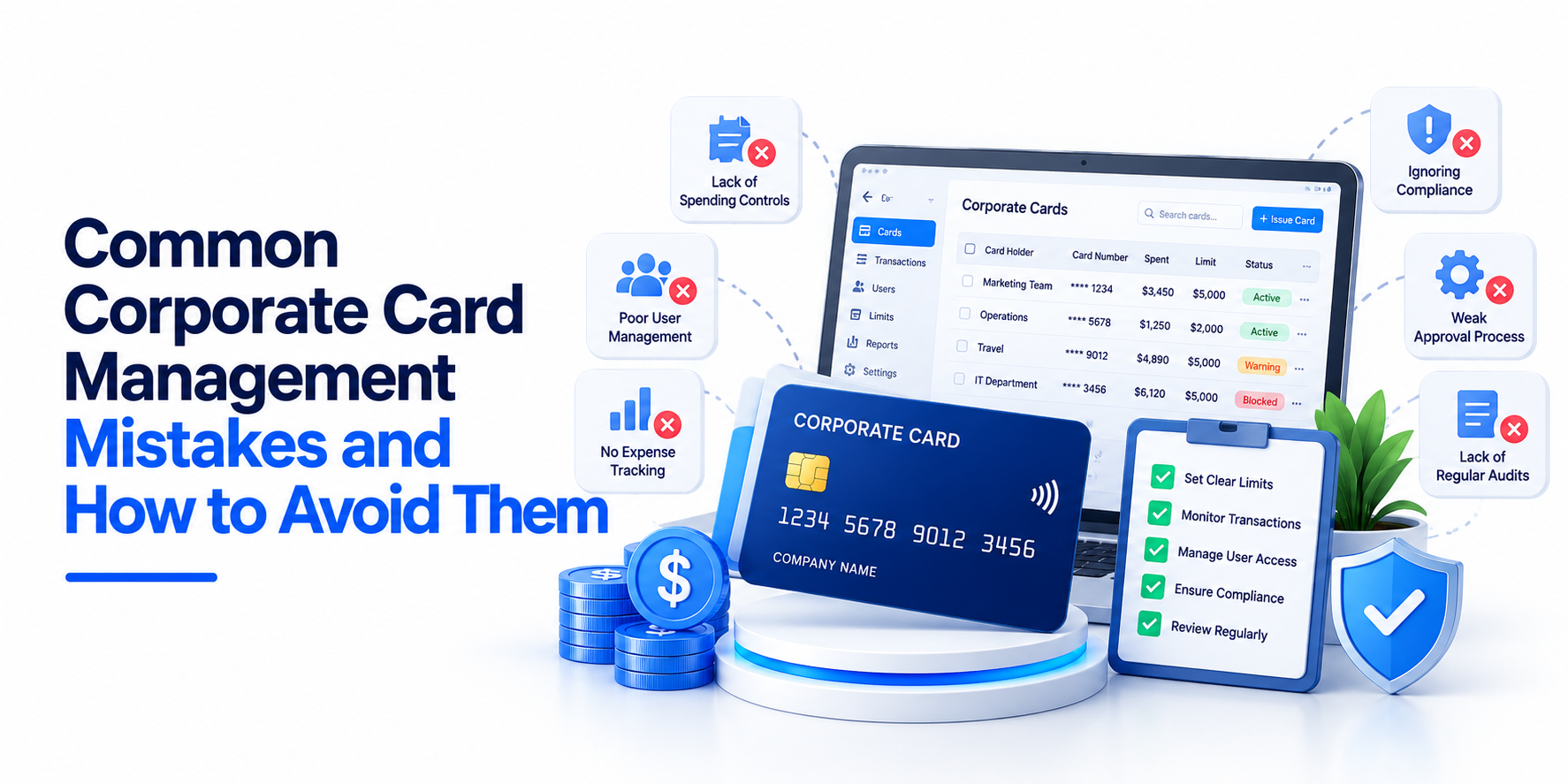
Corporate cards help businesses manage employee spending, business purchases, travel expenses, and recurring payments. However, without clear policies and proper controls, managing multiple cards can become complicated. Untracked transactions, unclear spending limits, and manual reconciliation can create unnecessary work for finance teams. Effective corporate card management helps businesses improve spending visibility, maintain financial control, and simplify expense operations. Here are some common mistakes businesses should avoid.
1. Not Setting Clear Spending Limits
Giving employees corporate cards without defined spending limits can lead to unexpected expenses and budget overruns. How to avoid it: Set spending limits based on employee roles, departments, and business needs. Use card controls to establish appropriate budgets and restrictions before transactions take place.
2. Using the Same Card for Different Expenses
Using one card for travel, subscriptions, advertising, and supplier payments can make it harder to identify individual expenses. How to avoid it: Consider assigning dedicated virtual or physical cards to specific employees, departments, or spending purposes. This can make transactions easier to track and review.
3. Relying on Manual Expense Tracking
Manual spreadsheets and delayed expense reports can increase administrative work and make reconciliation more difficult. How to avoid it: Choose corporate expense card solutions that provide transaction visibility and integration options. APIs and transaction updates can help connect card activity with existing finance systems.
4. Reviewing Transactions Too Late
Waiting until the end of the month to review corporate card transactions can delay the identification of unusual or unauthorized spending. How to avoid it: Monitor transactions regularly and use real-time transaction feeds and available alerts to identify issues earlier. Timely visibility helps finance teams respond more efficiently.
5. Ignoring Merchant and Transaction Controls
Spending limits alone may not be enough to manage every business expense. A transaction might stay within budget but still fall outside company policy. How to avoid it: Where supported, use merchant category restrictions, country controls, and channel-specific rules to align card usage with company policies.
6. Having No Clear Card Management Process
Businesses may overlook essential steps such as activating cards, updating permissions, freezing compromised cards, or removing access when employees leave. How to avoid it: Establish a clear card lifecycle process covering issuance, activation, monitoring, freezing, replacement, and termination. Assign responsibility for reviewing card access and maintaining accurate records.
How NetPay Supports Corporate Card Management
NetPay offers corporate and expense card infrastructure designed to help businesses manage employee spending and improve transaction visibility. Its capabilities include card issuance, spending controls, transaction feeds, and card management options. Businesses can explore these features to establish clearer spending policies, monitor card activity, and support more organized expense workflows. The appropriate setup will depend on the company's requirements, existing systems, and available integrations.
Conclusion
Common corporate card management mistakes often result from unclear policies, limited transaction visibility, and manual processes. By setting appropriate spending limits, assigning cards based on business needs, monitoring transactions, and maintaining clear card management procedures, businesses can improve financial oversight and reduce administrative work. With suitable corporate expense card infrastructure, companies can build more controlled and scalable spending processes as their teams grow.
What is corporate card management?
Corporate card management involves issuing, monitoring, and controlling business payment cards while maintaining spending policies, transaction records, and employee access.
What are the most common corporate card management mistakes?
Common mistakes include unclear spending limits, poor expense tracking, delayed transaction reviews, missing merchant controls, and weak card lifecycle procedures.
How can businesses improve corporate card management?
Businesses can improve corporate card management by defining clear policies, setting spending limits, monitoring transactions regularly, and using card controls and integrated expense workflows.
How do virtual cards help manage corporate expenses?
Virtual cards can be assigned to specific employees or spending purposes. Where supported, businesses can apply individual limits and controls to improve expense tracking.
How can NetPay help with corporate card management?
NetPay provides corporate and expense card infrastructure with card issuance, spending controls, transaction visibility, and card management capabilities. Businesses should confirm which features and integrations fit their requirements.

The NetPay247 team writes about card issuing, Virtual IBANs, cross-border payments and building products on embedded finance infrastructure.



Leave a reply
Your email address will not be published. Required fields are marked *