
Short answer
Learn how APIs connect cards, accounts, payment systems, and business platforms to create automated and scalable financial workflows.
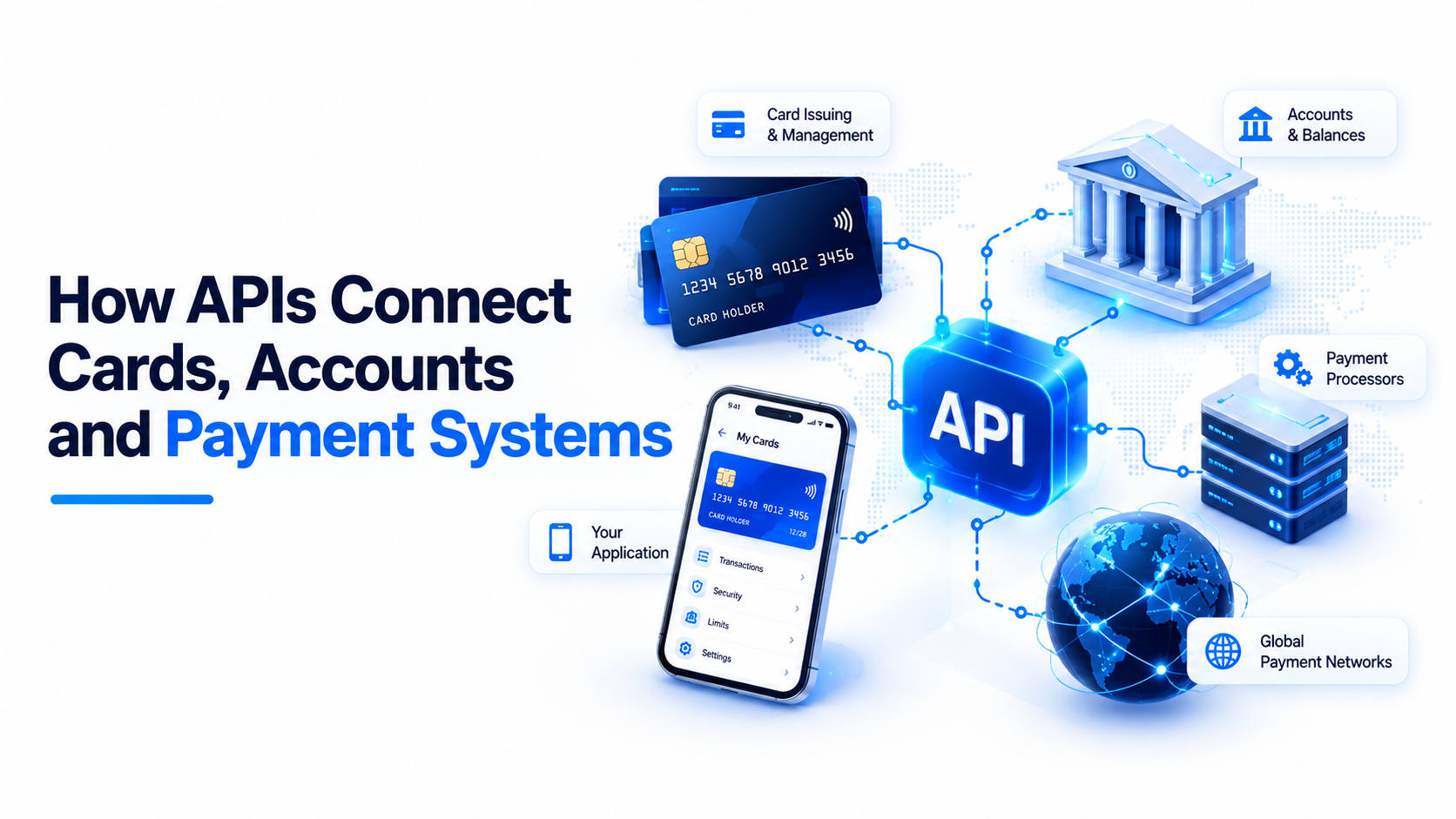
Modern financial products rarely operate as isolated systems. A business may offer cards to customers, manage accounts, process payments, handle payouts, and maintain transaction records—all at the same time. For these systems to work together, they need a reliable way to exchange information. This is where APIs in fintech become important. APIs, or Application Programming Interfaces, allow different financial systems to communicate with each other. Instead of manually moving information between platforms, APIs can connect cards, accounts, payment systems, and business applications through structured data flows.
Why APIs Matter in Financial Infrastructure
Imagine a business issuing a card to a customer. The card may be connected to an account balance, a payment processor, a transaction monitoring system, and an internal ledger. When the customer makes a payment, several systems may need to know what happened. The transaction may need to be: Authorized → Processed → Recorded → Updated → Reconciled Without connected infrastructure, businesses may need multiple manual processes or separate integrations to keep these systems synchronized. A well-designed payment API helps automate communication between these systems.
Connecting Cards With Accounts
Cards and accounts often work together. When a cardholder makes a transaction, the payment needs to be connected to the appropriate account or balance. The system may need to check available funds, authorize the transaction, update the balance, and record the transaction. An API can help connect the card layer with the account infrastructure. For example: Card Transaction → Authorization → Account Balance Check →Transaction Processing → Balance Update This creates a connected experience for both the business and the cardholder.
Connecting Payment Systems With Business Platforms
Financial transactions also need to reach the business systems that manage customers, accounting, reporting, and operations. A payment API can connect a payment infrastructure provider with a company's existing application or platform. For example, an e-commerce platform may need to know whether a payment was successful. A fintech application may need transaction information for its customer dashboard. An accounting system may need completed transaction data for reconciliation. APIs allow these systems to exchange information without requiring teams to manually update each platform.
The Role of Webhooks
APIs are not only about sending requests. Modern payment infrastructure also needs a way to notify business systems when something happens. This is where webhooks are useful. For example, when a card transaction changes status, the payment infrastructure can send an event to the connected business system. A typical flow could look like: Transaction Created → Authorization → Webhook Event → Business System Updated The same approach can be used for payment completion, failed transactions, refunds, settlements, and other events supported by the payment infrastructure. This gives businesses a more real-time view of financial activity.
One API, Multiple Financial Workflows
Businesses often need more than one payment capability. They may need: Card issuing Virtual and physical cards Accounts Payments Payouts Transaction data Spending controls Reconciliation Managing every function through completely separate integrations can increase development and operational complexity. A connected financial API infrastructure can bring multiple capabilities together through a consistent integration layer. This allows product teams to build customer-facing experiences while the underlying infrastructure handles the financial processes in the background.
How APIs Improve Payment Operations
API-connected financial systems can help businesses automate several repetitive processes. For example, transaction information can automatically move from a payment system into an internal dashboard. Card activity can be connected to expense management workflows. Payment status updates can trigger notifications or internal actions. This can reduce manual data entry and help businesses maintain more consistent transaction records. APIs can also make it easier to scale. Instead of creating a completely new process for every financial product, businesses can build on existing integrations and add supported capabilities as their requirements evolve.
How NetPay Connects Financial Infrastructure
NetPay provides financial infrastructure and APIs designed to help businesses connect card and payment capabilities with their own applications. Its infrastructure includes card issuing, virtual and physical cards, payment capabilities, accounts, transaction management, webhooks, and reporting. For card programs, APIs can support workflows such as card creation, activation, blocking, balance checks, transaction history, spending controls, and reconciliation. This allows businesses to connect financial infrastructure with their existing platforms instead of building every financial function from scratch.
Building a More Connected Payment Experience
The customer may only see a simple payment screen or card transaction. Behind that experience, however, multiple systems may be communicating with each other. Card → Account → Payment System → Business Platform → Reporting APIs provide the connection between these systems. As financial products become more digital and embedded, this connectivity is becoming increasingly important. Businesses need infrastructure that can exchange transaction data, respond to events, and support multiple financial workflows without creating unnecessary complexity.
Final Thoughts
APIs are becoming a core part of modern financial infrastructure because they allow cards, accounts, payment systems, and business applications to work together. Instead of treating each financial function as a separate system, businesses can create connected workflows where information moves automatically between the relevant platforms. The result is a more integrated financial environment: Connect → Process → Update → Monitor → Reconcile For fintechs and businesses building digital financial products, the advanced API infrastructure can provide the foundation needed to create scalable card and payment experiences. With platforms such as NetPay, businesses can connect card and payment infrastructure with their existing technology while building financial products around their own customer and operational requirements.
What is an API in fintech?
A fintech API allows different financial systems and applications to communicate and exchange data or trigger supported financial operations.
How do APIs connect cards and accounts?
APIs can connect card transactions with account balances, transaction records, authorization systems, and other financial infrastructure to keep information synchronized.
What is a payment API used for?
A payment API can allow businesses to connect their applications with payment infrastructure for supported functions such as payment processing, transaction status, refunds, payouts, and transaction data.
Why are APIs important for fintech businesses?
APIs help fintech businesses connect different financial functions, automate workflows, reduce manual processes, and integrate financial infrastructure with their own applications.
How does NetPay support API-based financial infrastructure?
NetPay provides API-based infrastructure for card issuing and payment-related workflows, including card management, transaction information, spending controls, webhooks, and reconciliation.

The NetPay247 team writes about card issuing, Virtual IBANs, cross-border payments and building products on embedded finance infrastructure.

Leave a reply
Your email address will not be published. Required fields are marked *