
Short answer
Learn how digital card platforms manage card status, spending limits, transactions, and risk controls. Discover how NetPay supports modern card management.
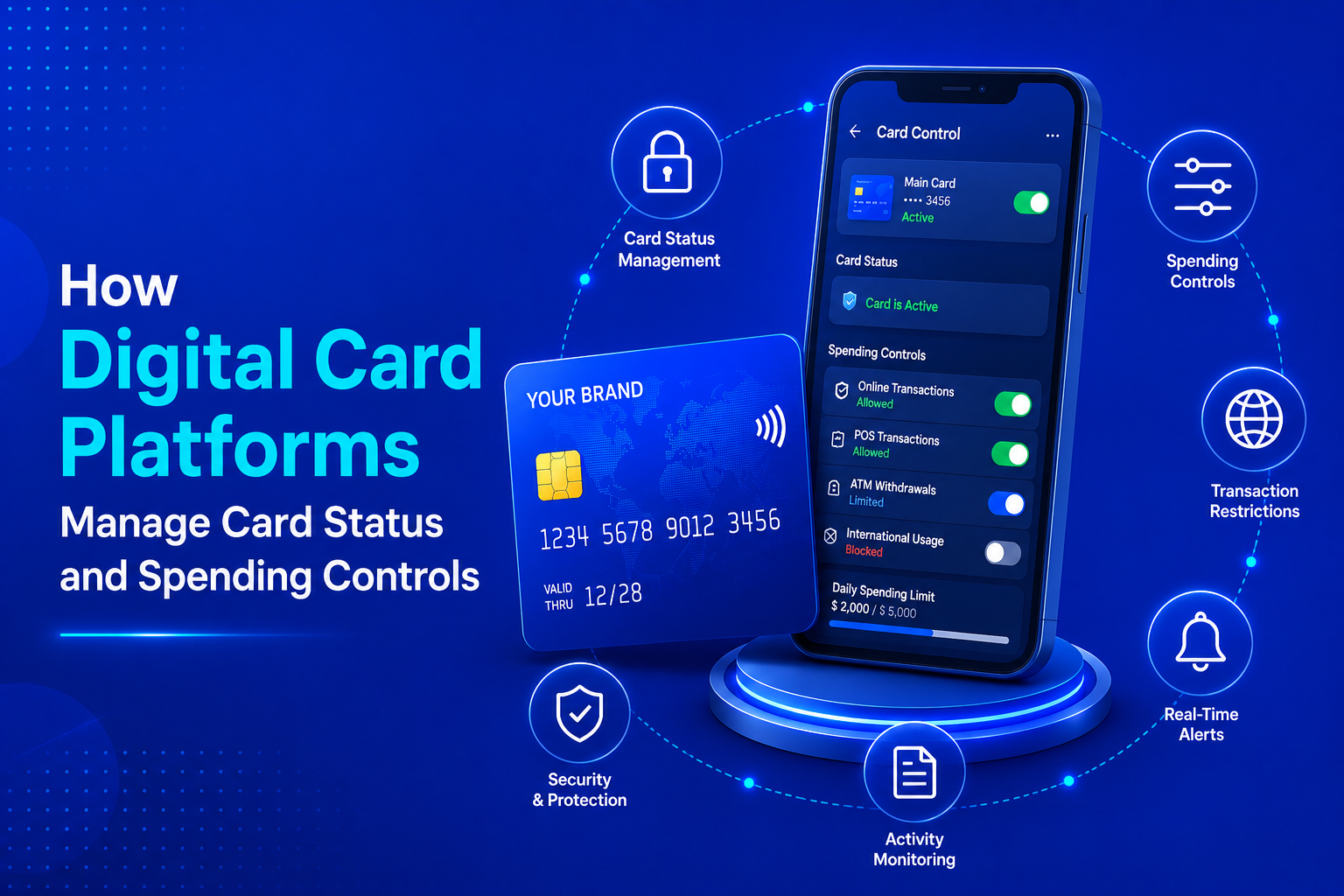
Digital card platforms are changing how businesses manage payments by giving them greater control over card activity, balances, and spending. Instead of relying only on traditional banking systems, businesses can use modern digital card platforms to manage cards, monitor transactions, set spending limits, and respond quickly when payment activity needs to be restricted. For fintech companies, brokers, marketplaces, and other businesses operating payment programs, having these controls built into the card infrastructure can improve operational visibility and risk management. NetPay provides card issuing infrastructure with physical and virtual card capabilities, card management, spending controls, transaction monitoring, and API access.
What Is a Digital Card Platform?
A digital card platform provides the technology required to create, manage, monitor, and control payment cards through software. Depending on the platform, businesses may be able to issue virtual cards, manage physical cards, monitor balances, review transactions, and apply different spending rules. NetPay's card infrastructure supports both physical and virtual cards on the Visa and Mastercard networks. Its technology layer also includes card creation, activation, blocking, balance checks, transaction history, spending limits, webhooks, and reconciliation capabilities. This gives businesses a centralized way to manage card activity rather than handling every payment function separately.
Understanding Card Status Management
Card status management is an important part of digital card infrastructure. A card may need to be activated, temporarily frozen, blocked, or cancelled depending on its usage and risk profile. A digital card platform can provide businesses with tools to manage these statuses through a dashboard or API. For example, NetPay supports card activation and blocking through its API, while its supported card controls include freeze, unfreeze, cancellation, and spending limits. This type of control can be particularly useful when businesses need to respond quickly to unusual activity or changes in cardholder access.
How Spending Controls Work
Spending controls allow businesses to establish boundaries around how cards can be used. Instead of giving every card unrestricted access to available funds, businesses can apply defined spending limits according to their operational requirements. For example, spending controls can help businesses manage: Employee or team spending Advertising expenditure Vendor payments Platform payouts Brokerage-related card programs Other controlled business expenses NetPay's card infrastructure specifically includes spending limits as part of its API capabilities, along with transaction monitoring and spending reports through its dashboard.
Why Real-Time Card Controls Matter
Payment environments can change quickly. A card that is appropriate for one transaction may need to be restricted later because of suspicious activity, a change in business requirements, or a cardholder's status. Having digital controls allows businesses to react without relying entirely on manual processes. NetPay's infrastructure supports card activation, blocking, freezing, unfreezing, and cancellation. These controls can help businesses manage card access as part of their broader payment operations.
The Role of APIs in Digital Card Management
APIs are an important component of modern card management. They allow businesses to connect card functionality with their own applications, platforms, or internal systems. NetPay provides API access for functions including: Card creation and issuance Card activation and blocking Balance checks Transaction history Webhook notifications Spending limits Reconciliation This allows businesses to integrate card management into their existing technology environment instead of relying exclusively on a separate interface.
Choosing the Right Digital Card Infrastructure
Businesses evaluating a digital card platform should look beyond the ability to issue cards. The underlying infrastructure should also support the operational requirements that come after issuance. Important considerations include: Card status management Spending controls Transaction monitoring API connectivity Dashboard functionality Balance visibility Reconciliation Cardholder management Risk controls Scalability A platform that combines these capabilities can provide a more centralized approach to managing card programs.
Conclusion
Digital card platforms give businesses more control over how payment cards are issued, monitored, and managed. Features such as card activation, blocking, spending limits, transaction monitoring, APIs, and dashboards can help create a more structured payment environment. For businesses looking to build or expand card programs, NetPay offers card issuing infrastructure designed around physical and virtual cards, API connectivity, card controls, transaction management, reconciliation, and scalable payment operations. As digital payments continue to evolve, effective card management infrastructure will remain an important part of building controlled, scalable, and technology-driven payment programs.
What is a digital card platform?
A digital card platform provides technology for issuing, managing, monitoring, and controlling payment cards through software.
How do digital card platforms manage card status?
They can provide tools to activate, freeze, unfreeze, block, or cancel cards based on business and risk requirements.
What are card spending controls?
Card spending controls allow businesses to establish limits and manage how their cards can be used.
Why are spending limits important for businesses?
Spending limits can help businesses control expenses and establish defined boundaries for employee, vendor, advertising, or other business spending.
How do APIs help with digital card management?
APIs allow businesses to connect card functions such as issuance, activation, blocking, balance checks, transaction history, and spending limits with their own systems.

The NetPay247 team writes about card issuing, Virtual IBANs, cross-border payments and building products on embedded finance infrastructure.

Leave a reply
Your email address will not be published. Required fields are marked *