
Short answer
Discover how crypto-supported payment infrastructure connects digital assets with modern card payments, offering businesses flexible, scalable, and secure payment solutions.
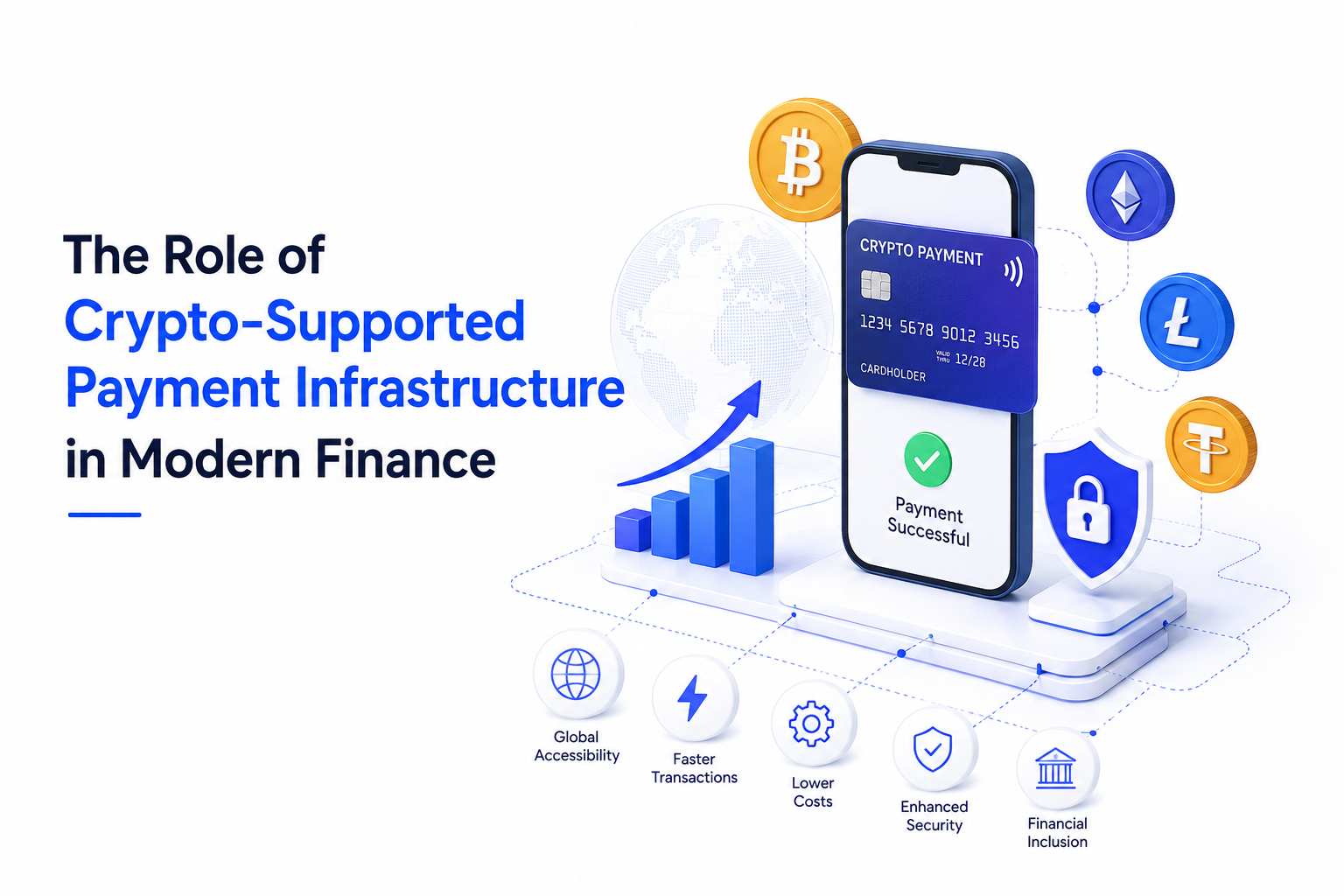
The financial industry is changing quickly. Businesses and customers now expect payment solutions that are faster, more flexible, and easier to access across different markets. As digital assets become part of the modern financial ecosystem, crypto-supported payment infrastructure is creating new ways for businesses to manage and move funds. One important development is the connection between cryptocurrency funding and card payment infrastructure. This approach allows businesses to use approved crypto-based funding rails to support card programs while combining digital asset capabilities with familiar payment methods.
What Is Crypto-Supported Payment Infrastructure?
Crypto-supported payment infrastructure refers to systems that allow businesses to use cryptocurrency as part of their payment and funding operations. Instead of keeping digital assets separate from everyday payment tools, businesses can connect crypto funding with services such as card programs and payment platforms. For example, NetPay's card issuing infrastructure supports USDT and crypto-based funding rails for card balances. The infrastructure is designed to support physical and virtual cards on Visa and Mastercard networks, along with API access, dashboards, reconciliation, and white-label capabilities.
Connecting Crypto With Card Payments
Cards remain one of the most widely used payment methods for businesses and consumers. Physical and virtual cards can be used for online payments, business expenses, vendor payments, advertising spend, and other financial activities. Crypto-supported card infrastructure creates a connection between digital asset funding and traditional card payment networks. According to the proposal, a crypto loading process can include submitting a loading request, receiving USDT through approved rails, completing compliance and risk reviews, crediting the card program balance, and allocating funds to cards. This type of infrastructure can help businesses build payment solutions that support both modern digital assets and established card networks.
Benefits for Modern Businesses
Greater Payment Flexibility
Businesses operating across different markets may need flexible ways to fund and manage payment programs. Crypto-supported funding can provide an additional funding rail for eligible businesses, while card infrastructure provides a familiar way to use those funds.
Support for Virtual and Physical Cards
Modern card programs can include both physical and virtual cards. Virtual cards can be useful for online payments, vendor spending, advertising, and platform payouts, while physical cards can support everyday business expenses and team spending.
Better Control and Visibility
Modern card infrastructure can provide tools for managing cards and transactions. Features may include balance checks, transaction history, spending limits, card activation and blocking, webhooks, and reconciliation. Dashboards can also help businesses monitor cardholders, transactions, loading activity, and spending reports.
White-Label Opportunities
Businesses and fintech companies may also want to offer financial products under their own brand. White-label card programs allow businesses to create branded card experiences while using supporting payment infrastructure in the background. The proposal includes custom branding and co-branded card programs as part of its supported features.
Compliance Remains Important
Crypto-supported payment infrastructure must operate with strong compliance and risk controls. The proposal highlights KYB and KYC processes, source-of-funds verification, transaction monitoring, suspicious activity detection, card blocking, and risk reviews. It also describes controls such as transaction holds, loading reviews, document requests, and settlement delays when required for risk management. This shows that crypto-supported payments are not simply about moving digital assets. A reliable infrastructure also needs processes that help businesses manage compliance, fraud risks, transactions, and customer activity.
Conclusion
Crypto-supported payment infrastructure is helping bridge the gap between digital assets and traditional payment systems. By connecting approved crypto funding rails with modern card infrastructure, businesses can explore more flexible ways to manage payment programs. The future of finance will likely depend on infrastructure that can support multiple payment methods while maintaining strong compliance, security, and operational controls. For businesses looking to build modern payment solutions, the ability to connect crypto-supported funding with card issuing infrastructure may become an increasingly valuable part of their financial technology strategy.
What is crypto-supported payment infrastructure?
Crypto-supported payment infrastructure allows businesses to use approved cryptocurrency funding rails as part of their payment and card operations.
How does crypto-supported card funding work?
The process can involve submitting a loading request, receiving USDT through approved rails, completing compliance and risk reviews, and crediting the funds to a card program balance.
What are the benefits of crypto-supported payment infrastructure?
It can provide businesses with flexible funding options while connecting digital assets with physical and virtual card payment infrastructure.
Can crypto-supported infrastructure support virtual cards?
Yes. The NetPay proposal supports physical and virtual card issuance, including virtual cards for online payments, vendor spending, advertising spend, and platform payouts.
Why is compliance important for crypto-supported payments?
Compliance helps businesses manage risks through processes such as KYB/KYC, source-of-funds verification, transaction monitoring, and risk reviews.

The NetPay247 team writes about card issuing, Virtual IBANs, cross-border payments and building products on embedded finance infrastructure.


Leave a reply
Your email address will not be published. Required fields are marked *