
Short answer
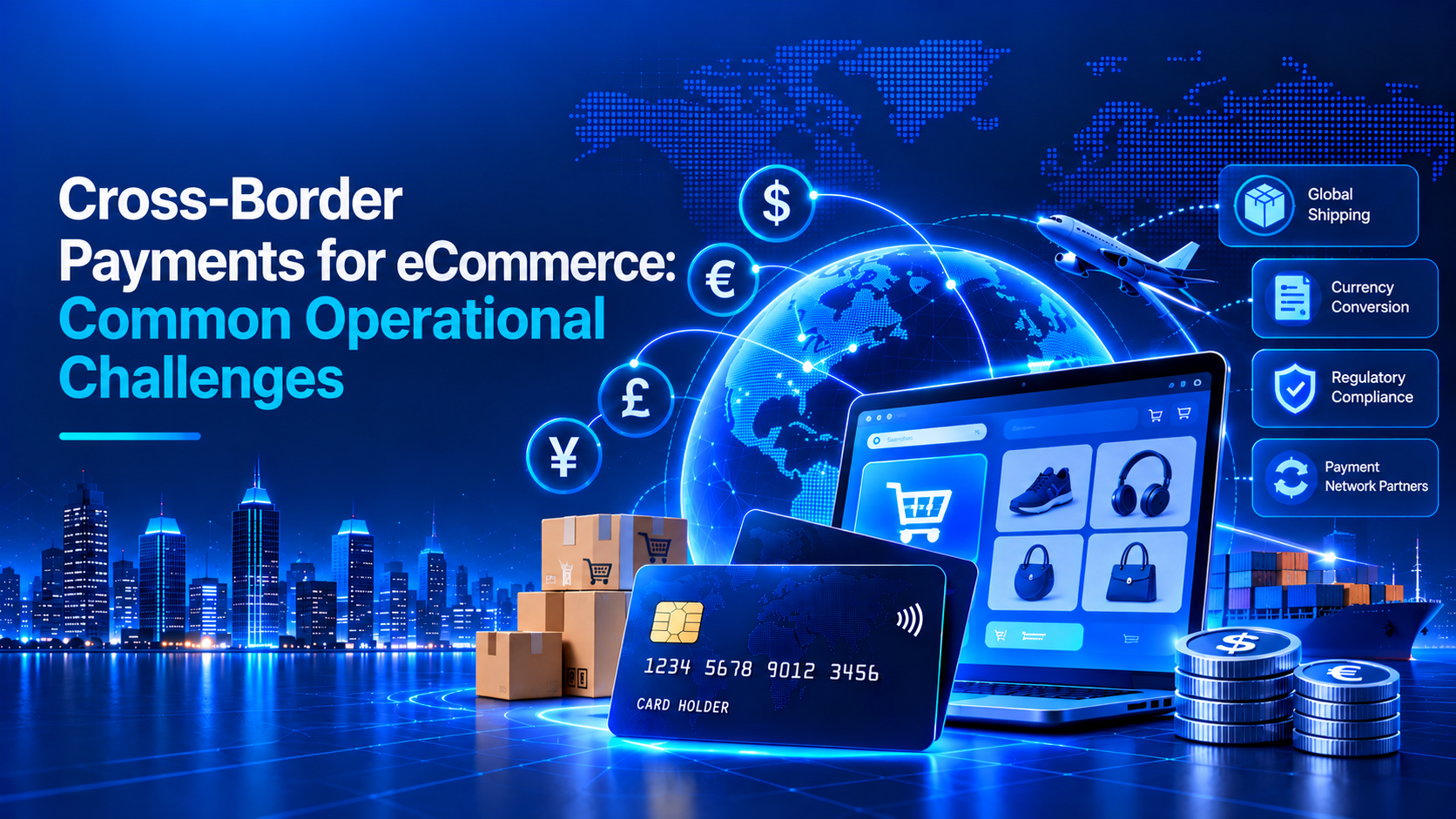
Explore common cross-border payment challenges for eCommerce, including FX conversion, payment routing, failed payments, refunds, and reconciliation.
eCommerce has made it possible for businesses to sell to customers across countries without opening a physical store in every market. But while reaching international customers is easier, managing cross-border payments for eCommerce can be considerably more complex.
A customer may pay in one currency while the merchant operates in another. Behind that transaction, businesses may need to manage currency conversion, payment processing, routing, settlement, refunds, and reconciliation.
As international sales grow, these operational challenges can become more noticeable.
What Are Cross-Border eCommerce Payments?
A cross-border payment occurs when money moves between parties located in different countries or jurisdictions.
For an eCommerce business, this could happen when a customer in one country purchases a product from a merchant based in another country.
A typical transaction may involve:
Customer Payment → Authorization → FX Conversion → Processing → Settlement → Reconciliation
The exact flow can vary depending on the currencies, payment methods, markets, and payment infrastructure involved.
Common Operational Challenges
1. Managing Multiple Currencies
International eCommerce businesses often receive payments in different currencies.
A merchant may sell products in USD, EUR, GBP, AED, and other currencies while maintaining its primary business accounts in one or more preferred currencies.
Managing these transactions requires reliable multi-currency payment infrastructure and an efficient approach to foreign exchange.
Without connected FX capabilities, businesses may need to manage currency conversion through separate processes, making transaction tracking more complicated.
2. FX Conversion and Exchange Rates
Foreign exchange is an important part of international eCommerce payments.
The amount paid by a customer may need to be converted before the merchant receives or settles the funds. Exchange rates, conversion costs, and the final settlement amount can all affect the transaction.
When FX is integrated into the payment flow, businesses can connect:
Payment → FX Conversion → Routing → Settlement
This creates a more connected process than treating currency conversion as a completely separate operation.
3. Payment Routing Across Markets
Different countries can have different payment methods, payment rails, and processing requirements.
An international eCommerce business therefore needs payment infrastructure capable of supporting transactions across different markets.
Efficient payment routing helps move transactions through the appropriate payment channels and infrastructure.
For growing businesses, having a connected payment system can reduce the operational burden of managing multiple payment connections independently.
4. Failed or Delayed Payments
Not every cross-border payment is completed successfully.
Payments can fail because of incorrect information, insufficient funds, payment method issues, compliance requirements, processing problems, or other transaction-specific factors.
For an eCommerce business, failed payments can directly affect the customer experience.
Businesses need visibility into payment status so they can identify failures, communicate with customers, and take appropriate action where supported.
5. Refunds and Chargebacks
International eCommerce also needs a clear process for handling refunds and disputes.
A refund may involve the original payment currency, settlement currency, and the merchant's internal accounting records.
Currency fluctuations can also make the final refunded amount different from the original transaction value when currencies are converted.
This means refunds and chargebacks need to be connected with the broader payment and reconciliation process.
6. Payment Reconciliation
Reconciliation can become more complicated when a business processes international transactions.
Finance teams may need to match:
- Customer payment
- Converted currency amount
- Payment fees
- Settlement amount
- Refunds
- Chargebacks
- Final account entries
A connected payment reconciliation process helps businesses maintain accurate records and understand where each transaction stands.
For high-volume eCommerce businesses, automated reconciliation can reduce repetitive manual work and improve financial visibility.
7. Keeping Payment Data Connected
Cross-border transactions can involve multiple systems, including eCommerce platforms, payment providers, accounting tools, customer databases, and internal financial systems.
If these systems do not communicate effectively, businesses may need to manually transfer or reconcile information.
APIs and webhooks can help connect payment infrastructure with business applications. Payment events can be shared with internal systems, helping businesses keep transaction statuses and records updated.
How NetPay Supports Global eCommerce Payments
NetPay provides global payment infrastructure designed to help businesses manage international payment workflows.
Its global payments capabilities connect payment processing with FX conversion, payment routing, delivery, webhooks, and reconciliation.
For eCommerce businesses operating across multiple markets, this connected approach can help reduce the complexity of managing international payments through separate systems.
Instead of treating payment processing, currency conversion, and reconciliation as isolated activities, businesses can build them into a more connected payment workflow.
Final Thoughts
Cross-border payments can help eCommerce businesses reach customers in new markets, but international growth also introduces operational complexity.
Multiple currencies, FX conversion, payment routing, failed payments, refunds, and reconciliation all need to work together.
For this reason, businesses should look beyond simply accepting international payments and consider the infrastructure supporting the complete transaction journey.
With connected global payment infrastructure, eCommerce businesses can bring payments, FX, routing, transaction data, and reconciliation into a more unified workflow.
NetPay helps businesses build this connected foundation for global payments, supporting the infrastructure needed to manage international payment operations as they expand across markets.
What are cross-border payments in eCommerce?
Cross-border payments occur when an eCommerce customer and merchant are located in different countries and money needs to move across borders.
What are the main challenges with cross-border eCommerce payments?
Common challenges include multiple currencies, FX conversion, payment routing, failed transactions, refunds, chargebacks, settlement, and reconciliation.
Why is FX important for international eCommerce payments?
FX conversion allows payments received in one currency to be converted into another currency required by the merchant or recipient.
How can businesses manage multiple currencies?
Businesses can use multi-currency payment infrastructure that supports currency conversion, payment processing, settlement, and transaction reporting.
Why is reconciliation difficult for cross-border payments?
International transactions can involve currency conversion, fees, refunds, chargebacks, and different settlement amounts, making it important to connect payment data throughout the transaction lifecycle.
How can APIs help eCommerce businesses with international payments?
APIs can connect payment infrastructure with eCommerce platforms, accounting systems, and internal applications, allowing supported payment and transaction data to move between systems automatically.
How does NetPay support cross-border eCommerce payments?
NetPay provides global payment infrastructure that connects payment processing with FX conversion, routing, delivery, webhooks, and reconciliation for international payment workflows.

The NetPay247 team writes about card issuing, Virtual IBANs, cross-border payments and building products on embedded finance infrastructure.

Leave a reply
Your email address will not be published. Required fields are marked *